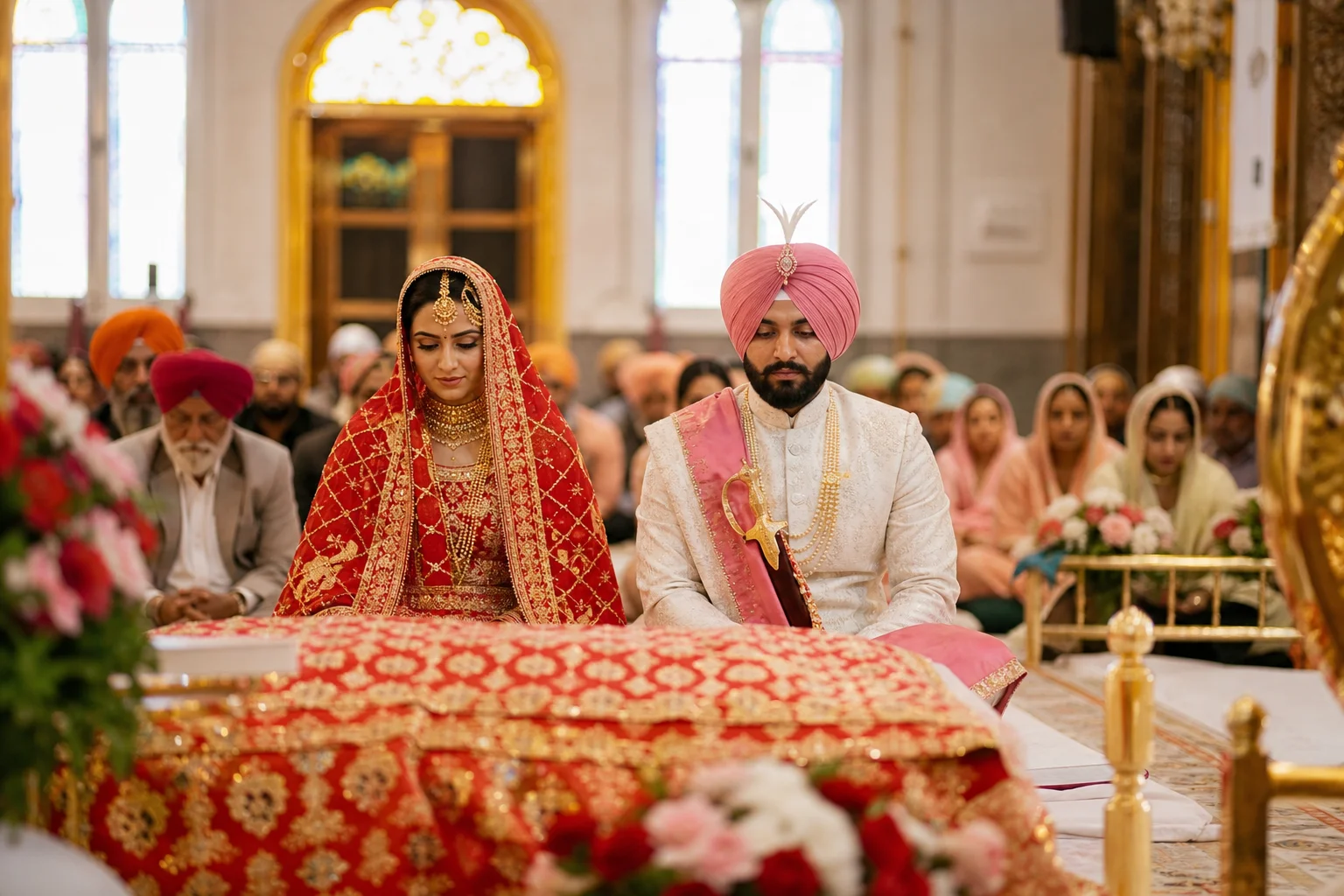
In the heart of the punjabi community, marriage is seen as more than just a social contract; it is a spiritual journey where two souls merge into one. The Anand Karaj, or the “Ceremony of Bliss,” is the cornerstone of any sikh wedding. It is a ceremony defined by its simplicity, deep spiritual resonance, and the beautiful surroundings of the Gurudwara.
The Essence of Anand Karaj
Unlike many other global traditions, the wedding ceremony in Sikhism is centered entirely around the Guru Granth Sahib, the holy scripture. The couple sits before the Guru, listening to the Laavan—four hymns composed by Guru Ram Das Ji. These hymns describe the four stages of spiritual growth and the journey of the soul towards a union with the Divine, paralleling the journey the couple is embarking on together.
The Four Laavan: A Journey of Commitment
As the Laavan are recited, the couple circumambulates the Guru Granth Sahib. Each circle represents a specific commitment:
- First Laav: Emphasizes the duty to the family and the community, grounding the marriage in a righteous way of life.
- Second Laav: Represents the stage of love and the removal of ego, as the couple begins to truly recognize the Divine in one another.
- Third Laav: Signifies the detachment from the world and a deeper focus on the spiritual bond.
- Fourth Laav: The final stage of Sahaj—perfect balance and union, where the two individuals become one light in two bodies.
Bridging Tradition and Modernity
For families looking for a matrimony that respects these ancient roots while navigating a modern world, understanding these rituals is vital. Whether you are a local resident or part of the NRI community, these traditions provide an anchor of identity. The rishtey formed during these ceremonies are celebrated with immense joy, vibrant music, and the communal meal known as Langar, which emphasizes equality and service.
The beauty of a Sikh wedding lies in its focus on equality and spiritual partnership. By preserving these values, we ensure that our heritage remains vibrant for generations to come.
Leave a Reply