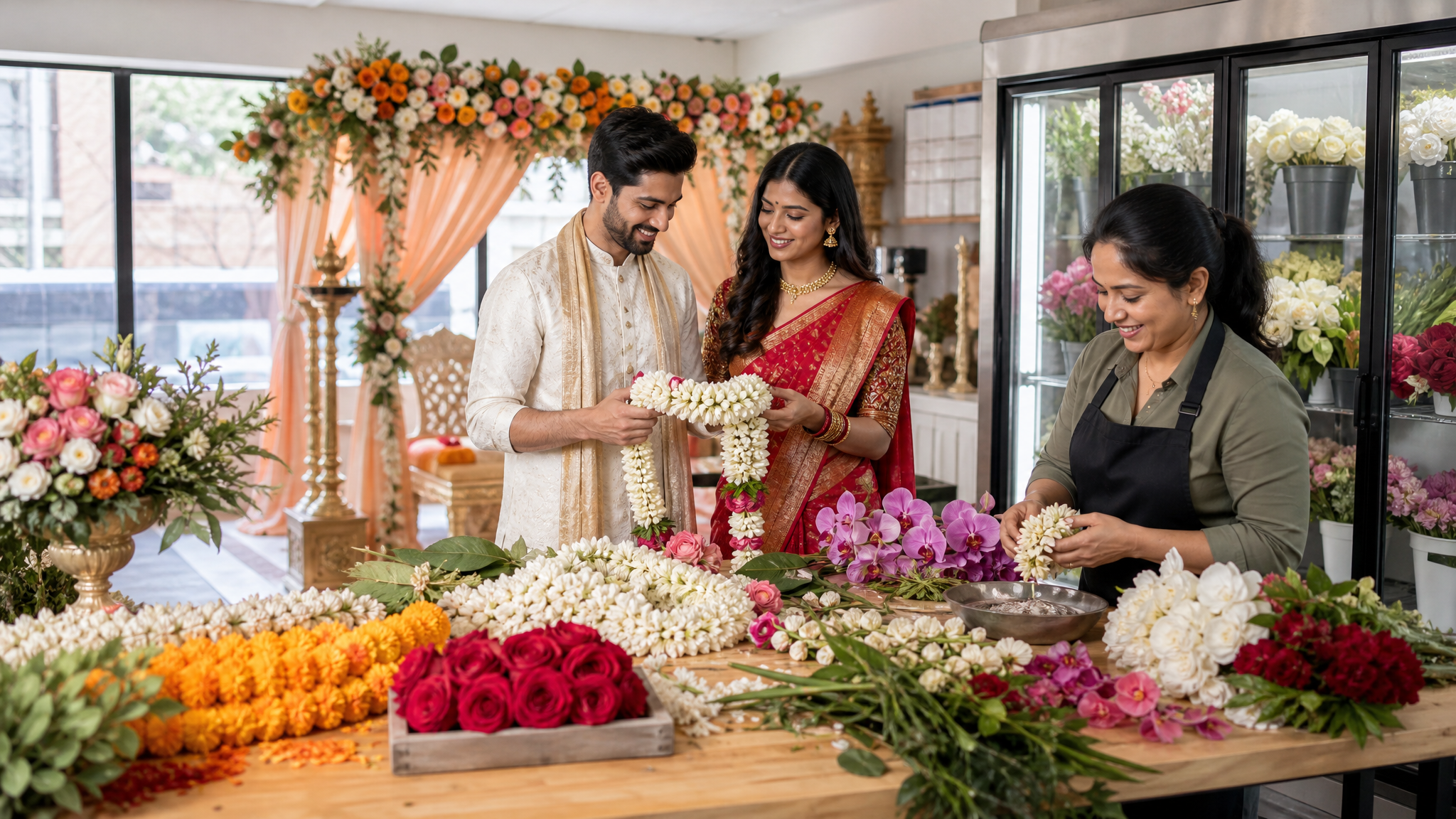
Indian Wedding Flowers and Garlands in the USA: Availability, Sourcing, and Ceremony Planning
Flowers can shape the mood of an Indian wedding, from a simple family ceremony to a large USA reception with a mandap, stage, aisle, garlands, centerpieces, and floral welcome table. Families may want marigolds, jasmine, roses, orchids, lotus-inspired details, regional garlands, or a particular color palette. Availability depends on season, city, quantity, freshness, vendor experience, and delivery timing.
This guide explains how to shop for Indian wedding flowers and garlands in the USA, what may be difficult to find locally, how to use alternatives respectfully, and what to ask a florist or decorator before booking.
Start with the ceremony and floral purpose
List every floral need before speaking with vendors. A wedding may need personal garlands, mandap arrangements, aisle flowers, stage decor, table centerpieces, welcome displays, hair flowers, family gifts, or farewell arrangements.
- Garlands for the couple or family ceremony
- Mandap, altar, stage, or ceremony backdrop
- Baraat, entrance, aisle, or welcome decor
- Table centerpieces and dining-area flowers
- Hair flowers or personal floral accessories
- Guest favors, family gifts, and thank-you arrangements
- Photo areas, signage frames, and reception details
Popular Indian wedding flower categories
| Category | Common use | Planning point |
|---|---|---|
| Marigold-style arrangements | Garlands, mandap, entrances, family ceremonies, and warm color palettes | Confirm freshness, quantity, color, and whether fresh or artificial flowers are intended. |
| Jasmine and hair flowers | Hair styling, garlands, South Indian ceremonies, and fragrance | Season, heat, storage, and delivery timing can affect freshness. |
| Roses | Mandap, bouquets, centerpieces, garlands, and mixed arrangements | Choose a color and stem quality that works with the venue and outfit palette. |
| Orchids and tropical flowers | Modern stages, luxury decor, centerpieces, and contemporary weddings | Confirm the quantity, installation method, and venue temperature. |
| Mixed regional palettes | Fusion, interfaith, and family celebrations with several traditions | Use a clear brief so the design does not turn cultural references into decoration without meaning. |
| Artificial or preserved flowers | Long events, reusable decor, allergy-sensitive guests, and predictable color | Inspect quality and make sure the venue permits the materials. |
Flowers for Punjabi and Sikh weddings
Punjabi wedding celebrations may use flowers for mehndi, haldi, sangeet, baraat, Anand Karaj-related gatherings, reception decor, family entrances, and garlands. The right choices depend on the family and venue rather than a fixed Punjabi checklist.
For a gurdwara or religious ceremony, ask the venue and family what floral decor is appropriate, where it may be placed, and whether photography or installation rules apply.
Flowers for South Indian, Bengali, Gujarati, and regional weddings
South Indian weddings may include jasmine or other hair flowers, garlands, temple-inspired arrangements, and ceremony-specific details. Bengali, Gujarati, Marathi, Rajasthani, Assamese, Odia, Kashmiri, and other regional weddings may use different colors, flowers, garland shapes, and family preferences.
Ask a knowledgeable family member or officiant to explain what is meaningful and what is optional. A florist can create a beautiful arrangement without assuming that one regional flower tradition applies to every family.
Flowers for Muslim, Christian, Jain, Buddhist, Parsi, and interfaith weddings
Muslim, Christian, Jain, Buddhist, Parsi, and interfaith weddings may use flowers for the ceremony, reception, entrance, table design, or family gathering in different ways. Some couples may prefer simple flowers, while others may want a full floral stage or modern installation.
Confirm ceremony rules, fragrance sensitivities, food-area restrictions, religious symbolism, and the couple’s design preferences before ordering.
Fresh, artificial, preserved, or local flowers?
| Option | Advantages | Watch for |
|---|---|---|
| Fresh local flowers | Natural appearance, local pickup, and easier last-minute substitutions | Season, weather, freshness, storage, and quantity. |
| Specialty imported flowers | May provide a regional look or specific fragrance | Availability, shipping, temperature, customs, and delivery risk. |
| Artificial flowers | Predictable color, reusable designs, and less concern about heat | Quality, realism, storage, venue approval, and environmental preferences. |
| Preserved flowers | Longer use and keepsake possibilities | Cost, color variation, fragility, and suitability for the ceremony. |
| Mixed approach | Uses fresh flowers for personal items and stable decor for the venue | Coordinate colors, installation, and storage across vendors. |
Where to shop for Indian wedding flowers in the USA
Options include South Asian florists, Indian grocery or flower shops, wedding florists, event decorators, wholesale flower markets, local farms, online specialty sellers, and venue-recommended vendors. The best source depends on the required flower, quantity, date, installation, and city.
- South Asian florist for garlands, hair flowers, and regional ceremony knowledge
- Wedding florist for venue design, centerpieces, bouquets, and installations
- Event decorator for mandap, stage, draping, lighting, and floral structures
- Local flower market or wholesaler for approved flowers and flexible quantities
- Indian grocery or community shop for limited seasonal or packaged items
- Online seller for artificial, preserved, or specialty decor with enough lead time
What may not be available locally?
Exact regional garlands, fresh jasmine in large quantities, a particular marigold color, matching flowers on short notice, specialty fragrance, and custom floral structures may be difficult to source in every USA city.
| Possible challenge | Why it happens | Backup plan |
|---|---|---|
| Jasmine or other fragrant flowers | Season, climate, transport, and short freshness window | Ask about local availability, approved alternatives, or artificial hair flowers. |
| Large quantities of marigolds | Color, date, regional demand, and vendor capacity | Combine local marigolds with approved yellow or orange flowers. |
| Exact garland design | Specialist craft and limited skilled labor | Show reference photos early and approve a related design. |
| Imported or unusual flowers | Shipping, temperature, customs, and delivery uncertainty | Use local seasonal flowers with a similar shape or palette. |
| Last-minute mandap installation | Labor, structure, venue access, and setup time | Use a simpler rental design or confirm a decorator with event-day access. |
| Allergy-sensitive arrangements | Fragrance, pollen, and guest health needs | Choose lower-fragrance flowers, stable decor, and clear communication. |
How early should flowers be ordered?
| Timing | Task | Reason |
|---|---|---|
| Several months ahead | Book florist, decorator, mandap, stage, and custom garland design | Protects the date and leaves time for design revisions. |
| One to two months ahead | Confirm flowers, colors, quantities, installation, and venue rules | Allows substitutions without losing the overall design. |
| A few weeks ahead | Reconfirm the order, delivery, storage, setup access, and backup plan | Reduces last-minute surprises and communication gaps. |
| Event week | Confirm fresh items, hair flowers, garlands, and day-of contact | Freshness and timing are especially important for personal flowers. |
Questions to ask an Indian wedding florist
- Have you created the specific garland, mandap, or ceremony arrangement before?
- Are the flowers fresh, artificial, preserved, or mixed?
- Where are the flowers sourced, and what substitutions are possible?
- What is the delivery, storage, installation, and pickup plan?
- Can you work with the venue’s rules about hanging, candles, water, or structures?
- How will the flowers be protected from heat, cold, wind, and travel?
- What happens if a flower or color is unavailable?
- Are taxes, delivery, labor, rentals, damage, and overtime included?
- Who is the day-of contact for the family, venue, and photographer?
Flowers, food, and guest comfort
Keep flowers away from food preparation, allergy-sensitive guests, candles, electrical equipment, and narrow walkways. Strong fragrance may affect children, older guests, or people with sensitivities. Ask the caterer and venue about safe placement.
For broader USA decor and mandap planning, read the USA Indian wedding mandap and decor guide.
Budgeting for wedding flowers
Floral cost depends on flower type, season, quantity, design complexity, installation, delivery distance, labor, rentals, and venue requirements. Separate must-have personal flowers from flexible decor. A smaller number of well-placed arrangements can create a strong effect without filling every surface.
Ask for a written proposal that identifies fresh flowers, artificial flowers, labor, delivery, setup, breakdown, taxes, deposits, substitutions, and cancellation terms.
Privacy and safe vendor planning
Vendor orders may include venue addresses, family phone numbers, payment details, guest schedules, and private ceremony information. Use trusted vendors, secure payment methods, and limited access to shared documents.
Avoid posting the exact venue access plan, delivery schedule, or home address publicly. Share photographs of family ceremonies only with permission.
How PunjabiRishtey fits into the family journey
PunjabiRishtey supports the matchmaking stage before couples and families begin choosing flowers, decorators, and wedding venues. Explore Punjabi matrimonial profiles, review USA matrimonial options, read membership information, or register a profile.
Frequently asked questions
Where can I buy Indian wedding flowers in the USA?
Look at South Asian florists, wedding florists, event decorators, Indian community shops, wholesale markets, local farms, online specialty sellers, and venue-recommended vendors.
Are Indian wedding garlands available in the USA?
They may be available through South Asian florists or specialty sellers, but exact flowers, sizes, colors, freshness, and quantities vary by city and season. Order or reserve them early.
What can I use if marigolds or jasmine are unavailable?
Ask the family and florist to approve local flowers, similar colors, artificial flowers, preserved flowers, or a mixed design. The alternative should fit the ceremony and the couple’s preferences.
How early should I book an Indian wedding florist?
Book as early as possible for a popular date, custom garlands, large mandap installations, imported flowers, or multiple wedding events. Reconfirm details several weeks before the event.
Can I use artificial flowers at an Indian wedding?
Yes, if the couple, family, venue, and ceremony allow them. Artificial flowers can help with heat, allergies, reuse, and predictable color, but quality and design should be checked in person when possible.
Final takeaway
Indian wedding flowers in the USA require the same care as any important wedding vendor: start with the ceremony, confirm the family’s traditions, check local availability, reserve custom items early, and agree on realistic alternatives. A thoughtful floral plan honors the wedding style while protecting freshness, comfort, budget, and timing.
Leave a Reply