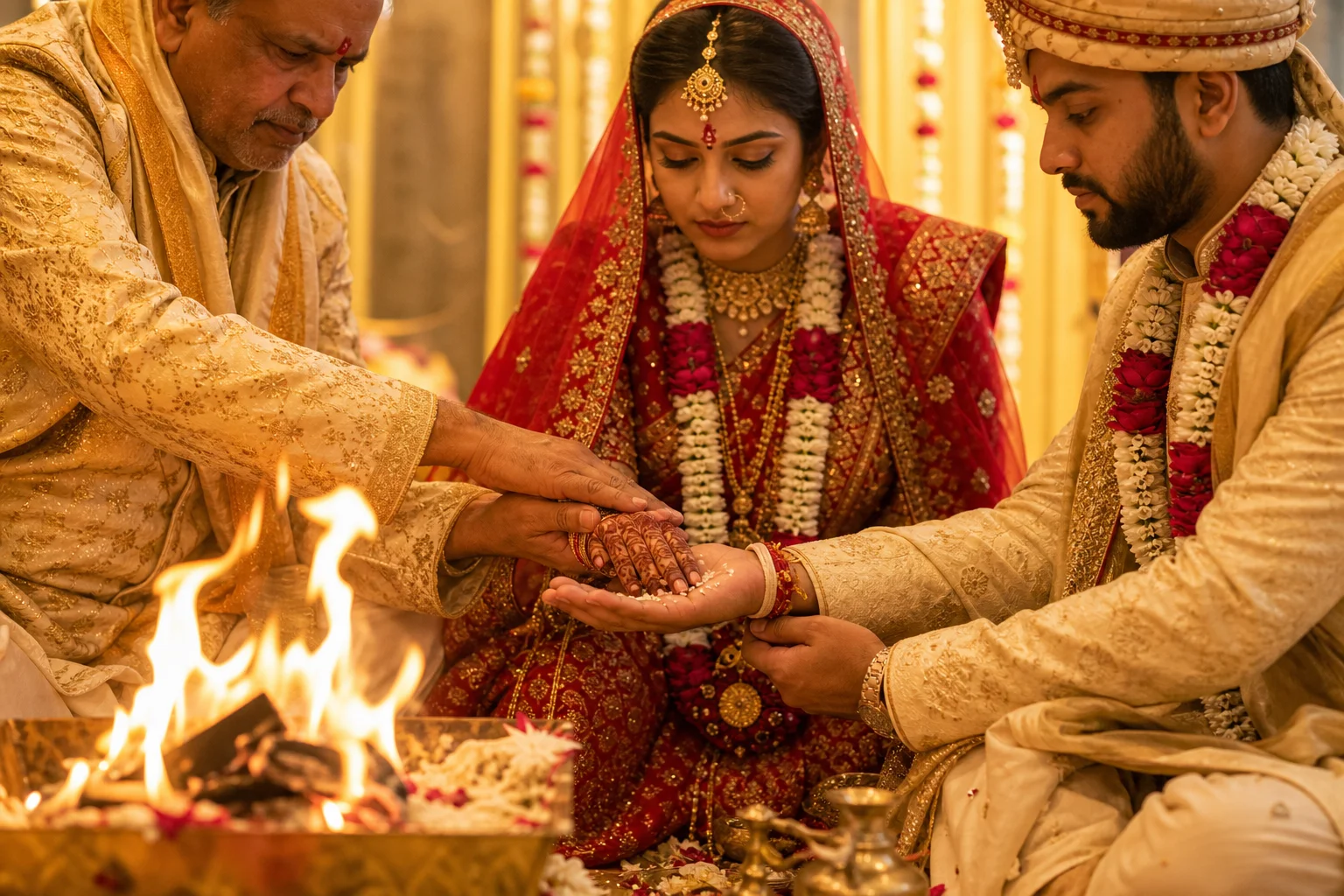
In the grand theater of a punjabi wedding, there is a moment so poignant that it often leaves the entire mandap in a state of reverent silence. This is the Kanyadaan—the ritual where a father gives away his daughter’s hand to the groom. In hindu tradition, this is not merely a social hand-off; it is considered the most sacred ‘daan’ (gift) a householder can perform, symbolizing a transition of responsibility and the start of a new spiritual lineage.
The Ritual: Joining Hands and Hearts
The term Kanyadaan is derived from two Sanskrit words: ‘Kanya’ meaning daughter and ‘Daan’ meaning gift. During the ceremony, the father places the bride’s right hand into the groom’s right hand, often while water is poured over them to seal the vow. This act signifies the father’s trust in the groom to care for and protect his daughter throughout the journey of matrimony. It is a moment of deep emotional release, marking the bride’s departure from her childhood home and her entry into a new rishta with her husband’s family.
A Legacy of Love and Sacrifice
For many wedding guests, the Kanyadaan is the emotional peak of the ceremony. It highlights the unique bond between a father and daughter—a bond built on years of sacrifice, protection, and unconditional love. While modern interpretations often emphasize the equality of the partners, the traditional Kanyadaan remains a beautiful tribute to the father’s role in nurturing the life that is now being entrusted to another.
Kanyadaan is a reminder that in our heritage, marriage is a union of families, sealed with the most precious gift a father can give.
Leave a Reply