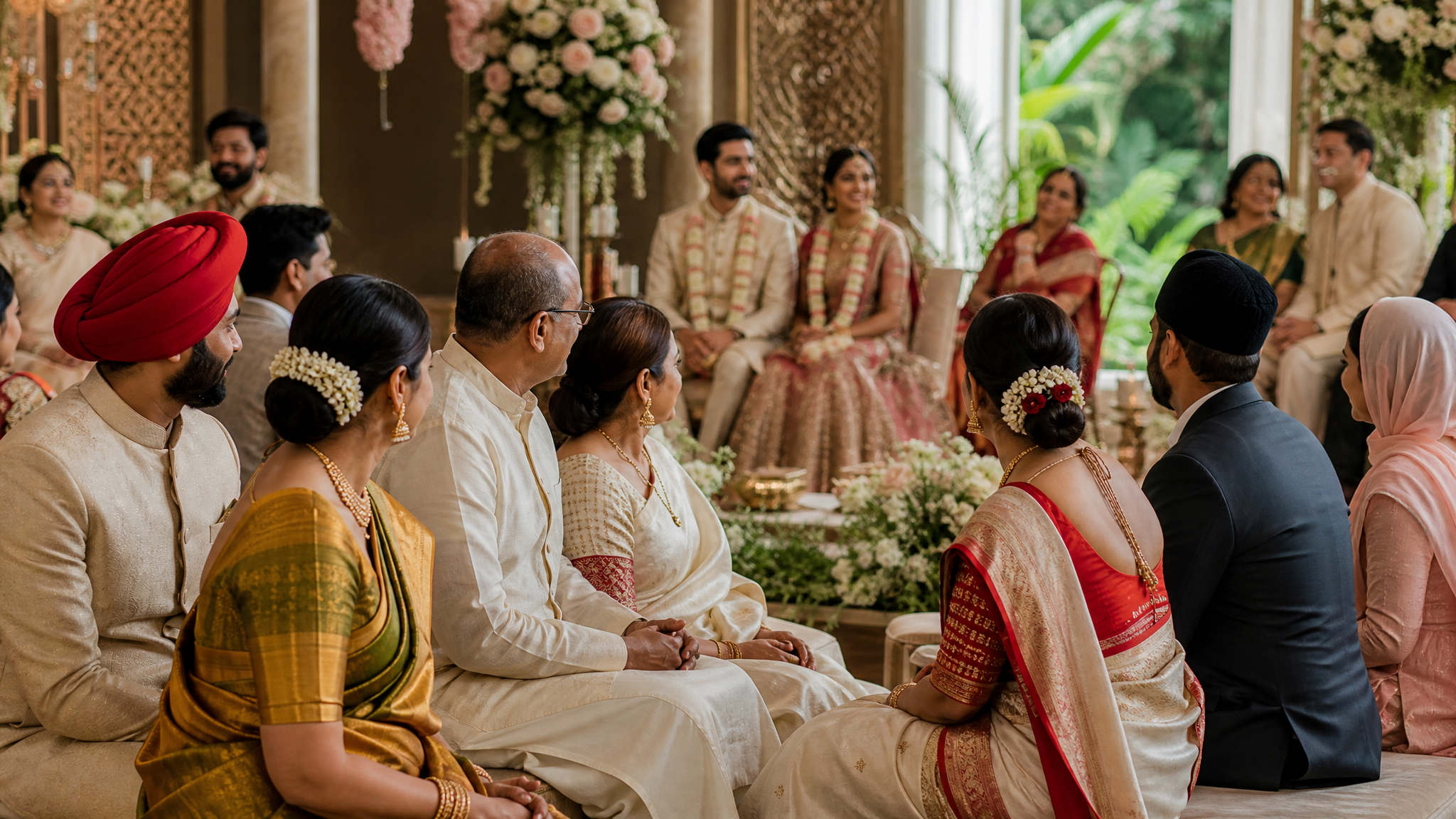
Indian Wedding Guest Etiquette: What to Expect Across Regions and Ceremonies
Attending an Indian wedding can be joyful and unfamiliar at the same time. A guest may be invited to a Punjabi sangeet, a Sikh Anand Karaj, a South Indian ceremony, a Bengali wedding, a Muslim nikah, a Christian church wedding, or a celebration that combines several family traditions. The most respectful approach is to ask questions, follow the hosts’ guidance, and remember that no single checklist represents every Indian family.
This guide explains common patterns without treating them as universal rules. Rituals, clothing, food, photography expectations, and family roles can vary by region, religion, language, venue, and the couple’s choices.
Before you attend: read the invitation carefully
Indian weddings may include several invitations or event details: engagement, mehndi, haldi, sangeet, wedding ceremony, reception, lunch, or post-wedding gathering. Check which events you are invited to, the start time, dress guidance, venue rules, parking information, and whether the invitation requests an RSVP.
If a ceremony takes place at a gurdwara, temple, mosque, church, or other religious venue, look for instructions about head coverings, footwear, photography, seating, and appropriate clothing. When the invitation is unclear, ask the couple or a family contact rather than guessing.
Indian wedding styles guests may encounter
- Multi-day family wedding: Several smaller events lead up to the main ceremony and reception.
- Religious ceremony: The couple follows the requirements of a Sikh, Hindu, Muslim, Christian, Jain, Buddhist, Parsi, or other tradition.
- Inter-regional wedding: Two families include customs from different states, languages, or communities.
- Interfaith wedding: The couple and families agree on a respectful combination of religious, civil, or cultural elements.
- Diaspora or destination wedding: Indian traditions are adapted to a USA venue, hotel, community hall, gurdwara, temple, church, or other location.
- Small family ceremony: The couple chooses a shorter celebration with close relatives and selected rituals.
North Indian and Punjabi celebrations
North Indian and Punjabi weddings may include mehndi, haldi, sangeet, a baraat, milni, a wedding ceremony, and a reception. Guests may see colorful clothing, family dancing, dhol, music, and a lively welcome for the groom’s procession. The order and names of events vary between Punjabi Hindu, Sikh, and other families.
What guests should know
- Follow the hosts’ directions about where to stand or sit during the baraat and milni.
- Ask before joining a family dance, taking close-up photos, or touching ceremonial items.
- At a gurdwara, cover your head, remove shoes where required, and follow the venue’s guidance.
- Expect relatives to play active roles in welcoming guests, serving food, and explaining the schedule.
South Indian ceremonies
South Indian weddings include distinct Tamil, Telugu, Kannada, Malayalam, Kodava, and other traditions. Guests may see silk clothing, floral decoration, a decorated mandapam, family blessings, garland exchange, music, and rituals connected to the couple’s community. Some ceremonies begin early, so check the invitation rather than assuming an afternoon start.
Do not assume that one South Indian wedding represents every state or family. If the event includes a temple or religious setting, ask about clothing, footwear, food, and photography expectations ahead of time.
East Indian ceremonies
Bengali, Odia, Assamese, Bihari, Jharkhandi, and other East Indian weddings have their own clothing, food, music, and ritual patterns. A Bengali wedding may include events such as gaye holud, saat paak, mala badal, or sindoor daan in some families. Guests should treat these names as examples, not a universal schedule.
Family members may explain when guests should participate, when to remain seated, and when photography is appropriate. A curious, quiet question is more respectful than interrupting a ritual to ask for an explanation.
West Indian ceremonies
Gujarati, Maharashtrian, Rajasthani, Goan, Sindhi, and other West Indian celebrations may include garba, dandiya, pithi, halad, family blessings, regional music, and distinctive clothing. Guests may be invited to dance during a pre-wedding event but should not assume that every guest must participate.
Food may be vegetarian, regionally specific, or served according to religious and family preferences. Ask the hosts or caterer about ingredients if you have an allergy or dietary restriction.
Hindu wedding guest etiquette
Hindu wedding ceremonies vary by region and family. Guests may hear prayers, see a sacred fire, witness pheras or saptapadi, and observe blessings, garland exchange, or mangalsutra and sindoor customs. Some events are religiously solemn even when the surrounding celebration is lively.
- Keep voices low during prayers and vows.
- Follow the officiant’s instructions about seating and movement.
- Ask before photographing close ritual moments.
- Choose formal, comfortable clothing that respects the venue.
Sikh Anand Karaj etiquette
An Anand Karaj takes place in the presence of the Guru Granth Sahib, usually at a gurdwara or another appropriate setting. Guests should cover their heads, remove shoes where required, dress respectfully, and avoid placing feet toward the Guru Granth Sahib. Follow the gurdwara’s instructions about seating, food, photography, and participation.
The couple’s reception or other family events may be more informal, but the same principle applies: follow the hosts rather than treating a religious ceremony like a stage performance.
Muslim nikah and walima etiquette
A Muslim wedding may include the nikah, family gatherings, mehndi, walima, regional customs, and separate or combined events. Dress expectations and photography rules can vary. Ask whether there are areas where guests should sit, whether food is halal, and whether the couple or families prefer no photography during the nikah.
Consent, witnesses, prayers, and the marriage contract may be important parts of the ceremony. Guests do not need to understand every legal or religious detail, but they should remain attentive and respectful.
Christian, Jain, Buddhist, Parsi, and other ceremonies
Christian weddings in India may include a church service, vows, rings, readings, prayers, and a reception. Jain, Buddhist, Parsi, tribal, and other Indian communities have their own ceremony formats, prayers, family roles, and food practices. Some couples combine a religious ceremony with a civil registration or a modern reception.
When you are unfamiliar with the tradition, ask the invitation contact about clothing, food, timing, and whether guests should participate in a particular ritual.
What to wear to an Indian wedding
Indian wedding clothing is usually festive and colorful, but the correct choice depends on the event and the invitation. Guests may wear a saree, lehenga, salwar suit, anarkali, kurta-pajama, sherwani-inspired outfit, bandh gala, or another formal ensemble. A tasteful Western formal outfit may also be appropriate when the hosts indicate a fusion or formal dress code.
- Check the invitation for a color, theme, or event-specific dress code.
- Choose clothing that allows you to sit, walk, and participate comfortably.
- Bring a shawl or layer for air-conditioned venues.
- Wear footwear that can be removed easily if the venue requires it.
- Avoid clothing that could be mistaken for the couple’s ceremonial outfit when the hosts request guest distinction.
Colors and cultural assumptions
Guests sometimes hear broad rules about colors, but preferences differ by family, religion, region, and event. Ask the couple if you are unsure about wearing white, black, red, or another prominent color. A respectful question is more reliable than a universal internet rule.
Gifts and money etiquette
Guests may give a gift, a registry item, or money according to the family’s preference and their own relationship with the couple. In some Indian families, an amount ending in one is customary, but it is not a requirement for every wedding. Do not discuss the value of another guest’s gift.
If the invitation mentions a charity, registry, or no-gifts preference, follow it. A thoughtful note is valuable even when you choose not to give money.
Food and hospitality
Indian weddings often include substantial hospitality and regional food. Meals may be vegetarian, vegan, halal, Jain, or prepared around other dietary requirements. If you have an allergy, tell the host or caterer early. Do not assume that a dish is safe because it looks familiar.
Guests may be encouraged to eat more than once or take food home. Accept or decline politely and thank the family for hosting.
Photography and social media
Ask before posting a couple’s photo, a child’s photo, a private family moment, or a religious ceremony. Some families welcome social sharing; others prefer privacy. Never livestream a ceremony or publish someone’s full name, location, or travel details without permission.
How families help guests feel comfortable
Indian weddings often rely on family members to welcome guests, explain rituals, coordinate food, and answer practical questions. If you are part of the family, assign a few approachable people to help guests who are unfamiliar with the ceremony. A short printed or digital timeline can make a multi-event celebration easier to follow.
Questions to ask before attending
| Question | Why it helps |
|---|---|
| Which events am I invited to? | Indian weddings may include several separate celebrations. |
| What should I wear? | Dress expectations can differ by ceremony and venue. |
| Are there religious venue rules? | You may need head covering, bare feet, modest clothing, or quiet participation. |
| Can I take photos? | Some rituals and families require privacy. |
| Is there a dietary or allergy contact? | Early notice helps the caterer prepare safely. |
How PunjabiRishtey fits into the family journey
PunjabiRishtey supports the matchmaking stage before families begin planning a wedding. You can explore Punjabi matrimonial profiles, review USA matrimonial options, read membership information, and register a profile.
Frequently asked questions
What should I wear to an Indian wedding?
Choose festive formal clothing appropriate to the event and venue. Sarees, lehengas, salwar suits, kurtas, sherwani-inspired outfits, and formal fusion clothing may all work when they fit the invitation.
Are Indian wedding rituals the same everywhere?
No. Rituals vary by religion, region, language, family, and couple. Ask the hosts what to expect.
Can guests participate in the dancing?
Often yes at informal events such as a sangeet or garba, but follow the hosts and do not interrupt a solemn ceremony.
Should I bring a gift?
Follow the invitation or family preference. A gift, registry item, money, or thoughtful note may be appropriate depending on the wedding.
What is the most important etiquette rule?
Ask respectfully, follow the venue and family guidance, protect privacy, and stay attentive during religious or ceremonial moments.
Final takeaway
The best Indian wedding guest is curious without being intrusive. Learn which ceremony you are attending, dress thoughtfully, respect family and religious guidance, ask before photographing, and celebrate the couple in the way their families have chosen.
Leave a Reply