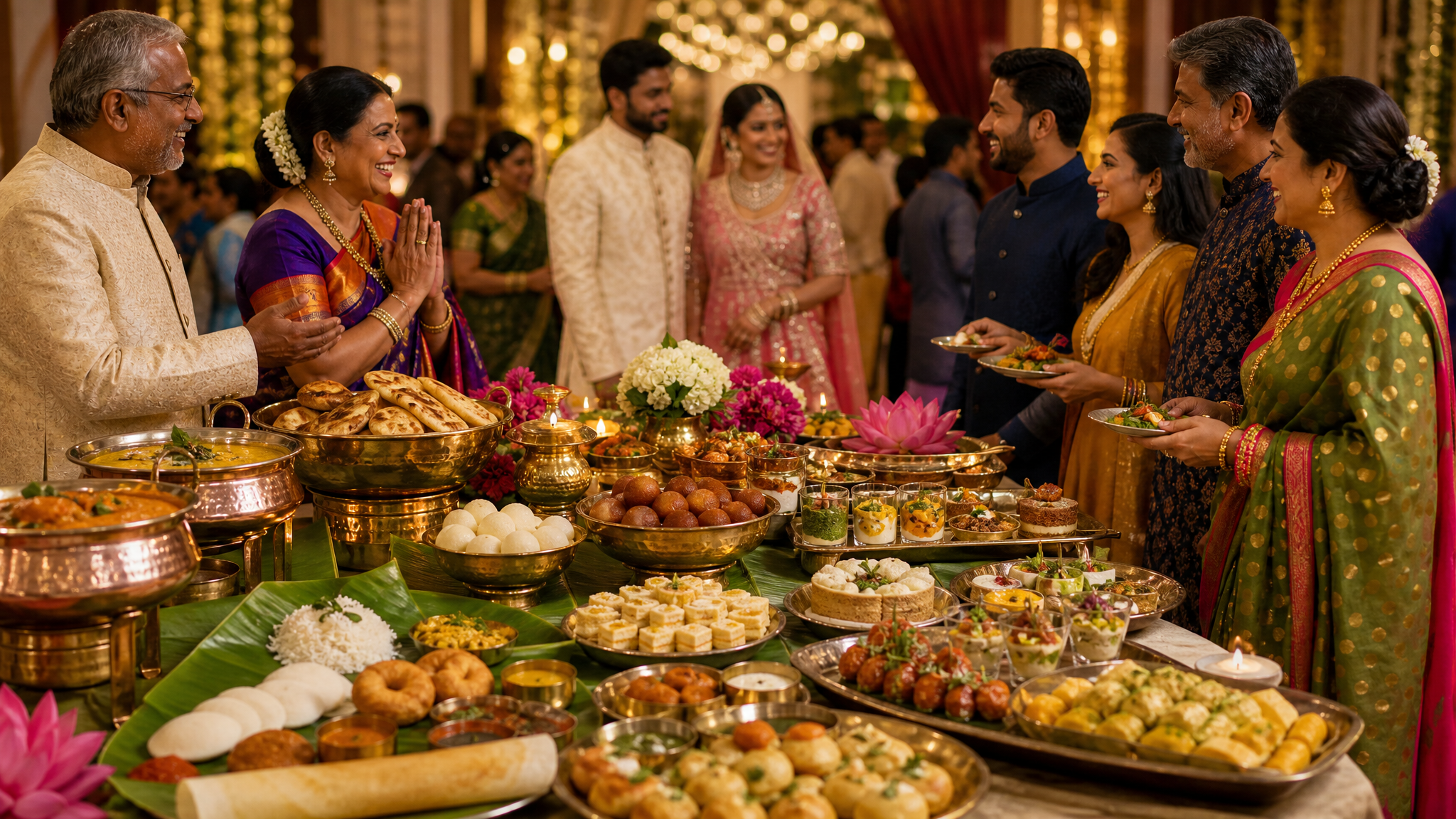
Indian Wedding Food and Hospitality: Regional Menus, Family Traditions, and Planning Tips
Food is one of the most memorable parts of an Indian wedding, but there is no single Indian wedding menu. A Punjabi reception, South Indian ceremony, Bengali celebration, Gujarati wedding, Muslim nikah and walima, Sikh wedding, Christian wedding, or interfaith event may each have different dishes, serving styles, dietary practices, and family expectations.
This guide explains how couples and families can plan wedding food respectfully across Indian cultures. The examples are starting points rather than fixed rules: recipes, rituals, religious requirements, and family preferences vary by region, language, community, and household.
Why food matters at an Indian wedding
Wedding hospitality often expresses welcome, generosity, regional identity, and family history. Relatives may contribute recipes, sweets, serving traditions, or advice about what guests should experience. Food can also connect families when two regional traditions are being celebrated together.
The menu should serve the guests who are actually attending. A beautiful spread is less successful if guests cannot identify allergens, dietary options, spice levels, or ingredients.
Choose the wedding food style first
- Traditional regional menu: Focuses on the couple’s family cuisine and familiar dishes.
- Multi-regional menu: Brings together food traditions from both families or several parts of India.
- Vegetarian celebration: May be chosen for family, religious, personal, or venue reasons.
- Halal or other religiously guided menu: Requires direct discussion with the caterer and family.
- Fusion reception: Combines Indian dishes with local or international options for a mixed guest list.
- Live-station menu: Uses fresh preparation for items such as dosa, chaat, breads, grills, or desserts.
- Plated, buffet, or family-style service: Changes the timing, staffing, seating, and guest experience.
Before collecting dish names, decide how the meal should feel: generous and family-style, elegant and plated, interactive and festive, or simple and intimate.
Punjabi and North Indian wedding food
Punjabi and North Indian celebrations may feature breads, lentils, paneer, vegetables, rice, grilled items, rich gravies, chaat, lassi, and sweets. A family may also prefer lighter dishes for a daytime ceremony and a more elaborate dinner reception.
Do not assume every Punjabi or North Indian guest expects the same menu. Ask the couple whether the celebration is vegetarian, whether onion and garlic are restricted, and which family dishes carry special meaning.
South Indian wedding food
South Indian wedding menus can include rice-based dishes, lentils, vegetables, chutneys, sweets, filter coffee, and meals served on a banana leaf or through another regional presentation. Tamil, Telugu, Kannada, Malayalam, Kodava, and other traditions each have their own variations.
Some South Indian ceremonies begin early and may include a breakfast or lunch rather than a late-night dinner. Confirm the schedule with the family and caterer, especially when guests are traveling.
Gujarati and West Indian wedding food
Gujarati celebrations may include a broad vegetarian spread, farsan, breads, vegetables, lentils, rice, sweets, and snacks. Marathi, Rajasthani, Goan, Sindhi, and other West Indian families bring additional regional preferences and serving traditions.
A menu with many dishes still needs balance. Include familiar options, a few signature items, clear labels, and enough seating for guests who need time to eat comfortably.
Bengali and East Indian wedding food
Bengali and other East Indian wedding menus may include rice, vegetables, fish or meat dishes where appropriate, sweets, and family recipes connected to the celebration. Odia, Assamese, Bihari, Jharkhandi, and neighboring traditions may differ considerably.
Ask the family which dishes are central to their celebration rather than selecting a menu from a generic regional list. A dish’s meaning may be more important than its popularity outside the community.
Food planning for Sikh, Hindu, Muslim, Christian, Jain, Buddhist, and Parsi weddings
Religious and family practices can affect ingredients, preparation, serving, alcohol, utensils, fasting, and the timing of the meal. An Anand Karaj at a gurdwara may involve langar or venue-specific food expectations. A Hindu wedding may include vegetarian or sattvic preferences. A Muslim wedding may require halal preparation. Jain families may avoid particular ingredients, while Christian, Buddhist, Parsi, and interfaith families may have their own traditions.
These are not interchangeable rules. Speak with the couple, family, officiant, and caterer before finalizing the menu.
Build the menu around guest needs
| Guest need | Planning question | Practical solution |
|---|---|---|
| Religious dietary practice | Are there ingredients or preparation methods the family avoids? | Use a caterer who can explain sourcing and separate preparation. |
| Allergies | Can the caterer identify common allergens and prevent cross-contact? | Label dishes and assign a knowledgeable food contact. |
| Children and older guests | Are there mild, familiar, and easy-to-eat options? | Provide simple foods, seating, water, and manageable serving portions. |
| Mixed cultural guest list | Will guests understand what they are eating? | Use clear labels and a short menu guide without assuming expertise. |
| Accessibility | Can guests reach the meal and sit comfortably? | Plan table height, queue flow, staff support, and nearby seating. |
Questions to ask an Indian wedding caterer
- Which regional cuisines and religious dietary requirements can you prepare confidently?
- How do you handle vegetarian, vegan, halal, Jain, gluten-free, nut-free, or other needs?
- Will the food be cooked on site, delivered, or finished at the venue?
- How do you label allergens and separate restricted dishes?
- Can you provide a tasting with the actual recipes or an equivalent preparation?
- What equipment, kitchen access, refrigeration, serving staff, and cleanup do you need?
- How will the menu work with a mehndi, haldi, sangeet, ceremony, or reception timeline?
- What happens if the guest count or venue schedule changes?
Family roles in wedding hospitality
Food planning becomes easier when relatives have clear roles. One person can collect family recipes and restrictions, another can manage the caterer, another can coordinate sweets and favors, and another can welcome guests to the meal.
| Family or vendor role | Helpful responsibility |
|---|---|
| Couple | Set the menu direction, guest priorities, budget, and privacy preferences. |
| Parents and elders | Explain meaningful dishes, family customs, and non-negotiable requirements. |
| Siblings and cousins | Coordinate tastings, labels, guest questions, and event timing. |
| Caterer | Confirm ingredients, preparation, staffing, service, safety, and cleanup. |
| Venue lead | Confirm kitchen rules, access times, refrigeration, fire rules, and waste handling. |
| Guest support lead | Help guests find suitable dishes without making anyone explain private dietary needs publicly. |
Food across the wedding events
Mehndi and haldi
These events often benefit from easy-to-eat snacks, drinks, sweets, and foods that do not interfere with mehndi or turmeric activities. Keep napkins, water, handwashing, and comfortable seating nearby.
Sangeet or garba
Guests may be dancing, moving, and arriving at different times. Small portions, live stations, and clearly marked vegetarian or allergy-friendly options can be easier than a single formal meal.
Main ceremony
Confirm whether food is served before or after the ceremony and whether the religious venue has rules about ingredients, serving, shoes, seating, or cleanup.
Reception
A reception menu can be more elaborate, but timing still matters. Coordinate speeches, performances, photos, dancing, and service so guests are not waiting too long for food.
Indian wedding food in the USA
USA-based couples can work with South Asian caterers, regional restaurants, community referrals, hotel kitchens, and event specialists. Search by cuisine and service style rather than assuming that the nearest Indian restaurant can handle a large wedding.
Ask whether a caterer serves your area, understands your ceremony, carries the required permits or insurance, can access the venue kitchen, and has experience with the guest count. A smaller regional caterer may offer excellent food but need more coordination for staffing, rentals, transport, or service equipment.
When a regional ingredient is hard to find
Some ingredients, sweets, leaves, flowers, or specialty products may be seasonal or difficult to source in a particular USA city. Ask the family and caterer whether a substitute preserves the dish’s purpose and flavor. For a religious or ritual use, ask the officiant before changing the item.
Order specialty ingredients early, confirm storage requirements, and keep a practical backup menu. Avoid relying on an international shipment that has no delivery buffer before the wedding.
Hospitality details guests remember
- Clear directions to the meal area and comfortable seating
- Water, tea, coffee, and non-alcoholic choices that are easy to find
- Simple labels for ingredients and dietary categories
- Staff or family members who can answer questions discreetly
- Food service that respects religious ceremony timing
- A plan for children, older guests, and guests with mobility needs
- A calm approach to declining food or requesting an alternative
Privacy and food photography
Ask the couple and family before photographing private family recipes, ceremonial offerings, children, or religious food arrangements. Do not publish guest names, dietary information, or behind-the-scenes family conversations without permission.
How PunjabiRishtey fits into the family journey
PunjabiRishtey supports the matchmaking stage before families begin planning hospitality and wedding events. Explore Punjabi matrimonial profiles, review USA matrimonial options, read membership information, or register a profile.
Frequently asked questions
What food is served at an Indian wedding?
There is no single menu. Food depends on region, religion, family, event, season, budget, and guest needs. Menus may include snacks, breads, rice, vegetables, lentils, meat or seafood, sweets, drinks, and regional specialties.
Are all Indian wedding menus vegetarian?
No. Some families choose vegetarian food, while others serve meat or seafood. Religious, regional, personal, and venue preferences should guide the menu.
How can a family handle allergies?
Tell the caterer early, ask about cross-contact, label dishes clearly, and appoint a knowledgeable food contact who can answer guests discreetly.
How far ahead should Indian wedding catering be booked?
Book as early as practical for large, multi-day, destination, or peak-season weddings. Confirm the caterer’s experience, service area, tasting process, and venue requirements before signing.
What if an important regional ingredient is unavailable?
Ask the family and caterer about an appropriate substitute. For a religious or ritual use, consult the officiant instead of making the decision based only on appearance.
Final takeaway
Indian wedding food is most meaningful when it reflects the families without forcing every tradition into one menu. Start with the ceremony style and guest needs, involve relatives with clear responsibilities, confirm religious and allergy requirements, and give regional ingredients and specialty catering enough time. Good hospitality is not only a large spread; it is helping every guest feel welcomed and considered.
Leave a Reply