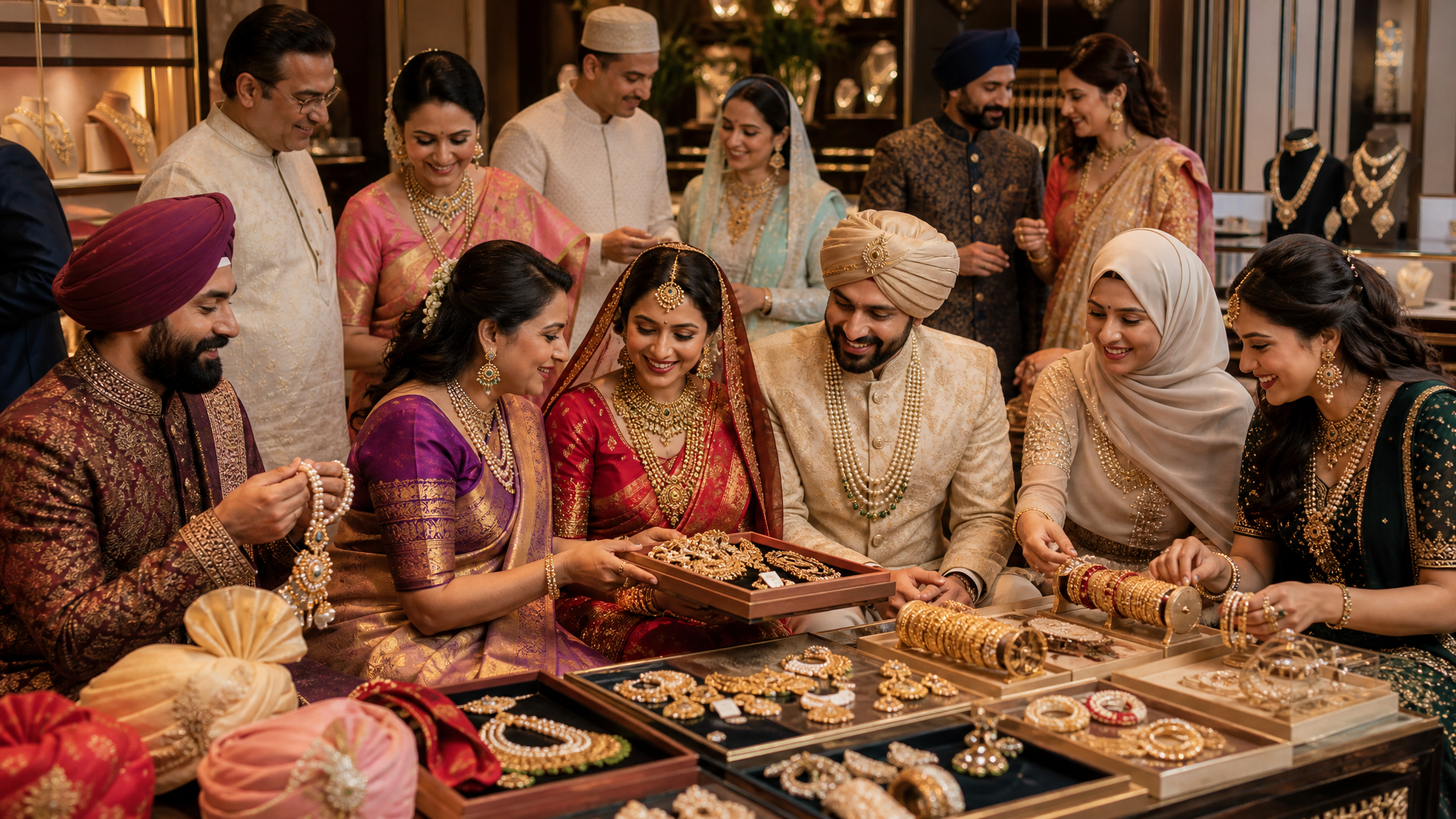
Indian Wedding Jewelry and Accessories: Regional Styles, Ceremony Choices, and Family Traditions
Indian wedding jewelry is shaped by region, family history, ceremony, religion, clothing, budget, and personal comfort. A Punjabi bride, a South Indian bride, a Bengali bride, a Gujarati bride, a Muslim bride, a Sikh groom, or a couple planning an interfaith wedding may choose very different accessories. There is no single jewelry set that represents every Indian wedding.
This guide helps couples, families, and guests plan Indian wedding jewelry and accessories for each event while keeping tradition, comfort, safety, and personal style in view.
How to build an Indian wedding jewelry plan
Start with the events rather than buying one large set without a plan. List the engagement, mehndi, haldi or pithi, sangeet, wedding ceremony, reception, and any regional or religious gatherings. Then match jewelry to the outfit, venue, weather, movement, and family expectations.
- Identify the wearer and the ceremony.
- Confirm whether the family expects traditional, contemporary, or modest styling.
- Check metal, stone, size, weight, and allergy needs.
- Plan secure storage, insurance, transport, and return timing.
- Leave time for resizing, repairs, polishing, and outfit changes.
Indian wedding jewelry by event
| Event | Common accessory direction | Planning note |
|---|---|---|
| Engagement or roka | Ring, earrings, necklace, bracelet, or a polished contemporary set | Choose pieces that work with the outfit and future family gatherings. |
| Mehndi | Light earrings, bangles, rings, floral details, and comfortable accessories | Leave space for henna and avoid pieces that interfere with the hands. |
| Haldi or pithi | Simple jewelry, floral accessories, or family-approved traditional pieces | Protect valuables from turmeric, water, movement, and outdoor conditions. |
| Sangeet or garba | Statement earrings, bangles, hair accessories, or dance-friendly pieces | Test weight and fastening before a long evening of movement. |
| Religious ceremony | Jewelry that fits the clothing, venue, and officiant’s guidance | Confirm modesty, head covering, footwear, and photography expectations. |
| Reception | Formal necklace, earrings, cuff, watch, brooch, or coordinated family jewelry | Balance the jewelry with stage lighting, outfit details, and comfort. |
Punjabi and Sikh wedding jewelry
Punjabi wedding styling may include layered necklaces, earrings, bangles, rings, hair accessories, kaleere, or a family heirloom. The choices depend on the bride’s outfit, the event, and the family’s customs. Some families may also plan coordinated accessories for the groom, parents, siblings, and wedding party.
For an Anand Karaj, ask the gurdwara and family about respectful ceremony attire and practical requirements. Jewelry should complement the ceremony without distracting from the couple’s participation or creating safety concerns.
South Indian wedding jewelry
South Indian wedding jewelry may include temple-inspired designs, layered necklaces, long harams, waist belts, earrings, bangles, hair ornaments, and jasmine or other floral details. Tamil, Telugu, Kannada, Malayalam, Kodava, and other families may have different preferences.
Heavy pieces can be meaningful but may be tiring during an early ceremony. Check the fit of the necklace, earrings, hair accessories, and waist jewelry before the wedding day.
Bengali, Gujarati, Marathi, Rajasthani, and regional styles
Bengali, Gujarati, Marathi, Rajasthani, Assamese, Odia, Kashmiri, and other regional celebrations may use distinctive jewelry, colors, headpieces, bangles, nose jewelry, or family ornaments. A regional style is not a fixed uniform, so confirm the family’s own tradition.
Accessories may be chosen to support a saree drape, lehenga, regional veil, folk dance, or family blessing. The best selection respects the outfit and the person wearing it.
Muslim, Christian, Jain, Buddhist, Parsi, and interfaith weddings
Muslim, Christian, Jain, Buddhist, Parsi, and interfaith weddings may use jewelry differently depending on the ceremony, family, language, venue, and personal faith. Some couples may prefer understated pieces for a religious service and more formal jewelry for a reception.
Ask the couple or family before buying religious symbols, ceremonial accessories, or jewelry intended for a particular ritual. A thoughtful choice is better than an assumption based on a broad cultural label.
Jewelry for brides and grooms
Bridal jewelry often receives more attention, but grooms also have meaningful accessory choices. These can include watches, cufflinks, brooches, rings, kalgi or sehra details, necklaces, turbans, pocket squares, shoes, and family heirlooms.
Couples may coordinate metals, colors, motifs, or family pieces without wearing identical accessories. A balanced plan lets each person keep a distinct style.
Jewelry for parents, siblings, and wedding guests
Parents and elders may wear family jewelry or receive a new piece as a gift. Siblings and guests can choose festive accessories that suit the event without competing with the couple. If the invitation includes a dress code, use it as the starting point.
| Person | Useful direction | Comfort check |
|---|---|---|
| Parent or elder | Classic necklace, earrings, watch, brooch, bracelet, or heirloom | Check weight, clasp security, and time spent standing or greeting guests. |
| Sibling or close family | Coordinated festive jewelry, bangles, earrings, or a family gift | Choose pieces that work across multiple outfits and events. |
| Wedding party | Matching color or motif with flexible designs | Allow different sizes, metal preferences, allergies, and cultural comfort. |
| Guest | Festive accessories appropriate to the invitation and venue | Consider dancing, outdoor weather, travel, and secure storage. |
How to choose between gold, silver, imitation, and handmade jewelry
Material choice depends on budget, use, sentimental value, weight, care, and the event. Gold or silver may be chosen for investment, heirloom, or family reasons. Imitation jewelry can provide color and design flexibility. Handmade pieces may bring a local or regional feel.
Ask for material details, care instructions, return conditions, and documentation when relevant. Do not assume that a gold-colored finish is solid gold or that a stone is natural without verification.
Jewelry shopping in the USA
USA-based families can shop through South Asian jewelry stores, bridal boutiques, department stores, custom jewelers, trusted online sellers, and family networks. Local shopping makes fitting, exchanges, repairs, and timing easier, while specialized sellers may offer more regional variety.
For shopping locations and hard-to-find wedding items, read the USA Indian wedding registry and shopping guide.
What may need advance sourcing
- Custom-sized rings, bangles, waist belts, and anklets
- Matching family sets or coordinated wedding-party accessories
- Exact regional jewelry designs or artisan pieces
- Engraved, engraved-name, or personalized gifts
- Heirloom repairs, polishing, resizing, and stone replacement
- Specialized headpieces, hair ornaments, and ceremony accessories
Confirm production time, shipping, insurance, returns, and a backup option. Do not wait until the week of the wedding for a piece that must be custom made.
Safety and privacy when buying wedding jewelry
Jewelry shopping involves financial and personal information. Use verified sellers, secure payment methods, private delivery instructions, and documented receipts. Store valuable pieces securely and decide who is responsible for transport and return after the event.
Avoid sharing close-up images of valuable jewelry, home addresses, travel plans, or receipts publicly. Ask before photographing family heirlooms or posting a guest’s jewelry online.
How to style jewelry with Indian wedding clothing
Start with the neckline, sleeve, dupatta or veil, embroidery, hairstyle, and event movement. One strong necklace may be enough for a detailed blouse. Large earrings may work better with a simpler neckline. A turban, veil, or head covering may affect the placement of hair ornaments.
Try the complete outfit in advance, including shoes and accessories. Take a few photos from the front and side to check comfort, balance, and visibility.
How PunjabiRishtey fits into the family journey
PunjabiRishtey supports the matchmaking stage before couples and families begin planning wedding wardrobes and jewelry. Explore Punjabi matrimonial profiles, review USA matrimonial options, read membership information, or register a profile.
Frequently asked questions
What jewelry is common at an Indian wedding?
Choices vary, but common categories include necklaces, earrings, bangles, rings, hair accessories, brooches, watches, headpieces, and family heirlooms. The right choice depends on the region, ceremony, outfit, and family.
How early should I buy Indian wedding jewelry?
Buy custom, resized, imported, or heirloom pieces several months ahead when possible. In-stock guest accessories may be purchased later, but leave time for fitting and exchanges.
What should a guest wear to an Indian wedding?
Follow the invitation and ask the hosts if you are unsure. Festive clothing and coordinated accessories are usually safer than an outfit that is too casual, but the ceremony venue may have additional expectations.
How do I choose a jewelry gift for the couple or family?
Ask about metal preferences, sizing, style, budget, and whether the family already has a registry. When details are unclear, a verified gift card or registry choice may be more useful.
Can I wear religious jewelry to another family’s wedding?
Use care and ask if the symbol or accessory has a specific religious or ceremonial meaning. Choose respectful, non-assumptive accessories when you are uncertain.
Final takeaway
Indian wedding jewelry becomes more meaningful when it is planned around the real ceremony, the clothing, the family, and the person wearing it. Respect regional differences, confirm religious expectations, test comfort, source custom pieces early, and protect valuable and private items throughout the celebration.
Leave a Reply