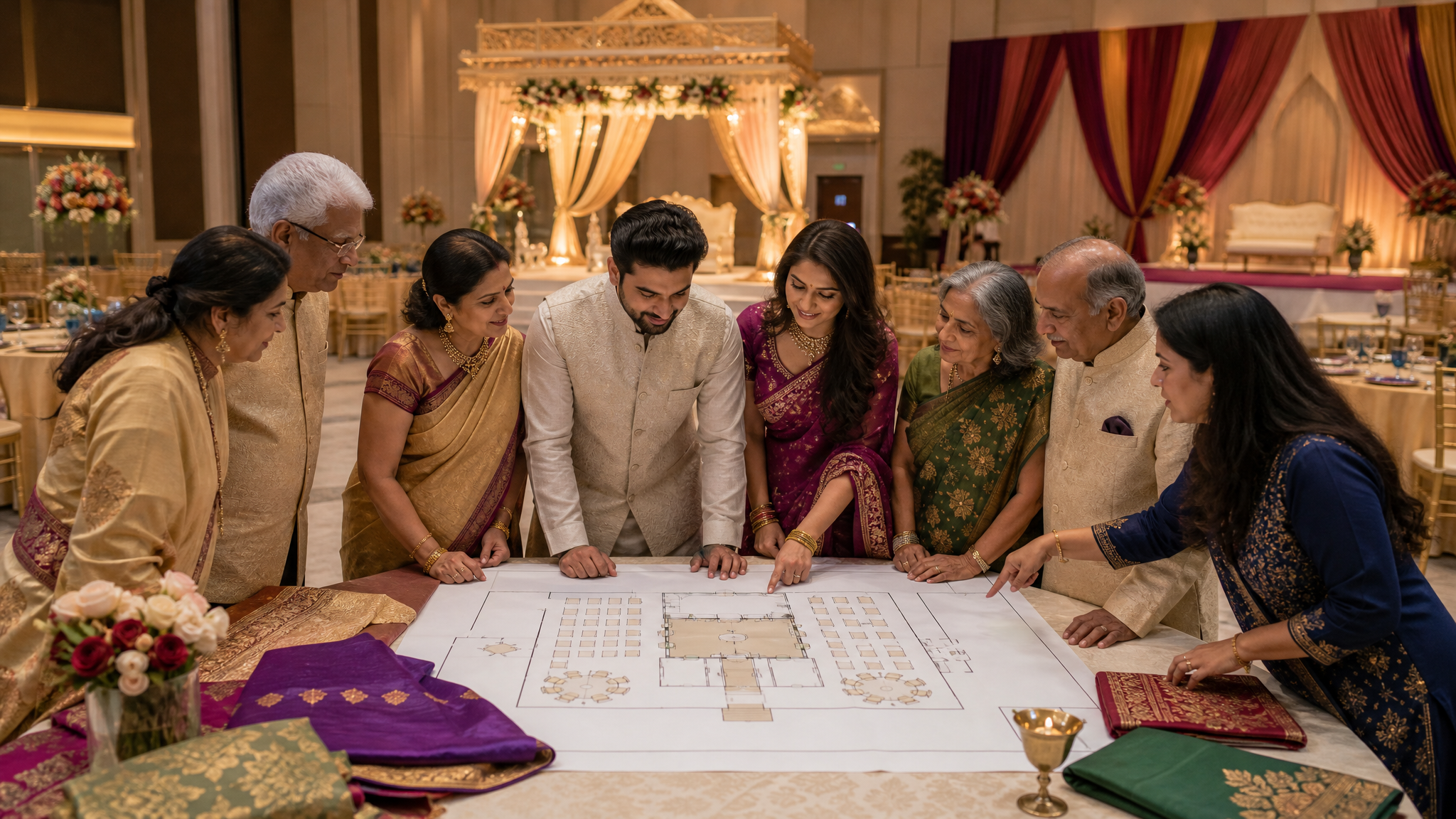
Indian Wedding Venue and Seating Planning: Rituals, Families, and Wedding Styles
Choosing an Indian wedding venue involves more than guest capacity. The space must support the ceremony, family responsibilities, food service, music, clothing, photography, accessibility, and the traditions that matter to the couple. A Punjabi sangeet, Sikh Anand Karaj, South Indian ceremony, Gujarati garba, Bengali wedding, Muslim nikah, Christian ceremony, or interfaith celebration may need a different layout.
This guide helps couples and families compare Indian wedding venues, plan seating, and create a comfortable flow for multiple ceremonies in India or the USA.
Start with the wedding events
Before touring a venue, list every event that needs a location. Some families use one venue for the wedding and reception, while others use a gurdwara, temple, church, community hall, home, hotel, banquet hall, or outdoor space for separate events.
- Engagement, roka, or family introduction
- Mehndi, haldi, or pithi
- Sangeet, garba, dandiya, or cultural performance
- Baraat, milni, or arrival procession
- Religious or civil wedding ceremony
- Meal, langar, lunch, dinner, or reception
- Family farewell, brunch, or post-wedding gathering
Indian wedding venue types
| Venue type | Works well for | Questions to ask |
|---|---|---|
| Gurdwara, temple, church, or religious venue | Religious ceremonies with established traditions | What are the rules for clothing, footwear, food, photography, seating, and timing? |
| Hotel or banquet hall | Multi-day weddings, receptions, guest rooms, and indoor plans | Can the room be divided for ceremony, meal, dance, and family needs? |
| Community or cultural center | Family-centered events with flexible food and decor planning | What are the kitchen, sound, decoration, parking, and cleanup rules? |
| Private home or backyard | Intimate ceremonies and family gatherings | How will weather, bathrooms, power, parking, neighbors, and accessibility be handled? |
| Outdoor garden or estate | Daytime rituals, photos, baraat, and relaxed receptions | What is the rain, heat, wind, lighting, flooring, and insect plan? |
| Destination or resort venue | Guest travel, several events, and a complete wedding weekend | What is included, and how will guests with mobility, dietary, or travel needs be supported? |
Regional and religious venue considerations
Punjabi, Sikh, South Indian, Bengali, Gujarati, Marathi, Rajasthani, Assamese, Odia, Kashmiri, Muslim, Christian, Jain, Buddhist, Parsi, and interfaith weddings may require different ceremony areas, food plans, sound arrangements, and family seating. Confirm the actual custom with the couple, family, officiant, and venue.
A venue should serve the wedding the family is planning, not a generic idea of what an Indian wedding is supposed to look like. Ask whether the space can support early ceremonies, quiet religious moments, group movement, dancing, and a meal without forcing every event into one layout.
Seating for the ceremony
Ceremony seating may depend on the officiant, family roles, religious practice, venue rules, and the couple’s preference. Some celebrations place immediate family near the couple, while others use open community seating or separate areas for elders and children.
- Confirm the couple’s preferred seating before printing a floor plan.
- Reserve accessible seating with clear sightlines.
- Give elders and guests with medical needs easy access to exits and restrooms.
- Keep a quiet area available for children, nursing guests, or anyone who needs a break.
- Ask the officiant whether any part of the ceremony has special seating or movement rules.
- Do not block pathways with decor, photography equipment, or guest bags.
Seating for meals and receptions
Meal service can be buffet, family-style, plated, community-style, or a combination. The seating plan should leave room for lines, servers, wheelchairs, children, elders, dietary questions, and a comfortable path between the dining and entertainment areas.
| Area | Planning need | Helpful detail |
|---|---|---|
| Family tables | Seats elders, parents, siblings, and close hosts | Place near the couple or stage only if the family wants that arrangement. |
| Guest tables | Supports conversation and mixed-age groups | Consider language, relationships, children, and guests who may arrive alone. |
| Food service | Prevents crowding and supports dietary needs | Label food clearly and provide accessible paths around buffet lines. |
| Children’s space | Gives families flexibility during long events | Keep it visible to caregivers and away from hot food, cords, and stairs. |
| Quiet or accessibility area | Supports guests who need less noise or easier movement | Offer a clear view or a way to follow important moments without entering crowded areas. |
| Vendor and service area | Keeps equipment and staff organized | Separate cameras, speakers, cables, gifts, and catering supplies from guest pathways. |
Family roles in venue planning
Many Indian weddings involve both families, elders, siblings, cousins, friends, and community hosts. Assign responsibilities early so the couple is not expected to answer every question on the wedding day.
- Couple: confirms priorities, guest experience, budget, and privacy.
- Parents and elders: explain family traditions, hosting preferences, and important ceremony needs.
- Coordinator: manages the timeline, vendors, room changes, and emergency decisions.
- Guest contact: answers transportation, lodging, dress, and accessibility questions.
- Food lead: confirms dietary labels, meal timing, service style, and family approvals.
- Venue lead: checks access, setup, cleanup, sound, lighting, and safety rules.
USA Indian wedding venue planning
USA venues may have rules about outside catering, open flames, religious objects, live animals, music volume, baraat routes, candles, food storage, alcohol, decor installation, and ceremony timing. Ask for written policies before signing.
For guests traveling from different states or countries, add hotel, parking, shuttle, weather, airport, and accessibility information. The venue should be realistic for the people attending, not only attractive in photographs.
Mandap, stage, and ceremony setup
A mandap, stage, chuppah-style structure, ceremonial table, altar, or seating platform may need additional space and a vendor. Measure ceiling height, doorway width, flooring, electrical access, rigging rules, and guest sightlines before approving the design.
For USA sourcing and rentals, read the related Indian wedding mandap and decor guide.
Music, dance, and procession logistics
Dhol, bhangra, garba, dandiya, live music, DJ performances, and family dances require a safe area for movement. If a baraat or procession is planned, confirm the route, weather plan, sound limits, traffic, accessibility, and who will guide guests.
Keep musicians, speakers, dancers, photographers, and guests from competing for the same narrow space. A simple floor plan can protect both the performance and the people enjoying it.
Venue questions before signing
- What is the maximum comfortable capacity for each event layout?
- Can the venue host a religious ceremony, reception, dance floor, and meal?
- Are outside caterers, sweets, florists, decorators, and photographers allowed?
- What are the policies for candles, incense, open flame, sacred items, and food?
- What time can vendors enter, and when must the event end?
- Are setup, cleanup, security, storage, and overtime fees separate?
- What happens if rain, heat, snow, smoke, or power problems affect the plan?
- Are restrooms, ramps, elevators, parking, and seating accessible?
- Can the venue support a baraat, family procession, or outdoor photographs?
- Who is the decision-maker on the event day?
Venue styles for different budgets and wedding plans
A smaller wedding can use a community hall, restaurant, home, or religious venue with focused decor. A larger wedding may need a hotel ballroom, convention space, estate, or multiple connected rooms. The most cost-effective venue is not always the one with the lowest rental price; consider catering restrictions, transportation, setup, decor, staffing, and cleanup.
Traditional, modern, minimalist, floral, regional, luxury, outdoor, destination, and fusion styles can all work when the layout supports the actual ceremony and guest experience.
Privacy, photography, and guest comfort
Venue plans may include guest lists, family addresses, room assignments, children’s needs, medical information, and private ceremony details. Share only what coordinators and vendors need. Ask guests before posting close-up images, and give the couple a way to communicate photography preferences.
How PunjabiRishtey fits into the family journey
PunjabiRishtey supports the matchmaking stage before couples and families begin selecting venues and organizing wedding events. Explore Punjabi matrimonial profiles, review USA matrimonial options, read membership information, or register a profile.
Frequently asked questions
What type of venue is best for an Indian wedding?
The best venue depends on the ceremony, guest count, family traditions, food, music, accessibility, budget, and whether several events share the same space. Religious venues, hotels, community halls, homes, and outdoor sites can all work.
How should guests be seated at an Indian wedding?
Follow the family and officiant’s preferences. Provide clear sightlines, accessible seating, space for elders and children, and open pathways for ceremony and meal service.
What should USA families ask an Indian wedding venue?
Ask about outside catering, decor, open flame, religious items, sound, baraat routes, vendor access, parking, accessibility, cleanup, insurance, and weather backup.
Do all Indian weddings need a mandap?
No. Ceremony structures depend on the religion, region, family, officiant, venue, and personal style. Confirm what the actual ceremony requires.
How can families avoid venue problems?
Write down the full event schedule, assign decision-makers, confirm venue rules in writing, create a floor plan, and keep a backup plan for weather, delays, access, and vendor changes.
Final takeaway
Indian wedding venue planning works best when the space follows the people and ceremonies rather than forcing every celebration into the same template. Start with the event list, involve both families, confirm cultural and religious needs, plan seating for comfort and access, and review every venue rule before signing.
Leave a Reply