Indian Wedding Makeup and Hairstyles: Regional Styles, Ceremony Planning, and Family Traditions
Indian wedding beauty planning is shaped by region, religion, ceremony, clothing, weather, family expectations, skin needs, hair texture, and personal style. A Punjabi bride, South Indian bride, Bengali bride, Gujarati bride, Muslim bride, Sikh groom, or couple planning an interfaith wedding may choose a very different look. There is no single makeup or hairstyle that represents every Indian wedding.
This guide helps couples, family members, and guests plan Indian wedding makeup and hairstyles for mehndi, haldi, sangeet, religious ceremonies, receptions, and USA-based celebrations.
Plan beauty looks by ceremony
| Event | Look and hair priorities | Planning reminder |
|---|---|---|
| Engagement or roka | Polished, comfortable makeup with a style that works for conversation and photographs | Choose a trial look if the event is being photographed professionally. |
| Mehndi | Fresh makeup, comfortable hair, and hands free for henna | Keep sleeves, jewelry, and hair accessories practical during the appointment. |
| Haldi or pithi | Light makeup, protected hair, and a style that can handle turmeric and outdoor activity | Use products and clothing that the family is comfortable getting stained. |
| Sangeet or garba | Long-wear makeup, secure hair, and movement-friendly accessories | Test the look under stage lighting and during dancing. |
| Religious ceremony | Makeup and hair that respect the ceremony, dress, head covering, and venue expectations | Ask the couple, family, officiant, or venue about styling rules. |
| Reception | Formal makeup, hairstyle, and accessories suited to evening photography | Plan for touch-ups, humidity, dancing, and changing jewelry. |
Regional Indian wedding makeup styles
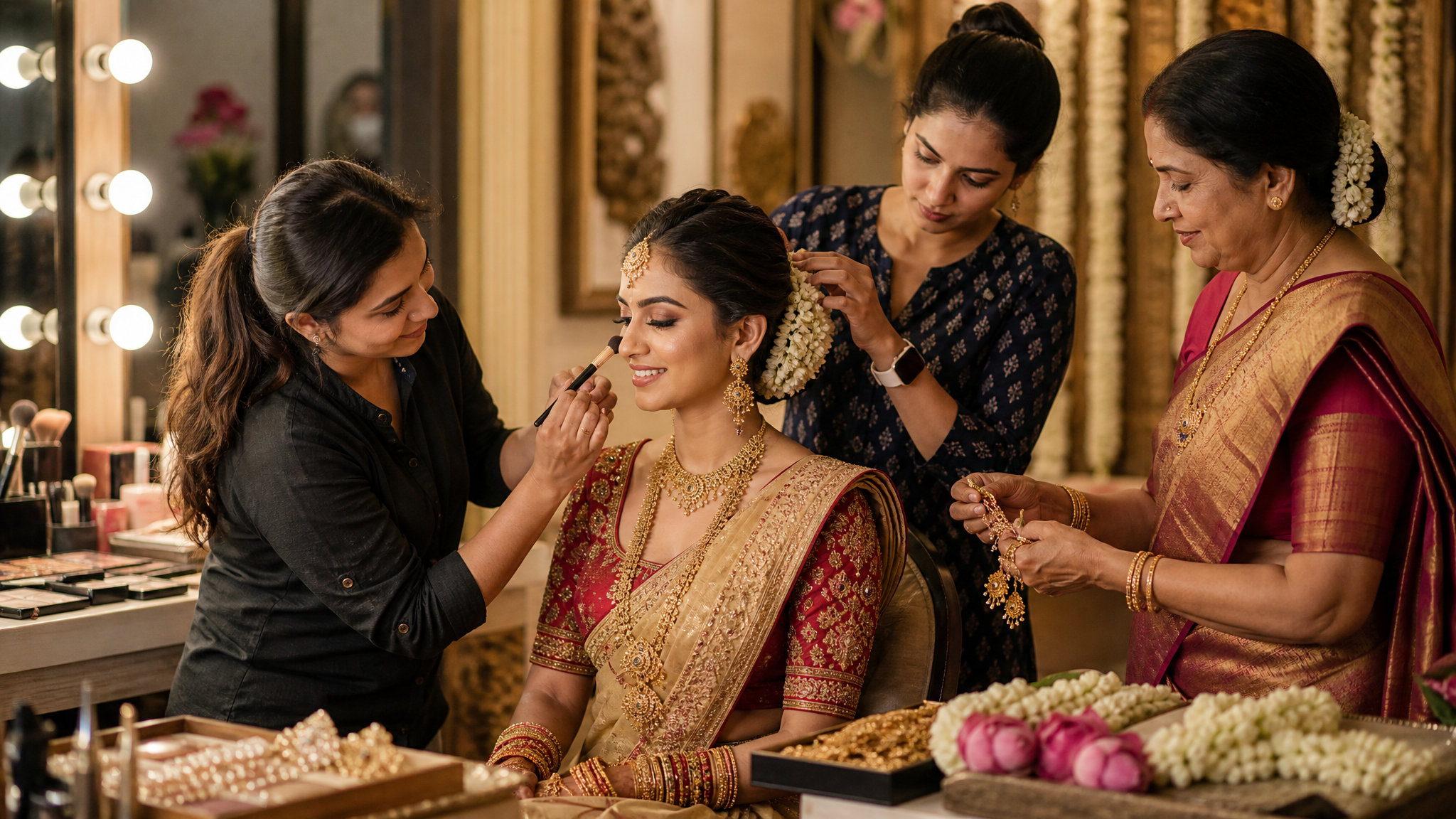
Regional beauty traditions are diverse and family-specific. Punjabi weddings may include bold eyes, glowing skin, statement jewelry, and a polished dupatta or turban arrangement. South Indian weddings may pair silk sarees and temple-inspired jewelry with a structured bun, braid, or jasmine-style flowers. Bengali, Gujarati, Marathi, Rajasthani, Assamese, Odia, Kashmiri, and other communities may have their own preferences for color, forehead details, hair, and jewelry.
Use regional references as a starting point, not a rule. Ask the bride, groom, family, and stylist what feels appropriate for the actual ceremony.
Makeup considerations for Sikh, Hindu, Muslim, Christian, Jain, Buddhist, Parsi, and interfaith weddings
Wedding makeup should respect the ceremony, family, religious setting, clothing, and the person wearing it. A Sikh ceremony may involve specific head-covering and gurdwara expectations. A Muslim wedding may include nikah, walima, modesty preferences, and separate event styling. Christian, Jain, Buddhist, Parsi, Hindu, and interfaith celebrations may have different venue and family expectations.
- Ask before changing or covering religious items, hair, or headwear.
- Confirm whether the ceremony requires a head covering or modest styling.
- Keep makeup and hair comfortable for long ceremonies.
- Respect personal choices about cosmetics, fragrance, false lashes, and hair extensions.
- Do not assume that a community’s style applies to every family.
Indian bridal makeup: build the look around the outfit
Start with the outfit, jewelry, dupatta, saree drape, lehenga, sherwani, turban, or veil. A heavily embellished outfit may work best with balanced makeup, while a simple outfit may allow a stronger eye, lip, or jewelry focus. The goal is coordination, not a fixed formula.
| Outfit detail | Beauty planning idea | Check before the event |
|---|---|---|
| Heavy embroidery or bright color | Keep the skin finish and eye look balanced | Test the makeup under venue and camera lighting. |
| Statement jewelry | Choose hair placement that supports the jewelry without crowding the face | Bring the actual jewelry to the trial if possible. |
| Veil or dupatta over the head | Secure hair and base makeup for movement and fabric contact | Practice the full setup with pins and accessories. |
| Silk saree or regional drape | Coordinate bun, braid, flowers, and forehead details with the drape | Confirm how long the hair arrangement must hold. |
| Sherwani, kurta, or formal menswear | Use grooming, skin preparation, and hair styling that remain natural | Schedule trimming, facial care, or haircuts early enough to recover. |
Indian wedding hairstyles by hair type and event
Common choices include buns, braids, half-up styles, waves, ponytails, short formal styling, turban preparation, and hair worn with flowers or jewelry. The best style depends on hair length, texture, climate, outfit, veil, jewelry, comfort, and movement.
- Bun with flowers for sarees, formal ceremonies, and traditional styling
- Braid with jewelry or flowers for regional and South Indian-inspired looks
- Half-up waves for sangeet, reception, and contemporary fusion styles
- Secure updo for dancing, outdoor ceremonies, and humid weather
- Short hair styling with jewelry, clips, waves, or a carefully placed veil
- Natural texture styling when the wearer wants hair to remain recognizable and comfortable
- Turban or headwear preparation for ceremonies and family traditions
Makeup and hairstyle trials
A trial helps identify product reactions, color concerns, hair weight, accessory problems, and timing. Test the complete look with the outfit, jewelry, veil, headwear, and lighting when possible.
- Share ceremony dates, outfit colors, venue conditions, and cultural requirements.
- Bring reference photos that reflect the wearer’s actual features and desired style.
- Test foundation, concealer, lipstick, lashes, hair products, and fragrance sensitivity.
- Wear the style long enough to identify discomfort or slipping accessories.
- Photograph the look in daylight, indoor light, and flash if the event will be photographed.
- Record the products and touch-up items used.
USA Indian wedding beauty planning
USA-based couples may work with South Asian bridal stylists, local makeup artists, salon teams, independent artists, hair specialists, or destination beauty vendors. Ask whether the artist has experience with sarees, lehengas, dupattas, turbans, jewelry, long ceremonies, darker skin tones, textured hair, and multi-event schedules.
Confirm travel fees, early-morning availability, touch-ups, assistant requirements, lighting, workspace, sanitation, deposits, cancellation rules, and what the artist expects the family to provide.
Beauty planning for family members and guests
Parents, siblings, grandparents, cousins, and guests may need styling for several events. Coordinate without pressuring everyone to look identical. A family can share colors or accessories while allowing different comfort levels, ages, cultures, and budgets.
- Offer a clear schedule so elders and children are not left waiting.
- Provide fragrance-free or sensitive-skin options where possible.
- Leave space for religious or medical needs.
- Keep emergency items such as pins, hair ties, tissues, blotting paper, and comfortable footwear.
- Make sure stylists know the photography schedule and ceremony start time.
Weather, travel, and long-event preparation
Heat, humidity, cold, snow, wind, long travel, and multiple venue changes can affect makeup and hair. Build time for touch-ups, secure accessories properly, carry a small emergency kit, and avoid trying an untested product on the wedding day.
For venue logistics, see the related Indian wedding venue and seating planning guide.
Questions to ask a wedding makeup artist or hairstylist
- Have you worked with the planned outfit, jewelry, veil, or headwear?
- Are you comfortable styling the required skin tones, hair textures, and ages?
- How long will each person take, and how many assistants are needed?
- What products, lashes, extensions, tools, and touch-up items do you provide?
- How do you handle allergies, sensitive skin, fragrance concerns, or product reactions?
- Can you travel to the home, hotel, venue, or multiple locations?
- What are the deposit, cancellation, travel, overtime, and early-start terms?
- Can the completed look be tested with the actual outfit and jewelry?
Privacy and personal-image consent
Beauty vendors may receive photos, names, addresses, schedules, health-related information, and private family details. Share only what is needed. Ask before an artist posts a before-and-after image or tags a client, especially when children or religious ceremonies are involved.
How PunjabiRishtey fits into the family journey
PunjabiRishtey supports the matchmaking stage before couples and families begin planning wedding beauty, clothing, venues, and rituals. Explore Punjabi matrimonial profiles, review USA matrimonial options, read membership information, or register a profile.
Frequently asked questions
How early should Indian wedding makeup be booked?
Book early for popular dates, multiple ceremonies, travel, large families, or artists with limited availability. Schedule a trial before the main event when possible.
What makeup style is best for an Indian wedding?
The best style matches the ceremony, outfit, jewelry, venue, weather, personal comfort, and family preferences. Regional inspiration should be adapted rather than copied as a fixed rule.
What hairstyle works with an Indian wedding saree?
Buns, braids, waves, half-up styles, and natural texture can all work. Choose based on the saree drape, jewelry, flowers, veil, hair type, and how long the style must last.
Should family members have the same makeup style?
No. Families can coordinate colors or formality while respecting different ages, cultures, skin needs, budgets, and comfort levels.
How can a USA wedding family prepare for several beauty events?
Create a schedule, reserve artists, test complete looks, provide a suitable workspace, plan touch-ups, and keep emergency supplies ready at each venue.
Final takeaway
Indian wedding makeup and hairstyles are most successful when they reflect the wearer rather than a generic template. Plan by ceremony, respect regional and family traditions, test the full look, choose experienced vendors, and leave enough time for comfort, privacy, and unexpected changes.
Leave a Reply