Preparing for a Hindu marriage abroad involves much more than choosing a beautiful mandap. Couples living in the USA, Canada, the UK, Australia, or another country may be planning a destination wedding in India while coordinating a muhurat, several traditional events, international travel, family expectations, vendors, and civil registration questions. A thoughtful plan helps the couple protect the spiritual purpose of the ceremony while making the practical experience comfortable for every guest.
This Hindu wedding planning guide is intended for couples and families preparing from outside India. Hindu customs vary by region, community, family tradition, language, and the guidance of the Pandit or temple. Treat the checklist as a planning framework, then confirm ceremony details with your officiant, venue, registrar, consulate, or qualified professional. Legal procedures and documents can vary according to citizenship, residence, location, and the registration route chosen.
Define the wedding you want to create
Begin by discussing the purpose and shape of the celebration. A Hindu wedding may include an engagement, Roka, Ganesh or other family puja, Mehndi, Sangeet, Haldi, wedding ceremony, pheras, vidaai, reception, and post-wedding gatherings. Some couples want a traditional multi-day celebration in a family city. Others prefer a smaller ceremony followed by a reception for international guests.
Write down your priorities before relatives and vendors begin making suggestions. Decide the approximate guest count, location, season, event length, ceremony style, budget range, and traditions that you want to include. If the couple comes from different regions or faith backgrounds, discuss which customs are meaningful to each family and how they can be included respectfully.
Useful questions include:
- Which ceremony events are essential for our families?
- Will the main ceremony and reception be at one venue?
- Who will attend the pheras, and which events have wider invitations?
- How will we explain rituals to guests who are unfamiliar with Hindu weddings?
- Which responsibilities can family members manage locally?
Confirm the muhurat and ceremony sequence with your Pandit
The muhurat, or auspicious timing, may be important to your family and should be confirmed with the Pandit or qualified religious adviser. Do not copy a time from another wedding or assume that every Hindu community follows the same calculation. Ask your officiant to explain the selected time, the ceremony’s expected length, and which events must happen before or after it.
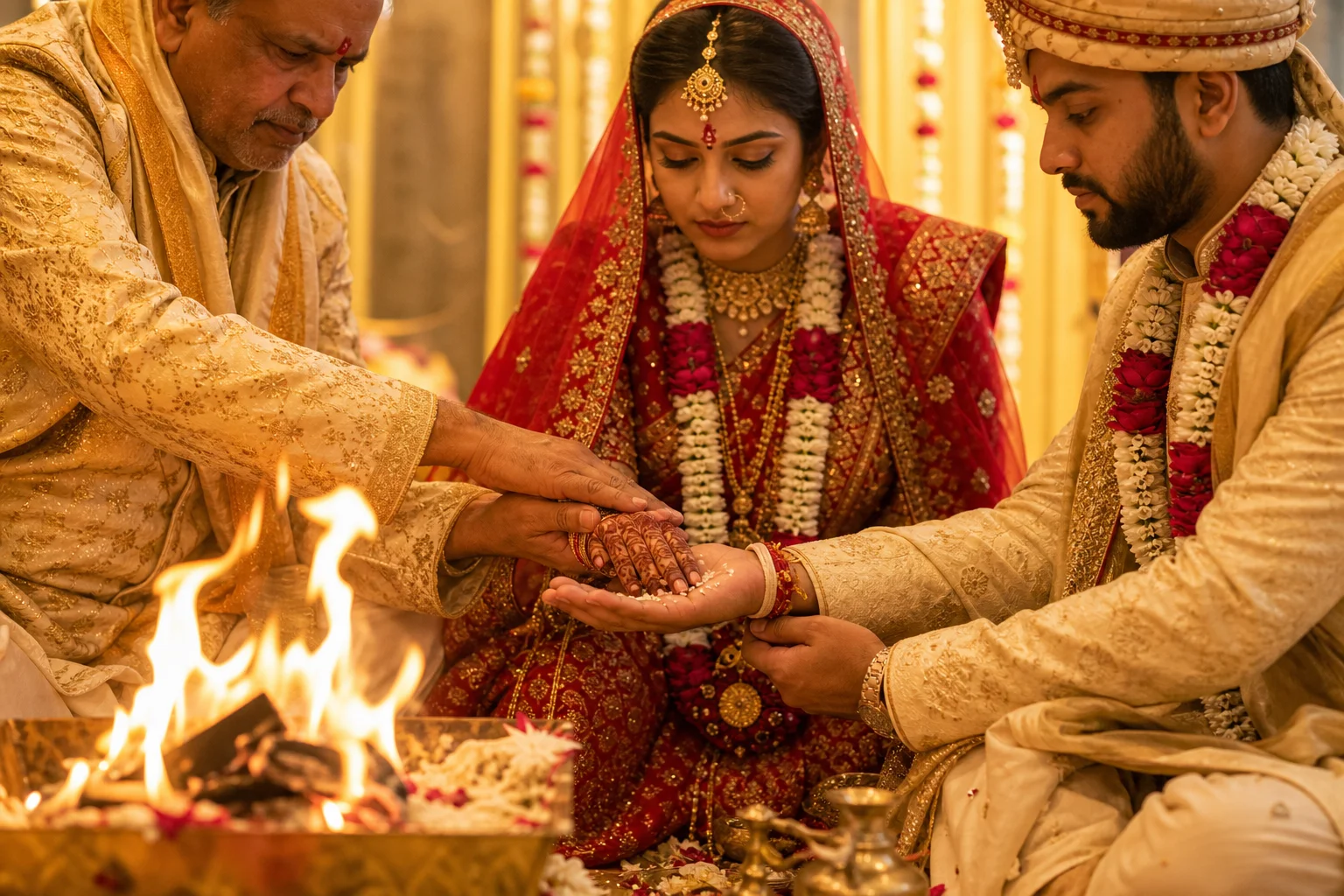
Request a written ceremony outline. Depending on your tradition, it may include Ganesh puja, varmala or jai mala, kanyadaan, hasta milap, the sacred fire, pheras or saptapadi, sindoor, mangalsutra, blessings, and vidaai. The order and inclusion of rituals vary, so let the Pandit guide the couple rather than treating a generic internet list as universal.
Ask for a complete samagri list and identify who will source each item. Confirm whether the Pandit brings materials or expects the family to provide them. Pack ritual items in labeled containers and assign one responsible person to check them before the ceremony.
Build a Hindu ceremony coordination checklist
- Confirm the muhurat and ceremony duration with the Pandit.
- Record the Pandit’s arrival time and contact information.
- Request the ceremony sequence in writing.
- Ask for the specific samagri list for your family’s tradition.
- Confirm the mandap layout, sacred fire arrangements, and venue safety rules.
- Plan seating for parents, grandparents, and ceremony participants.
- Explain photography, music, and guest movement expectations to suppliers.
- Schedule the couple’s arrival with enough time before the muhurat.
Choose a venue that can support the rituals
A hotel ballroom, resort, farmhouse, temple, banquet venue, or family property can work for a Hindu wedding, but the venue must support the ceremony’s practical needs. Ask about fire-safety procedures for the havan or sacred fire, ventilation, power, weather backup, sound restrictions, kitchen arrangements, accessibility, parking, and privacy for the wedding party.
During a live video tour, inspect the entrance, guest seating, mandap area, bride and groom preparation rooms, bathrooms, dining space, and route between the ceremony and reception. If the wedding is outdoors, confirm an indoor alternative and establish the weather decision deadline. A beautiful venue becomes stressful if guests must cross a busy road, elders have no seating, or the ceremony area cannot be protected from rain or heat.
Check whether the venue allows the decor, music, fire, flowers, food service, and photography you expect. Get all important permissions and inclusions in writing.
Review documents and marriage registration with the right authority
A Hindu ceremony and civil registration should be planned as related but separate questions. The process can depend on the couple’s citizenship, residence, the state where the marriage takes place, whether either partner has been married before, and the legal route selected. Ask the relevant marriage registrar, consulate, or qualified legal professional for current guidance.
Prepare a secure folder for passports, identity documents, proof of address, visa or immigration information, and any documents connected with a previous marriage if relevant. Ask the authority whether translations, affidavits, photographs, witnesses, appointments, or notice periods apply. Confirm how and when the marriage certificate will be issued, and whether additional steps are needed for immigration, insurance, or name changes.
Do not publish a fixed document list as if it applies to every couple. Requirements can vary, and a Pandit or venue should not be treated as a substitute for legal advice. Keep digital copies in secure storage and printed copies with a trusted family lead.
Create a Hindu wedding planning timeline
A realistic timeline protects the muhurat and gives the couple room to enjoy the events. Work backward from the wedding date. At the early stage, confirm the ceremony adviser, city, venue, guest range, budget, and registration questions. Next, book major vendors, reserve accommodation, send invitations, and start collecting travel details. In the final phase, confirm the RSVP list, rooming plan, transport, ceremony materials, vendor payments, seating, and emergency contacts.
A typical week may include a welcome event, Roka, Mehndi, Sangeet, Haldi, family puja, wedding ceremony, pheras, reception, and post-wedding gathering. Each event needs its own guest list, dress guidance, catering, venue layout, transportation, photography priorities, and family lead.
Leave breathing space between appointments. The couple needs time for fittings, meals, rest, photography, and private family moments. On the main day, schedule makeup, portraits, transport, and the couple’s arrival with a buffer before the muhurat. A coordinator should handle routine vendor questions while the couple prepares.
Plan the pheras and key rituals with care
Explain the ceremony to international guests without reducing it to a performance. A short guide can describe the role of the sacred fire, the vows or commitments represented by the pheras, the participation of parents, and the meaning of the blessings. Your Pandit can help you use language that accurately reflects your tradition.
Confirm who will participate in kanyadaan, hasta milap, the pheras, readings, music, and blessings. Some families may include regional rituals before or after the core ceremony. Others may adapt the format for an interfaith or multicultural wedding. Discuss adaptations openly with both families and the officiant.
Plan practical details such as where the couple will sit, how elders will reach the mandap, where the ritual items will be placed, how the photographer will work without interrupting the ceremony, and how guests will move to the reception. Respectful coordination allows the spiritual moments to remain central.
Arrange international guest travel and accommodation
International guests need a simple, reliable flow from arrival to departure. Collect each guest’s contact information, flight or train details, hotel dates, room preferences, dietary needs, accessibility requirements, and attendance at each event. Use one central RSVP record so the caterer, hotel, venue, and transport team receive the same final information.
Prepare a welcome guide with the hotel address, airport transfer instructions, event itinerary, dress suggestions, weather advice, emergency contacts, currency information, and a short explanation of the ceremonies. Arrange named drivers or a clearly identified hospitality desk. Build a backup plan for delayed flights, traffic, and lost luggage.
Older guests and young children may need rooms near elevators, shorter routes, regular seating, and quiet periods. Guests unfamiliar with India may also need support with SIM cards, local transport, and translation.
Select vendors for organization and cultural sensitivity
Ask vendors to show relevant work, but evaluate their process as carefully as their portfolio. A photographer should understand ceremony restrictions and the family’s priorities. A decorator should know how to build a mandap that is safe and suitable for the venue. A caterer should understand the guest count, dietary needs, service timing, and regional preferences. Makeup, music, transport, and entertainment suppliers should all provide a named event-day contact.
Every contract should explain deliverables, staff, setup, travel, taxes, overtime, payment milestones, cancellation terms, and contingency arrangements. Keep the documents in a shared planning space. The PunjabiRishtey Wedding Planner for NRI Hindu wedding planning can help couples coordinate vendors, timelines, guests, and family responsibilities while decisions are being made across countries.
Coordinate family roles without losing the couple’s voice
Family collaboration works best when each person has a clear role. Assign a Pandit liaison, venue lead, guest and RSVP lead, accommodation lead, transport lead, vendor lead, budget lead, and emergency contact. Ask each person to record updates in the shared system rather than distributing different versions of the schedule.
Agree on which decisions require the couple’s approval. Relatives can contribute knowledge and energy without turning every detail into a debate. A weekly planning call can review open tasks, payments, guest changes, vendor questions, and risks in one place.
Use a Hindu marriage preparation checklist
- Agree on the wedding format, guest size, city, and priorities.
- Confirm the muhurat and ceremony sequence with the Pandit.
- Request the samagri list and assign responsibility for sourcing it.
- Inspect the venue and confirm mandap, fire, weather, accessibility, and sound arrangements.
- Ask the registrar, consulate, or qualified professional about current registration guidance.
- Book vendors with written agreements and named event-day contacts.
- Build a multi-event timeline with buffers and rest periods.
- Collect guest travel, accommodation, RSVP, dietary, and accessibility information.
- Explain rituals and clothing expectations to international guests.
- Assign family roles and keep one shared schedule.
- Prepare alternatives for weather, traffic, delayed travel, illness, equipment, and missing supplies.
Frequently asked questions about preparing for a Hindu marriage abroad
When should we confirm the muhurat?
Begin the conversation with your Pandit early, before finalizing the full event schedule. The selected timing affects the ceremony day, transport, vendor arrival, photography, catering, and guest communication.
Can we combine Hindu traditions from two regions?
Many families discuss a blended format, but the appropriate order and meaning should be agreed with both families and the officiant. Avoid assuming that a ritual has the same role in every community.
Does a Hindu ceremony automatically provide a marriage certificate?
Ask the relevant registrar or qualified professional. Religious ceremonies and civil registration may involve different steps, and the process varies by circumstance and location.
How can couples make a wedding in India less stressful from abroad?
Use one schedule, one guest record, written vendor agreements, clear family roles, and a local person empowered to solve routine problems. The PunjabiRishtey Wedding Planner can help organize those moving parts so the couple can stay connected to the meaning of the ceremony.
Conclusion
Preparing for a Hindu marriage abroad requires both spiritual attention and practical discipline. Confirm the muhurat and rituals with your Pandit, choose a venue that can support the ceremony, ask the proper authorities about registration, and create a guest and vendor system that works across time zones.
When the plan is clear, families have room to celebrate instead of constantly solving avoidable problems. Whether your wedding is a traditional Hindu ceremony, a Punjabi celebration, or a multicultural union, careful preparation can make the experience welcoming, respectful, and joyful for everyone.