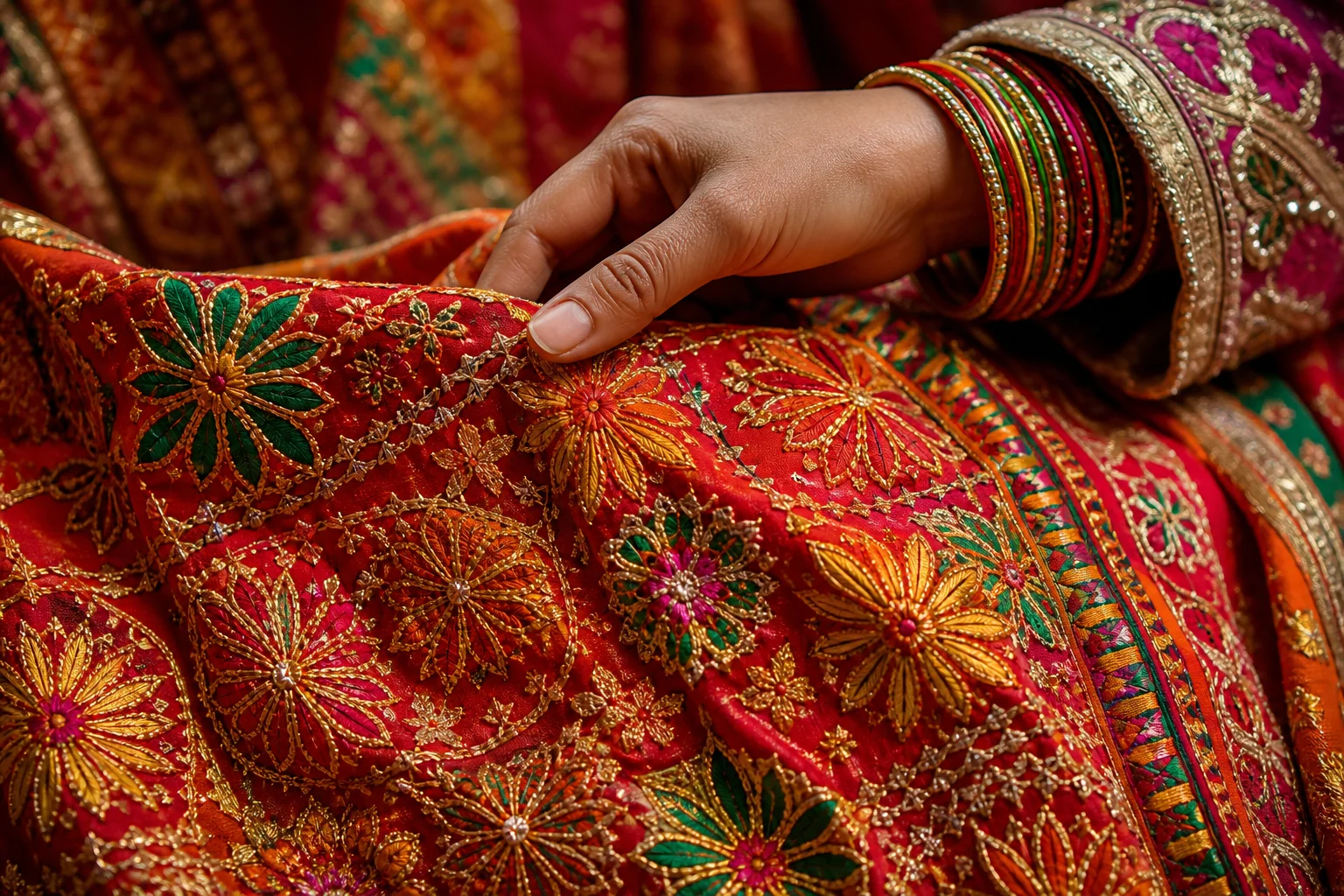
When you walk through a punjabi village during a festive occasion, your eyes are immediately drawn to a riot of colors draped over the shoulders of the women. This is Phulkari—literally meaning ‘flower work.’ It is not just an embroidery technique; it is a canvas of emotions, a storytelling medium, and the very fabric of our heritage.
The Art of the Needle: More Than Just Stitches
Phulkari is an art form that was traditionally passed down from mothers to daughters. In a world before industrial machines, every stitch was a meditation. Using a simple needle and colorful silk threads (Pat), women would spend months creating intricate floral and geometric patterns on coarse cotton cloth (Khaddar). For a wedding, a bride would wear a specific type of Phulkari called a ‘Bagh’ (garden), where the embroidery is so dense that the base cloth is completely hidden.
Cultural Significance in Punjabi Matrimony
In the realm of matrimony, Phulkari holds a sacred place. It is a symbol of domesticity, love, and a mother’s blessings for her daughter’s new life. During sikh and hindu weddings alike, the Phulkari dupatta is often used during key rituals, acting as a protective and auspicious covering for the couple.
Preserving the Craft in the Modern World
Today, while machine-made versions abound, the true value of a hand-stitched Phulkari remains unmatched. It represents a slower, more intentional way of life. For families building new rishtey, gifting a Phulkari is a way of saying that we value our roots. It is a piece of art that carries the warmth of the Punjab in every thread.
Every Phulkari tells a story. What story does your family’s heirloom carry? As we celebrate these vibrant threads, we ensure that our heritage remains as bright as the silk itself.
Leave a Reply