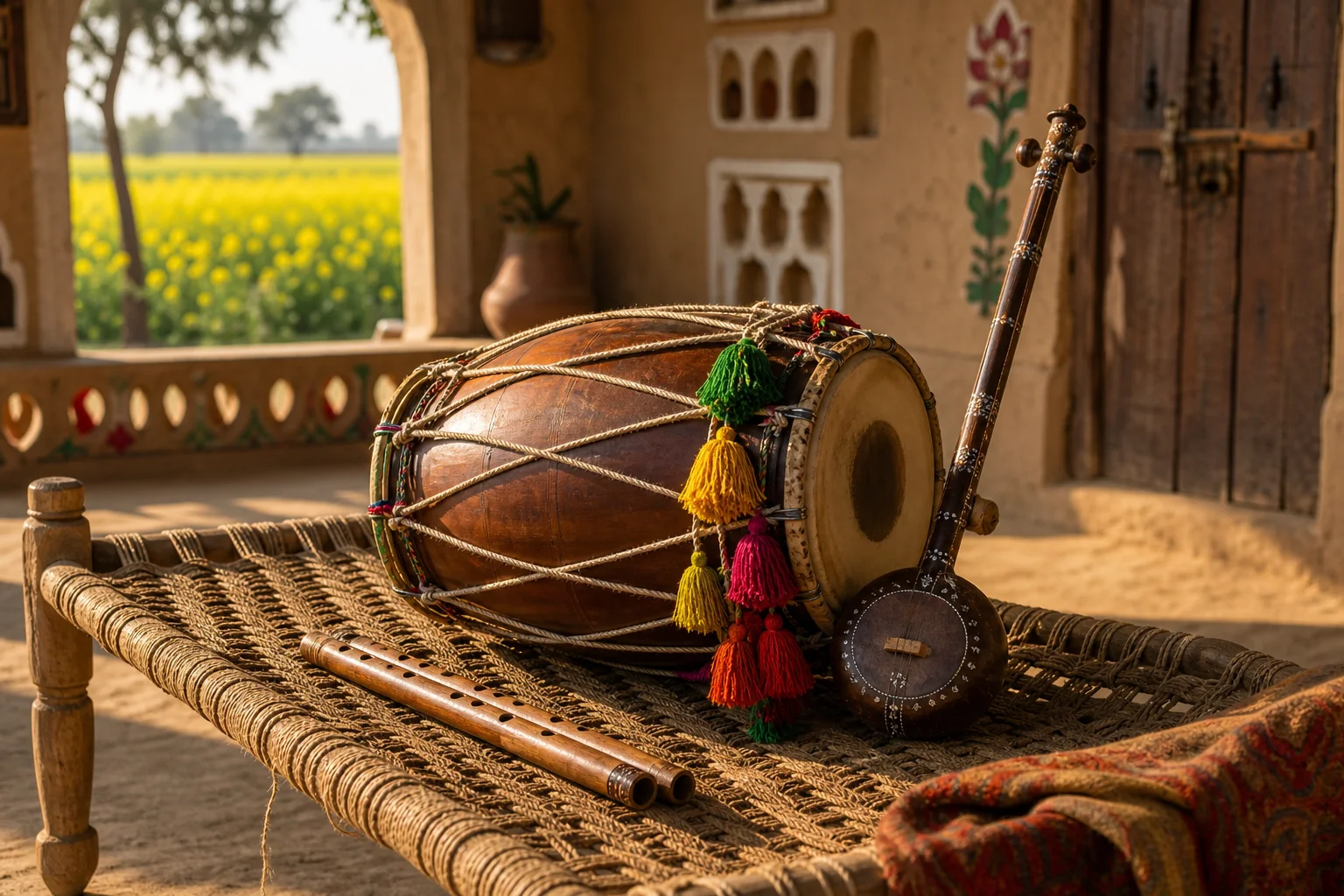
The spirit of the Punjab is best expressed through its sound. It is a sound that is earthy, powerful, and deeply resonant with the land. From the boisterous beats of the Dhol to the soulful twang of the Tumbi, punjabi folk instruments are the voices of our ancestors, echoing through the mustard fields and village squares.
The Dhol: The Heartbeat of Celebration
No wedding is complete without the Dhol. This large, double-sided drum is more than just an instrument; it is a call to joy. Its deep, thumping bass is enough to get anyone on their feet. Traditionally made from mango or shisham wood, the Dhol has been the rhythmic anchor of our celebrations for centuries, symbolizing the strength and energy of the community.
The Tumbi and Algoza: The Soul of Folk Songs
While the Dhol brings the energy, the Tumbi brings the soul. This single-string instrument, made famous by legends like Lal Chand Yamla Jatt, has a unique, high-pitched sound that is synonymous with Punjabi folk music. Beside it, the Algoza (double flute) adds a hauntingly beautiful layer to the melodies, often played during festivals and gatherings where rishtey are formed and celebrated.
Music as a Bridge for Matrimony and Heritage
In both sikh and hindu traditions, music serves as a bridge between the spiritual and the social. Whether it is the devotional hymns in a Gurudwara or the lively folk songs at a Sangeet, these instruments carry the cultural DNA of our people. For those navigating the world of matrimony, this shared musical heritage is a powerful point of connection, reminding us of our collective identity.
The music of Punjab is the sound of resilience and joy. By keeping these traditional instruments alive, we keep the heartbeat of our culture strong.
Leave a Reply