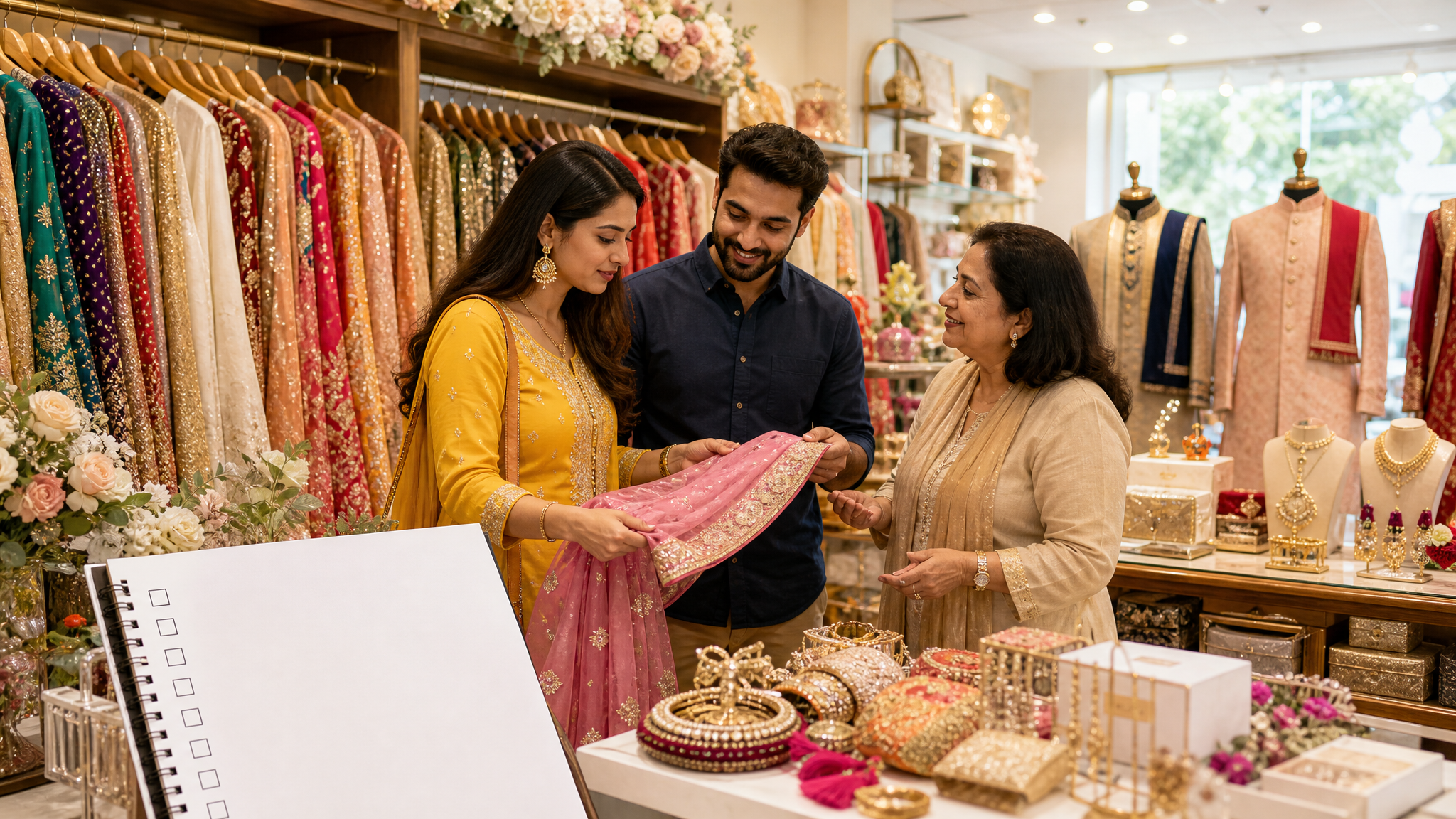
Where to Shop for Indian Wedding Items in the USA—and What May Be Hard to Find
Planning an Indian wedding in the USA can make shopping easier in some ways and more complicated in others. Major cities have South Asian boutiques, jewelry stores, grocery markets, florists, decorators, tailors, and online retailers. At the same time, certain regional textiles, custom ritual items, exact food ingredients, and last-minute alterations may require advance ordering or help from family in India.
The most practical approach is to divide the shopping list into three groups: items that are easy to buy locally, items that are better ordered early, and items that may need a trusted specialist or a family source in India.
Start with a wedding shopping inventory
Before visiting stores, list every event and the items needed for it. A Punjabi wedding, South Indian wedding, Bengali wedding, Muslim nikah, Sikh Anand Karaj, Christian wedding, or another celebration may require different clothing, ceremony materials, jewelry, food, and decor.
| Category | Examples | Shopping question |
|---|---|---|
| Clothing | Lehenga, saree, sherwani, kurta, dupatta, turban | Is custom fitting or draping support needed? |
| Jewelry | Earrings, bangles, necklace, kalire, family pieces | Can it be viewed, sized, and insured locally? |
| Ceremony | Ritual items, trays, garlands, cloth, accessories | Does the officiant require a specific version? |
| Decor | Flowers, mandap pieces, candles, fabrics, signage | Can the venue and florist supply the materials? |
| Gifts | Welcome baskets, favors, family gifts | Can items be shipped or purchased in bulk? |
Where people commonly shop in the USA
Availability varies by city, but several types of USA shopping destinations are useful:
- South Asian bridal boutiques: Useful for lehengas, sarees, sherwanis, bridal accessories, fitting, and styling advice.
- Indian clothing and jewelry stores: Often carry guest outfits, family clothing, bangles, costume jewelry, and accessories.
- Indian grocery markets: Helpful for spices, snacks, sweets, serving items, and some ceremony-related supplies.
- Specialty online retailers: Useful for clothing, jewelry, invitations, favors, decor, and items that are not available locally.
- Local florists and event decorators: Can create garlands, centerpieces, ceremony backdrops, and reception decor when given clear references.
- Tailors and alteration specialists: Important for blouse fitting, lehenga adjustments, sherwani sleeves, dupatta finishing, and last-minute repairs.
- Community networks: Families, gurdwaras, temples, mosques, churches, and cultural groups may know trusted vendors, but verify current availability and pricing independently.
Search results and store inventories change. Confirm measurements, delivery windows, return terms, appointment requirements, and whether a vendor is serving your area before paying a deposit.
Indian wedding clothing in the USA
Indian clothing is among the easiest wedding categories to source in the USA, especially in metropolitan areas and through online retailers. Brides may find lehengas, sarees, anarkalis, salwar suits, and reception outfits. Grooms may find sherwanis, kurta-pajamas, bandhgalas, safa or turban accessories, and footwear.
Even when a garment is available, fitting can take time. Ask whether the store offers alterations, whether the blouse is stitched or unstitched, how much seam allowance is included, and whether the final drape or turban style requires an experienced person.
What to order early
- Custom bridal lehengas and heavily embroidered outfits
- Blouses requiring detailed fitting or special necklines
- Coordinated family clothing in several sizes
- Regional turbans, pagris, dupattas, or specialty textiles
- Matching outfits for a wedding party
Jewelry and wedding accessories
USA boutiques and online stores may offer gold jewelry, imitation jewelry, kundan-style sets, bangles, earrings, hair accessories, kalire, bindis, waist belts, and groom accessories. Families should compare metal quality, stone settings, return policies, sizing, insurance, and delivery dates.
Some families bring heirloom jewelry from India. If you travel with valuable pieces, keep records, use secure storage, and check current customs and insurance requirements. Do not place important jewelry in checked luggage.
Flowers, garlands, and decor
Local florists and Indian wedding decorators in the USA can often create fresh garlands, bouquets, mandap flowers, table arrangements, backdrops, and reception decor. Artificial garlands and reusable fabric decor may be easier to order online and transport between events.
Ask a florist whether the requested flowers are in season, whether the design can be recreated with local alternatives, and how long garlands will remain fresh. Exact regional flowers may not be available in every city or at every time of year.
Food, sweets, and ceremony ingredients
Indian grocery stores can provide many spices, flours, snacks, pickles, sweets, teas, serving items, and packaged ingredients. Caterers may prepare regional menus, including Punjabi, Gujarati, South Indian, Bengali, Hyderabadi, or other styles.
Some ingredients may be restricted, seasonal, difficult to transport, or unavailable in the exact form a family expects. Fresh specialty leaves, particular flowers, regional sweets, and homemade items should be discussed with the caterer well in advance. Do not assume a recipe can be reproduced exactly without tasting and testing.
What may be hard to find in the USA
“Not available” depends on the city, season, vendor, and budget. Items that may be difficult to source include:
- Exact regional textiles, handwoven fabrics, or artisan embroidery
- Specific family or community ritual items required by an officiant
- Fresh flowers or leaves that are seasonal in India
- Highly customized jewelry or heirloom-style reproductions
- Traditional sweets with a short shelf life
- Specialty utensils, trays, or decor from a particular region
- Matching clothing for a large family group with unusual measurements
- Last-minute alterations during major wedding seasons
- A vendor who can combine several regional styles accurately
When an item is difficult to find, consider a local substitute that preserves the purpose and feeling of the ritual. Ask the couple, family elders, officiant, or a specialist before replacing an item that has religious or cultural significance.
When ordering from India may help
Families may source certain textiles, jewelry, clothing, invitation designs, or specialty items from India when they need a particular artisan, regional style, or family connection. Ordering internationally adds customs, shipping, sizing, payment, return, and delay risks.
Order early, request measurements in writing, confirm the total delivered cost, and avoid sending irreplaceable or irreplaceable-to-you family items through an unverified seller. A trusted relative or established specialist may help, but recommendations should still be checked.
USA shopping timeline
- Six to nine months before: Set the event list, budget, clothing direction, jewelry needs, venue rules, and major vendor requirements.
- Four to six months before: Order custom outfits, book alterations, choose jewelry, discuss decor, and confirm the officiant’s ritual list.
- Two to three months before: Purchase family clothing, invitations, favors, shoes, accessories, and non-perishable ceremony supplies.
- Two to four weeks before: Confirm fittings, floral counts, sweets, catering, guest welcome items, and delivery dates.
- Wedding week: Keep a small emergency kit with pins, sewing supplies, fashion tape, stain care, spare accessories, and copies of vendor contacts.
How to compare wedding vendors
Ask every vendor the same practical questions so that comparisons are useful:
- Do you have experience with this event and regional style?
- What is included in the quoted price?
- Are fitting, delivery, setup, taxes, and alterations separate?
- What happens if an item is delayed or unavailable?
- What is the deposit, cancellation, exchange, or return policy?
- Can you show recent work that matches the requested style?
Do not treat a social-media image as proof that the same item or quality is currently available. Ask for current photos, measurements, material details, and a written order summary.
Shopping for families planning from abroad
NRI families can divide responsibilities between the USA and India. One side may manage venue, catering, and local alterations while the other handles family textiles, heirlooms, or regional ceremony items. Use a shared list with item owner, deadline, vendor, cost, delivery status, and backup plan.
Cross-border coordination works best when no single person is expected to remember every detail. A simple spreadsheet or family group message can prevent duplicate purchases and missed deadlines.
How PunjabiRishtey fits into wedding planning
PunjabiRishtey supports the matchmaking stage for Indian, Punjabi, Sikh, and NRI families. Families can explore Punjabi matrimonial profiles, review USA matrimonial options, read membership information, and register a profile.
Once families are considering a wedding, shopping should follow the couple’s chosen traditions rather than a generic checklist. Confirm ritual needs with the officiant and plan specialty purchases early.
Frequently asked questions
Where can I shop for Indian wedding clothes in the USA?
Look at South Asian bridal boutiques, Indian clothing stores, specialty online retailers, and local tailors. Availability depends on your city, season, measurements, and event date.
What Indian wedding items may be difficult to find in the USA?
Exact regional textiles, custom ritual items, seasonal flowers, short-shelf-life sweets, and last-minute specialist alterations may require advance ordering or a trusted source in India.
Can USA florists make Indian wedding garlands?
Many can create garlands or close alternatives, but confirm flower availability, freshness, design, quantity, and delivery timing before booking.
Should I order a wedding outfit from India?
It can make sense for a particular regional style or custom piece, but order early and confirm measurements, shipping, customs, exchange terms, and a backup plan.
How early should Indian wedding shopping begin?
Begin major clothing, jewelry, ceremony, and vendor planning several months ahead. Custom pieces and large family orders need more time than regular guest clothing.
Final takeaway
Indian wedding shopping in the USA can work well when families separate local purchases, advance orders, and hard-to-source specialty items. Build the list around the couple’s actual rituals and wedding style, confirm what each vendor can provide, and keep enough time for fitting, delivery, and unexpected changes.
Leave a Reply