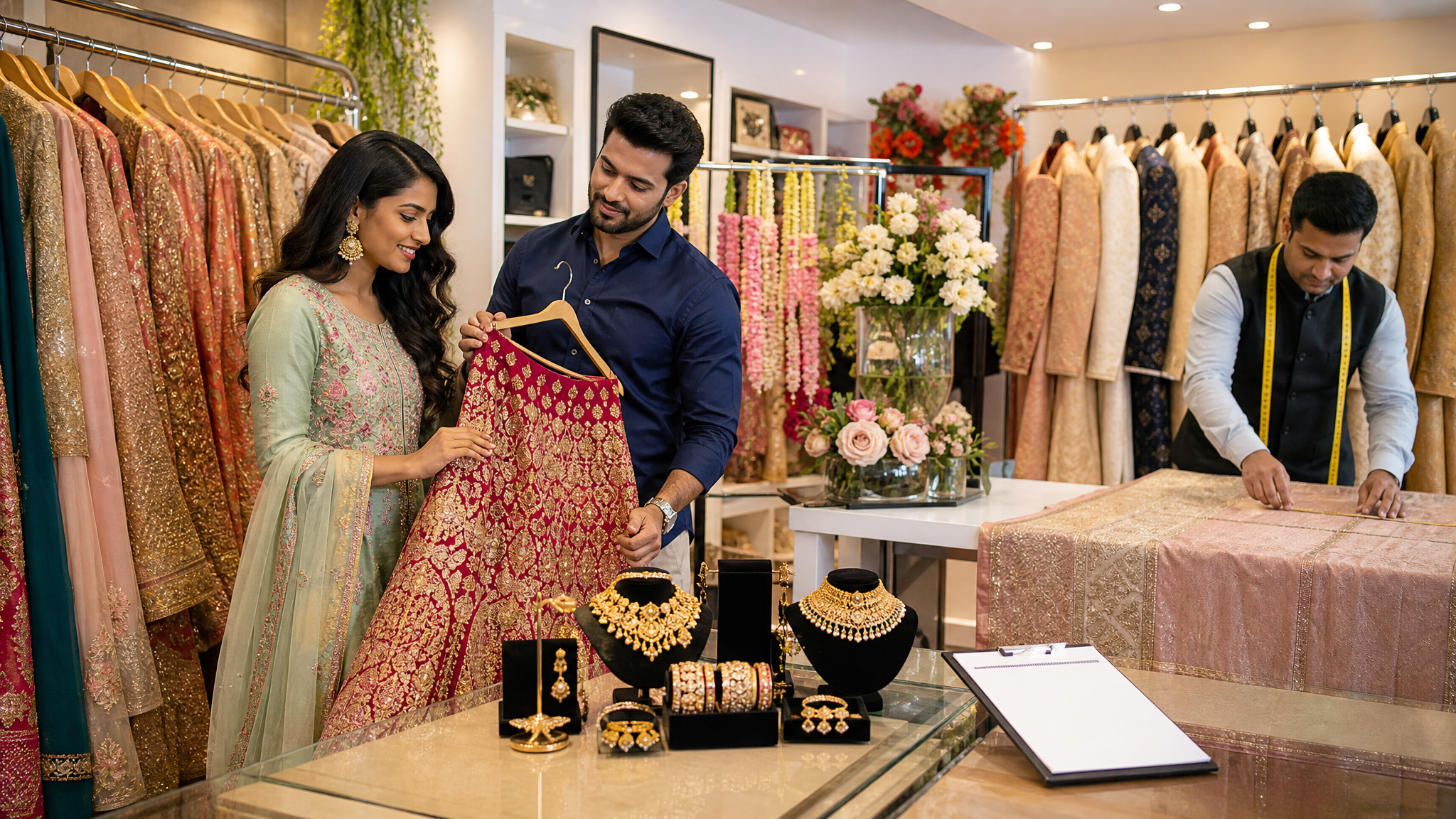
Where to Shop for Indian Wedding Clothes and Jewelry in the USA
Shopping for an Indian wedding in the USA is easier when the list is organized by item, event, fitting deadline, and vendor type. Many families can buy clothing, jewelry, decor, and accessories domestically, while exact regional textiles, custom ritual pieces, seasonal flowers, and last-minute alterations may require more planning.
Store inventory, prices, appointments, shipping windows, and locations can change. Treat the examples below as starting points to verify, not as endorsements or permanent availability guarantees.
Start with the wedding events
A wedding may include engagement, mehndi, haldi, sangeet, ceremony, reception, lunch, or a family gathering. The outfit and accessory needed for a daytime ritual may be different from the outfit needed for a formal evening reception.
| Event or need | Typical shopping list | Plan early for |
|---|---|---|
| Mehndi or haldi | Light lehenga, anarkali, kurta, comfortable footwear | Color coordination and washable fabrics |
| Sangeet | Dance-friendly outfit, jewelry, accessories | Comfort, movement, and group coordination |
| Ceremony | Regional clothing, turban, dupatta, jewelry, ritual accessories | Venue rules, fitting, draping, and ceremony requirements |
| Reception | Formal lehenga, saree, sherwani, tuxedo, or fusion attire | Custom work, alterations, and delivery |
| Family and guests | Coordinated outfits, gifts, favors, shoes, and shawls | Multiple sizes and a shared color plan |
USA shopping options by vendor type
- South Asian bridal boutiques: Best for bridal lehengas, sarees, sherwanis, custom fittings, styling, and appointments.
- Indian clothing retailers: Useful for guest wear, family outfits, kurta sets, sarees, suits, and accessories.
- Jewelry boutiques: Useful for bridal sets, bangles, earrings, kundan-style jewelry, and occasion accessories.
- Indian grocery markets: Helpful for spices, sweets, snacks, serving items, and some ceremony supplies.
- Florists and decorators: Useful for garlands, mandap flowers, centerpieces, backdrops, and reception styling.
- Tailors and alteration specialists: Important when online or off-the-rack clothing needs fitting, sleeve work, blouse stitching, or draping support.
- Online specialty stores: Useful for nationwide ordering, but confirm measurements, returns, duties, delivery, and stock before paying.
Current examples to investigate
Current website checks show several USA-focused or USA-serving examples that families may investigate:
- Nazranaa presents Indian bridal wear, men’s styles, jewelry, custom bridal-party attire, and a New Jersey warehouse/shipping model on its official site.
- KYNAH describes an appointment-only store in Los Angeles offering bridal, women’s, and men’s Indian fashion, including customizable pieces.
- MOHAR lists women’s and men’s clothing, bridal lehengas, jewelry, fabrics, and domestic shipping information on its official site.
- KALKI Fashion is an online Indian fashion retailer that can be checked for wedding clothing, custom fitting, shipping, and returns.
- Andaaz Fashion offers an online wedding and occasion-wear category that families can compare for style, sizing, delivery, and return terms.
These examples are not a ranking. Before ordering, verify the current product page, stock, service area, alteration options, delivery date, return policy, and total delivered cost. A store’s website may show a collection that is not available in your size or timeline.
Indian wedding clothing for brides
Bridal shopping may include a lehenga, saree, reception outfit, blouse, dupatta, footwear, jewelry, hair accessories, and event-specific clothing. Ask whether the garment is ready-to-wear, made-to-order, or custom; whether the blouse is stitched; and whether alterations are included.
For online orders, measure with help from a trusted person, save the measurement chart, and ask about the fabric, lining, color variation, embroidery weight, and return restrictions. Custom and personalized garments may not be returnable.
Indian wedding clothing for grooms
Grooms may shop for a sherwani, kurta-pajama, bandhgala, Indo-Western outfit, safa or turban, stole, mojari, and reception clothing. The couple may coordinate colors without wearing identical outfits.
Schedule at least one fitting for a sherwani or tailored jacket. Check sleeve length, shoulder fit, trouser length, footwear comfort, and whether the turban style requires a specialist.
Family and guest outfits
Families often need several outfits across multiple events. Decide whether the group should coordinate by color, fabric, region, or formality. A shared spreadsheet with name, event, size, vendor, order date, alteration date, and delivery status can prevent missed details.
Guest clothing does not need to imitate the couple’s ceremonial outfit. Festive Indian or fusion formalwear is usually a flexible choice, but the invitation and family preferences should guide the final decision.
Jewelry and accessories
USA retailers may carry bridal sets, imitation jewelry, bangles, earrings, maang tikka, kalire, hair accessories, brooches, cufflinks, and groom accessories. Compare materials, stone settings, clasp quality, sizing, shipping insurance, and return terms.
If you are traveling with heirloom gold or valuable jewelry, keep photographs and documentation, use secure storage, and check current travel and insurance requirements. Never place irreplaceable jewelry in checked luggage.
Flowers, garlands, and decor
Local florists and South Asian decorators may create fresh garlands, bouquets, mandap arrangements, table centerpieces, and backdrops. Ask whether requested flowers are seasonal and whether a local substitute can preserve the intended look and meaning.
Artificial garlands, reusable fabric, candles, trays, signage, and favor packaging can often be ordered online or bought through local Indian stores. Confirm venue rules before ordering large decor pieces.
What may be difficult to find
Availability depends on city, season, vendor, budget, and the exact regional tradition. Families may have difficulty finding:
- Exact handwoven regional textiles or artisan embroidery
- Specialty ritual trays, utensils, cloth, or community-specific items
- Seasonal flowers or fresh leaves used in a particular ceremony
- Traditional sweets with a short shelf life or a specific regional recipe
- Matching outfits in unusual sizes for a large family group
- Last-minute custom jewelry, blouse work, or alterations
- A vendor who understands two different regional styles in one event
- Specific colors or fabrics during peak wedding season
When an exact item is unavailable, ask the couple, family elder, officiant, or community specialist whether a substitute is appropriate. A visually similar replacement may not be suitable for a religious ritual.
Ordering from India versus buying in the USA
| Choose USA shopping when | Consider ordering from India when |
|---|---|
| You need easy fittings, local returns, or quick alterations. | You need a specific regional artisan, textile, or custom tradition. |
| The event is close and delivery certainty matters. | A trusted family source can manage measurements and quality checks. |
| You want to see jewelry or fabric before purchasing. | The item is difficult to find locally but can be ordered well in advance. |
| You need coordinated outfits across several sizes. | The USA price or inventory does not suit the required style and timeline. |
International ordering adds shipping, customs, payment, sizing, return, delay, and communication risks. Get measurements and delivery terms in writing, and always keep a backup plan for essential clothing or ceremony items.
USA wedding shopping timeline
- Six to nine months before: Decide events, style, budget, venue rules, and custom clothing requirements.
- Four to six months before: Order bridal and groom clothing, book fittings, choose jewelry, and reserve specialist vendors.
- Two to three months before: Purchase family outfits, guest clothing, invitations, favors, shoes, and non-perishable supplies.
- Two to four weeks before: Confirm measurements, alterations, floral quantities, sweets, deliveries, and vendor contacts.
- Wedding week: Prepare an emergency kit with pins, sewing supplies, fashion tape, stain care, spare accessories, and copies of orders.
Questions to ask before paying a vendor
- Is the item currently in stock in the required size and color?
- Is it ready-to-ship, made-to-order, or custom?
- Are alterations, fitting, delivery, tax, and setup included?
- What is the expected delivery date and what happens if it slips?
- Can the item be exchanged or returned after a fitting?
- Are custom or sale items final sale?
- Can the vendor provide a written order summary and measurements?
How PunjabiRishtey fits into the wedding journey
PunjabiRishtey supports the matchmaking stage for Indian, Punjabi, Sikh, and NRI families. Families can explore Punjabi matrimonial profiles, review USA matrimonial options, read membership information, and register a profile.
Once a couple and families begin wedding planning, shopping should follow their chosen rituals and style. Use current vendor information, confirm availability directly, and plan specialty items early.
Frequently asked questions
Where can I shop for Indian wedding clothes in the USA?
Consider South Asian bridal boutiques, Indian clothing stores, jewelry boutiques, official online retailers, local tailors, and community recommendations. Verify current inventory and service details directly.
Can I buy a lehenga or sherwani online?
Yes, but check measurements, fabric, lining, delivery, alterations, return restrictions, and whether the item is custom or ready-to-ship.
What Indian wedding items are hardest to find in the USA?
Exact regional textiles, community-specific ritual items, seasonal flowers, short-shelf-life sweets, and last-minute specialist alterations may be difficult depending on your location and date.
Should I order from India or buy locally?
Buy locally when you need fittings, returns, or delivery certainty. Consider India for a specific artisan or regional item only when there is enough time and a trusted quality check.
How far ahead should I start wedding shopping?
Begin major clothing, jewelry, decor, and vendor planning several months before the wedding. Custom pieces and family group orders need additional time.
Final takeaway
Indian wedding shopping in the USA is manageable when families divide the list into local purchases, advance orders, and specialty items that may need a trusted source elsewhere. Compare current vendors carefully, protect the timeline, and let the couple’s regional and family traditions guide the final choices.
Leave a Reply