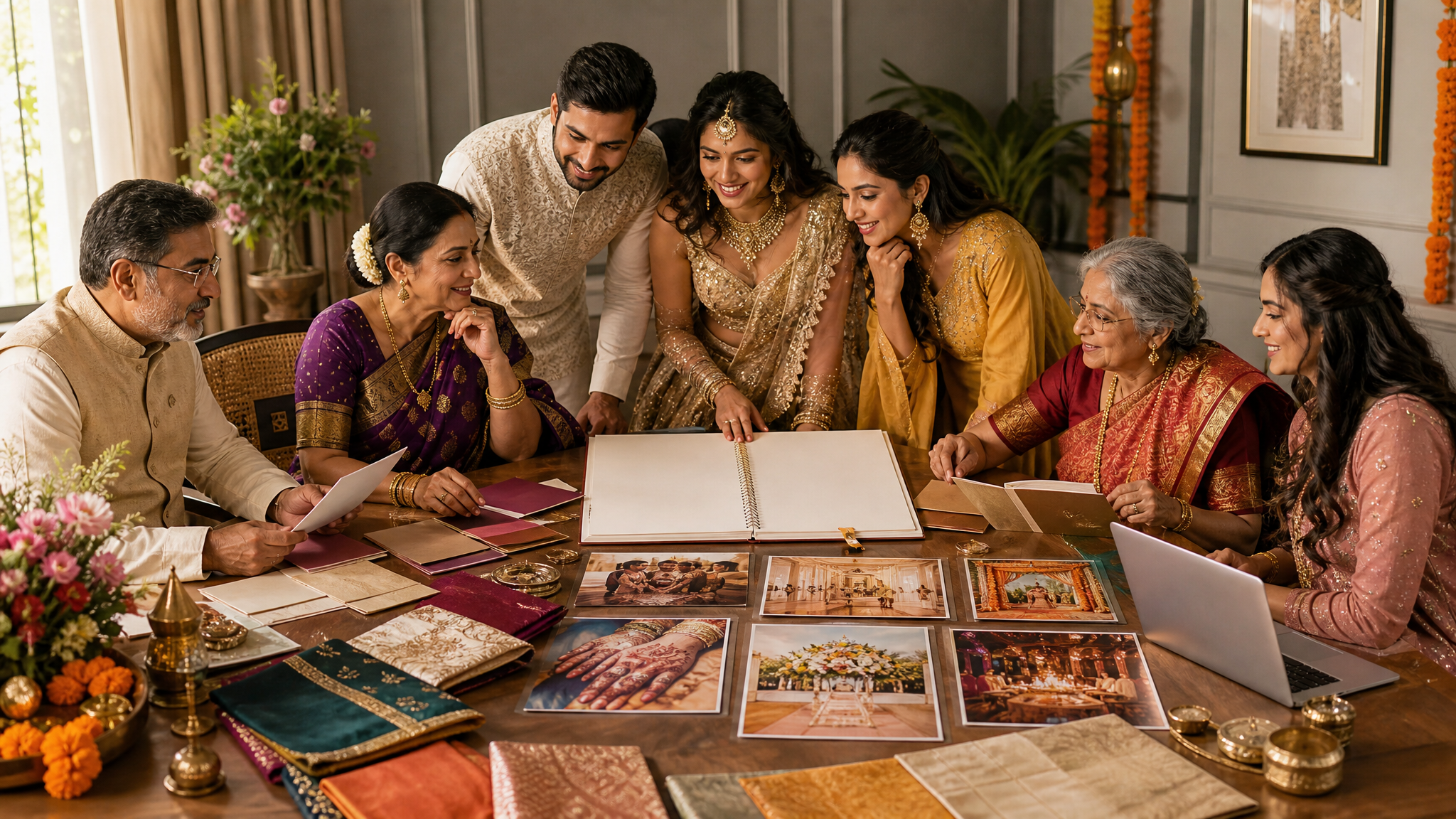
Indian Wedding Planning Timeline: Rituals, Family Roles, and Wedding Styles
Planning an Indian wedding is less about following one universal checklist and more about giving each ceremony, family, and tradition enough time and attention. A Punjabi sangeet, Sikh Anand Karaj, Tamil wedding, Bengali celebration, Gujarati garba night, Muslim nikah, Christian ceremony, or interfaith wedding may have a very different rhythm.
This Indian wedding planning timeline is a flexible framework for couples and families. Use it to organize decisions, assign responsibilities, and protect the meaning of each ritual without assuming that every community follows the same sequence.
What makes Indian wedding planning different?
Many Indian weddings combine several events, multiple households, religious or cultural rituals, extended-family participation, and guests traveling from different places. The planning team may include the couple, parents, grandparents, siblings, family friends, an officiant, a venue, caterers, decorators, photographers, and clothing or jewelry vendors.
The couple should remain at the center of the decisions. Family involvement can be generous and valuable, but responsibilities should be discussed rather than assumed.
Choose the wedding style before booking vendors
- Traditional multi-day wedding: Several pre-wedding events lead to a religious ceremony and reception.
- Small family ceremony: A shorter gathering focused on close relatives and essential rituals.
- Inter-regional wedding: Two families include customs from different states, languages, or communities.
- Interfaith wedding: Religious, civil, or cultural elements are combined after careful family discussion.
- Diaspora wedding: Indian traditions are adapted to a USA venue, local schedule, and available vendors.
- Destination wedding: Guests travel to a location where accommodation, transport, and event timing need additional coordination.
Write down the preferred style, guest experience, ceremony requirements, food expectations, and budget boundaries. This short brief will help every vendor understand the celebration.
12 to 18 months before the wedding
Begin with the decisions that affect every later choice: the couple’s priorities, approximate guest list, wedding region, date range, ceremony type, and overall budget.
Couple’s responsibilities
- Discuss the desired wedding style, privacy preferences, and non-negotiable rituals.
- Agree on how much decision-making family members will have.
- Prepare an initial guest list and identify guests who may need travel support.
- Decide whether the wedding will be religious, civil, cultural, or a combination.
Family responsibilities
- Clarify traditions each family hopes to include and which are optional.
- Identify elders or community advisers who can explain ritual requirements.
- Discuss hosting responsibilities, guest accommodation, and cultural introductions.
- Share important dietary, accessibility, and privacy needs early.
9 to 12 months before the wedding
Once the direction is clear, secure the date and the vendors that are hardest to replace. Some ceremonies require a specific officiant, religious venue, community calendar, or early-morning schedule.
- Book the venue and confirm its ceremony, food, music, and decor rules.
- Confirm the officiant, gurdwara, temple, mosque, church, or civil ceremony provider.
- Reserve the photographer, videographer, caterer, decorator, and entertainment.
- Ask vendors about insurance, deposits, cancellation terms, overtime, and setup time.
- Create one shared schedule with the couple, immediate family, planner, and venue.
6 to 9 months before the wedding
This is a useful window for clothing, jewelry, invitations, transportation, and guest communication. Custom outfits and regional textiles may need additional time, especially when measurements, international shipping, or multiple fittings are involved.
Clothing and style decisions
- Choose bridal, groom, family, and guest clothing for each major event.
- Decide whether the families will coordinate colors, fabrics, or accessories.
- Book blouse stitching, tailoring, turban styling, draping, or jewelry appointments.
- Plan comfortable footwear and backup options for long ceremonies.
Guest communication
- Send a save-the-date or travel notice for guests coming from another city or country.
- Explain which events are formal, festive, religious, or family-only.
- Share venue clothing rules, parking details, hotel information, and RSVP timing.
4 to 6 months before the wedding
Turn the broad plan into an event-by-event production schedule. List the people, items, vendors, transport, and family decisions needed for mehndi, haldi, sangeet, ceremony, reception, and any regional gathering.
| Event | Planning questions | Typical lead roles |
|---|---|---|
| Mehndi | Who is applying mehndi? Is the space comfortable and easy to clean? | Family host, mehndi artist, decorator |
| Haldi or pithi | What materials, clothing, seating, and cleanup plan are needed? | Close family, ceremony helper, venue team |
| Sangeet or garba | Who coordinates music, performances, rehearsals, and timing? | Siblings, emcee, DJ or musicians |
| Main ceremony | What rituals, readings, offerings, coverings, flowers, or venue rules apply? | Officiant, couple, family ritual lead |
| Reception | How will guests move from ceremony to meal, speeches, dancing, and send-off? | Planner, venue, emcee, immediate family |
2 to 4 months before the wedding
Finalize details that affect guest comfort and ceremony flow. Confirm guest numbers, menu, seating, transportation, music, floral quantities, photography priorities, and the order of events.
- Schedule clothing fittings and check every custom garment.
- Confirm jewelry, shoes, accessories, gifts, favors, and ceremony supplies.
- Review the guest list for dietary restrictions, mobility needs, and children.
- Prepare a family contact sheet with vendor phone numbers and emergency contacts.
- Ask the photographer about private moments, religious restrictions, and no-photo requests.
- Write a simple guest guide explaining the event sequence and dress expectations.
Four to eight weeks before the wedding
Move from planning to confirmation. The couple and family leads should know who is responsible for every important item and decision.
- Confirm the final guest count with the venue and caterer.
- Confirm delivery times for clothing, jewelry, flowers, sweets, decor, and rentals.
- Complete final fittings and repair or replace anything uncomfortable.
- Share the day-of schedule with family, wedding party, vendors, and transport drivers.
- Prepare a small emergency kit with sewing supplies, safety pins, stain care, and basic medication.
The week before the wedding
The best use of the final week is reducing last-minute decisions. Put each outfit, accessory, ritual item, and document in a labeled bag. Keep passports, identification, rings, jewelry, and essential medication with a trusted person rather than in checked luggage.
One family member should own vendor communication so the couple is not interrupted throughout the day. Another person can manage gifts, envelopes, personal belongings, and guest questions.
Wedding-day family roles
| Role | Practical responsibility |
|---|---|
| Couple | Participate in rituals, communicate boundaries, and enjoy the celebration. |
| Parents or guardians | Welcome guests, support the ceremony plan, and handle key family decisions. |
| Siblings and cousins | Coordinate performances, transport, outfits, guest questions, and small emergencies. |
| Elders | Offer cultural guidance while respecting the couple’s final choices. |
| Planner or family coordinator | Manage vendors, schedule changes, setup, and communication. |
| Guest support lead | Help visitors understand venue rules, meals, seating, and event movement. |
Regional and religious flexibility
A planning timeline should make room for difference. A Sikh Anand Karaj may require gurdwara etiquette and head coverings. A Hindu ceremony may require a mandap, fire arrangements, offerings, and an officiant’s instructions. A Muslim nikah may involve a marriage contract, witnesses, privacy preferences, and halal food. A Christian wedding may center a church service, readings, vows, and a reception. Jain, Buddhist, Parsi, tribal, and other communities have their own practices.
Ask the couple and officiant which steps are essential, which can be adapted, and which should not be photographed or publicly shared.
Planning an Indian wedding in the USA
USA-based families often adapt Indian wedding styles to local venue rules, vendor availability, travel schedules, and work commitments. Ask early about fire restrictions, open-flame rules, outside catering, alcohol service, noise limits, cooking areas, religious items, and ceremony timing.
For clothing, flowers, sweets, decor, and ritual supplies, separate the shopping list into items available locally, items that need advance ordering, and items that require a trusted specialist. The related USA Indian wedding shopping guide can help families begin that process.
Privacy and safety during wedding planning
Wedding invitations, travel details, children’s names, phone numbers, and jewelry photos should not be shared publicly without permission. Use private group messages for sensitive logistics. Ask guests before posting images, and make the couple’s privacy preference clear to vendors.
How PunjabiRishtey fits into the journey
Wedding planning usually begins after a couple and families have decided to move forward together. PunjabiRishtey supports the earlier matchmaking stage through Punjabi matrimonial profiles, USA matrimonial options, membership information, and profile registration.
Frequently asked questions
How long does it take to plan an Indian wedding?
Many couples benefit from beginning major decisions 9 to 18 months ahead, especially for multi-day celebrations, destination weddings, custom clothing, or large guest lists. A smaller wedding can be planned in less time when the date and ceremony requirements are clear.
Who should make decisions in an Indian wedding?
The couple should make the final decisions, while family members can contribute cultural knowledge, hosting support, and practical help according to responsibilities agreed in advance.
Do all Indian wedding rituals follow the same order?
No. Rituals and event sequences vary by religion, region, language, community, family, and couple. Use the officiant’s and family’s guidance.
What should a family plan first?
Start with the ceremony type, date range, guest count, venue requirements, family priorities, and budget boundaries. These decisions affect every vendor and event.
What is the most useful wedding-day role?
A dedicated coordinator who can answer vendors and guests allows the couple and immediate family to stay present during the celebration.
Final takeaway
A strong Indian wedding plan protects both logistics and meaning. Build a flexible timeline, assign family roles clearly, ask cultural advisers about essential rituals, confirm USA venue rules, and give custom clothing and specialty items enough lead time. The result can feel organized without losing the warmth and individuality of the families involved.
Leave a Reply