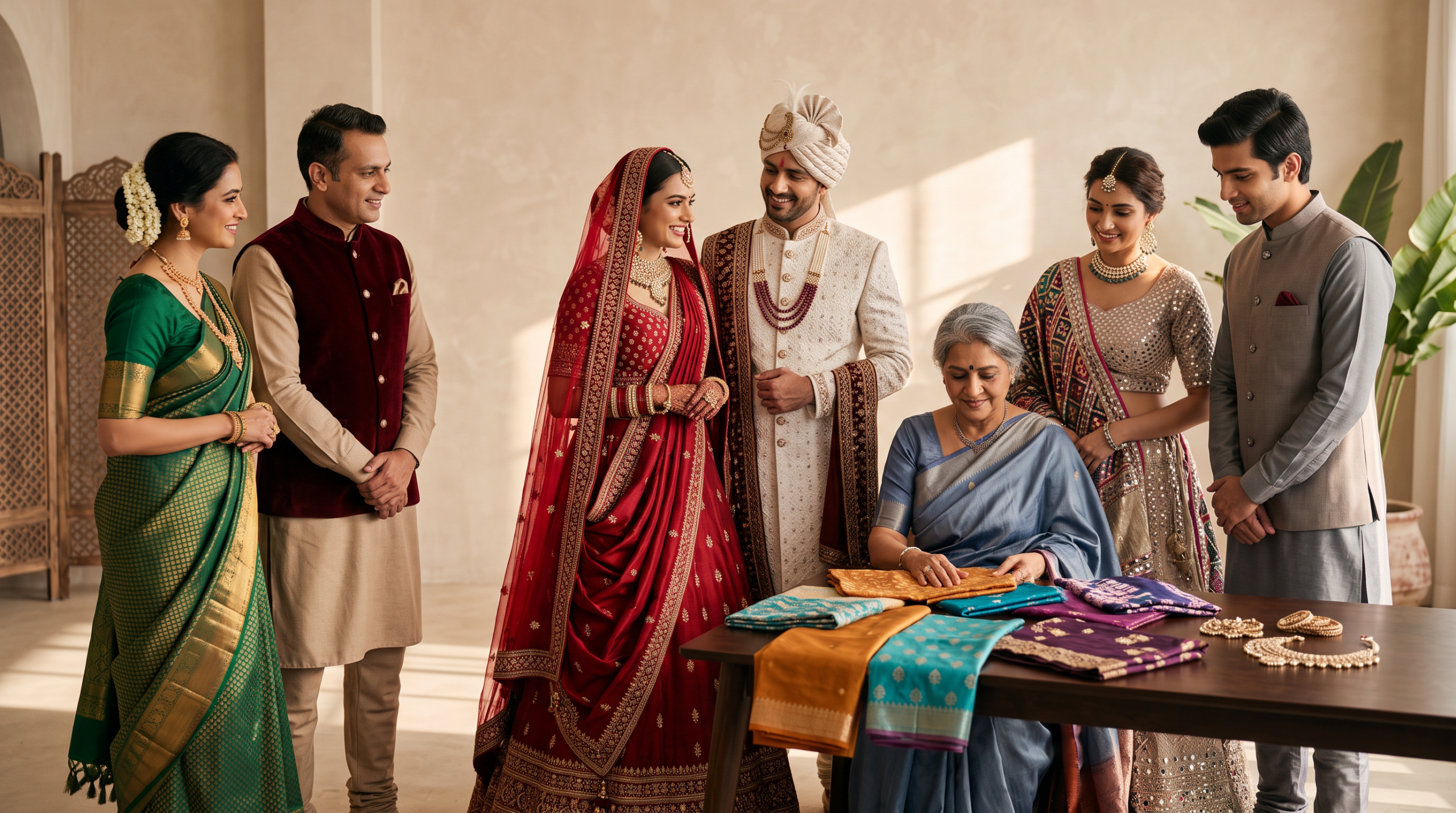
Indian Wedding Clothing Guide: Regional Attire for Couples, Families, and Guests
Indian wedding clothing reflects region, religion, season, ceremony, family history, comfort, and personal style. A Punjabi wedding may look different from a Tamil, Bengali, Gujarati, Muslim, Sikh, Christian, Jain, or interfaith celebration. The most useful clothing plan starts with the specific event and family guidance rather than treating one outfit as the definition of an Indian wedding.
This guide explains common Indian wedding attire choices for brides, grooms, parents, relatives, and guests. The examples are broad starting points, not rules for every community or household.
Start with the wedding events
Many Indian weddings include several gatherings, and each one may have a different dress expectation. Before shopping, ask for the event schedule, venue, dress code, ceremony requirements, weather, footwear guidance, and whether the family prefers traditional, contemporary, or fusion clothing.
| Event | Common style direction | Planning point |
|---|---|---|
| Engagement or roka | Elegant saree, lehenga, suit, kurta, sherwani, or fusion formalwear | Choose an outfit that allows conversation, photographs, and comfortable movement. |
| Mehndi | Colorful, lighter clothing with manageable sleeves and footwear | Protect embroidery and keep hands, feet, and seating practical for henna. |
| Haldi or pithi | Simple, washable, or dedicated ceremony clothing | Expect turmeric, water, and movement; avoid irreplaceable garments. |
| Sangeet or garba | Festive lehenga, anarkali, kurta set, bandhgala, or dance-friendly fusion wear | Test footwear and make sure the outfit supports dancing. |
| Religious ceremony | Tradition-specific formalwear with appropriate coverage | Ask the family or officiant about head coverings, shoes, colors, and modesty. |
| Reception | Formal saree, lehenga, gown, sherwani, tuxedo, suit, or regional formalwear | Coordinate the venue, weather, photos, and how long the outfit will be worn. |
Bridal clothing across Indian wedding styles
Bridal attire can include a saree, lehenga, sharara, gharara, salwar suit, regional drape, gown, or a combination across several events. Some brides wear different colors and silhouettes for the ceremony and reception, while others choose a single meaningful garment.
Prioritize fit, movement, secure closures, breathable layers, and enough time for alterations. A beautiful outfit that is too heavy, uncomfortable, or difficult to sit in can make a long ceremony harder.
Punjabi and Sikh wedding attire
Punjabi weddings may include vibrant lehengas, salwar suits, sarees, jewelry, phulkari-inspired details, turbans, kurta-pajamas, sherwanis, and colorful accessories. A Sikh Anand Karaj has its own setting and etiquette. Ask the family or gurdwara about head coverings, footwear, and respectful dress before choosing an outfit.
Do not assume that every Punjabi or Sikh family follows the same colors, fabrics, or ceremony sequence. Personal style and family practice matter.
South Indian wedding attire
South Indian weddings may feature silk sarees, kanjeevaram-style textiles, veshti or dhoti-inspired garments, silk shirts, jewelry, jasmine, and regional draping. Tamil, Telugu, Kannada, Malayalam, Kodava, and other communities have distinct variations.
Ask whether a ceremony involves a particular drape, flower, or jewelry tradition. Early morning ceremonies may also require a lighter layer or comfortable footwear for travel between events.
Bengali and East Indian wedding attire
Bengali brides and families may choose sarees, red or ivory palettes, traditional jewelry, and ceremony-specific accessories, while grooms may wear dhoti-style or formal regional clothing. Odia, Assamese, Bihari, and neighboring traditions bring their own textiles and details.
Use family guidance instead of copying an image from another community. The meaning of a color, headpiece, or drape may vary.
Gujarati and West Indian wedding attire
Gujarati and West Indian celebrations may include colorful bandhani or patterned textiles, lehengas, sarees, kediyas, kurta sets, jackets, and garments suited to garba or dandiya. Marathi, Rajasthani, Goan, Sindhi, and other traditions also have their own clothing language.
For a dance event, choose a secure drape, breathable fabric, and footwear that can handle standing and movement.
Muslim, Christian, Jain, Buddhist, Parsi, and interfaith celebrations
Muslim weddings may include modest formalwear, shararas, ghararas, sarees, sherwanis, suits, or other family and regional choices. Christian weddings may involve church-appropriate attire, a white gown, a suit, or an Indian-Western combination. Jain, Buddhist, Parsi, and interfaith families may blend different dress expectations across events.
There is no universal religious outfit. Confirm coverage, head coverings, jewelry, footwear, photography expectations, and ceremony etiquette directly with the family or officiant.
Groom and groom’s family clothing
Grooms may choose a sherwani, achkan, kurta-pajama, bandhgala, suit, tuxedo, dhoti-style outfit, or a regional garment. Coordinated safa or turban colors, stoles, footwear, and jewelry may be important to some families.
Parents and relatives do not need identical outfits. A shared color family, fabric detail, or accessory can create a coordinated group look without making everyone uncomfortable.
How families can coordinate without overmatching
- Choose a color palette rather than one exact shade.
- Let elders select garments that are comfortable and culturally meaningful.
- Coordinate textiles or accessories instead of requiring identical outfits.
- Plan children’s clothes around movement, temperature, and easy bathroom access.
- Keep a backup layer, footwear, and garment-care plan for long events.
- Share dress guidance early with guests traveling from outside the community.
What Indian wedding guests should wear
Guests can usually choose a saree, lehenga, anarkali, salwar suit, kurta set, sherwani, bandhgala, suit, or culturally respectful fusion outfit depending on the invitation. When in doubt, ask the couple whether the event is casual, festive, formal, religious, or color-specific.
Avoid wearing an outfit that is likely to interfere with ceremony movement, photography, or venue customs. Respect requests about bare shoulders, head coverings, shoes, and colors without turning them into assumptions about every Indian wedding.
Fabric, weather, and comfort
| Situation | Useful clothing decision | Check before purchase |
|---|---|---|
| Hot outdoor wedding | Breathable silk blends, cotton-silk, light georgette, or comfortable layers | Sun, humidity, seating, and sweat management |
| Cold USA venue or winter wedding | Layered blouse or kurta, shawl, jacket, coat, and closed footwear | Whether outerwear works with the silhouette and photos |
| Long ceremony | Secure drape, supportive footwear, and manageable jewelry | Sitting, walking, restroom access, and ceremony duration |
| Dance-heavy event | Flexible fabric, safe hemline, and shoes with grip | Movement, stage access, and the dance floor |
| Traveling with garments | Protective garment bag, foldable accessories, and repair kit | Wrinkling, baggage weight, and arrival time for pressing |
Jewelry and accessories
Jewelry may include earrings, necklaces, bangles, rings, kamarbandh, matha patti, nose jewelry, anklets, brooches, turbans, stoles, dupattas, handbags, and footwear. Choose accessories that stay secure and do not create safety problems during dancing, driving, or crowded ceremonies.
Keep valuable jewelry private while traveling and avoid posting detailed images of expensive pieces or storage locations online.
Indian wedding clothing in the USA
USA-based families can shop through South Asian boutiques, Indian clothing retailers, local designers, tailors, trunk shows, online stores, and community referrals. Availability varies by city, size, regional style, season, and alteration needs.
For a specialized garment, ask about measurements, return rules, lining, delivery, customs if applicable, alteration support, and whether the displayed color matches the actual fabric.
Buying from India versus buying in the USA
| Consideration | Buying from India | Buying in the USA |
|---|---|---|
| Regional selection | May offer broader local access to specialized textiles and designers. | May offer curated selections with easier local communication. |
| Fittings | Can work well when a trusted tailor or family member is available. | Local alterations may be easier before the event. |
| Timing | Requires delivery, travel, and contingency time. | May reduce shipping distance, but inventory can be limited. |
| Returns | International returns can be complicated. | Policies may be easier to use, but confirm before ordering. |
| Cost | Depends on garment, exchange rate, shipping, duties, and tailoring. | Includes local pricing and convenience; compare the complete cost. |
Clothing timeline for couples and families
- 6 to 9 months before: Confirm ceremonies, colors, regional traditions, guest dress guidance, and major outfits.
- 4 to 6 months before: Order custom garments, schedule designer appointments, and begin family coordination.
- 2 to 3 months before: Complete fittings, check jewelry, confirm shoes, and resolve alterations.
- 2 to 4 weeks before: Press garments, pack accessories, photograph outfit combinations privately, and prepare repairs.
- Wedding week: Keep ceremony clothing protected, organized by event, and accessible to the person helping the couple dress.
How PunjabiRishtey fits into the family journey
PunjabiRishtey supports the matchmaking stage before families begin selecting wedding attire. Explore Punjabi matrimonial profiles, review USA matrimonial options, read membership information, or register a profile.
For USA shopping and ceremony supplies, read the related USA Indian wedding shopping guide and Indian wedding mandap and decor guide.
Frequently asked questions
What do people wear to an Indian wedding?
People may wear sarees, lehengas, salwar suits, anarkalis, shararas, sherwanis, kurta sets, bandhgala jackets, suits, tuxedos, or regional garments. The right choice depends on the event and family guidance.
What should a guest wear to a Sikh or Hindu wedding?
Choose respectful formalwear and ask the family or venue about head coverings, shoes, modesty, colors, and ceremony etiquette. Requirements can vary by family and setting.
How early should I order an Indian wedding outfit?
Custom or specialist garments should be started several months early. Allow time for measurements, tailoring, shipping, pressing, and a backup plan.
Can Indian wedding clothing be rented in the USA?
Some markets and retailers offer rental or loan options, but selection, sizing, and availability vary. Confirm fit, cleaning, return timing, and accessories before relying on a rental.
How can families coordinate outfits without looking identical?
Use a shared palette, fabric family, accessory, or level of formality. Allow each person to choose a comfortable silhouette that suits their role and tradition.
Final takeaway
Indian wedding clothing is most successful when it respects the ceremony, honors family identity, and allows people to move comfortably through a long celebration. Start with the event schedule, ask culturally specific questions, plan alterations early, and coordinate with color or texture instead of forcing every guest into the same look.
Leave a Reply