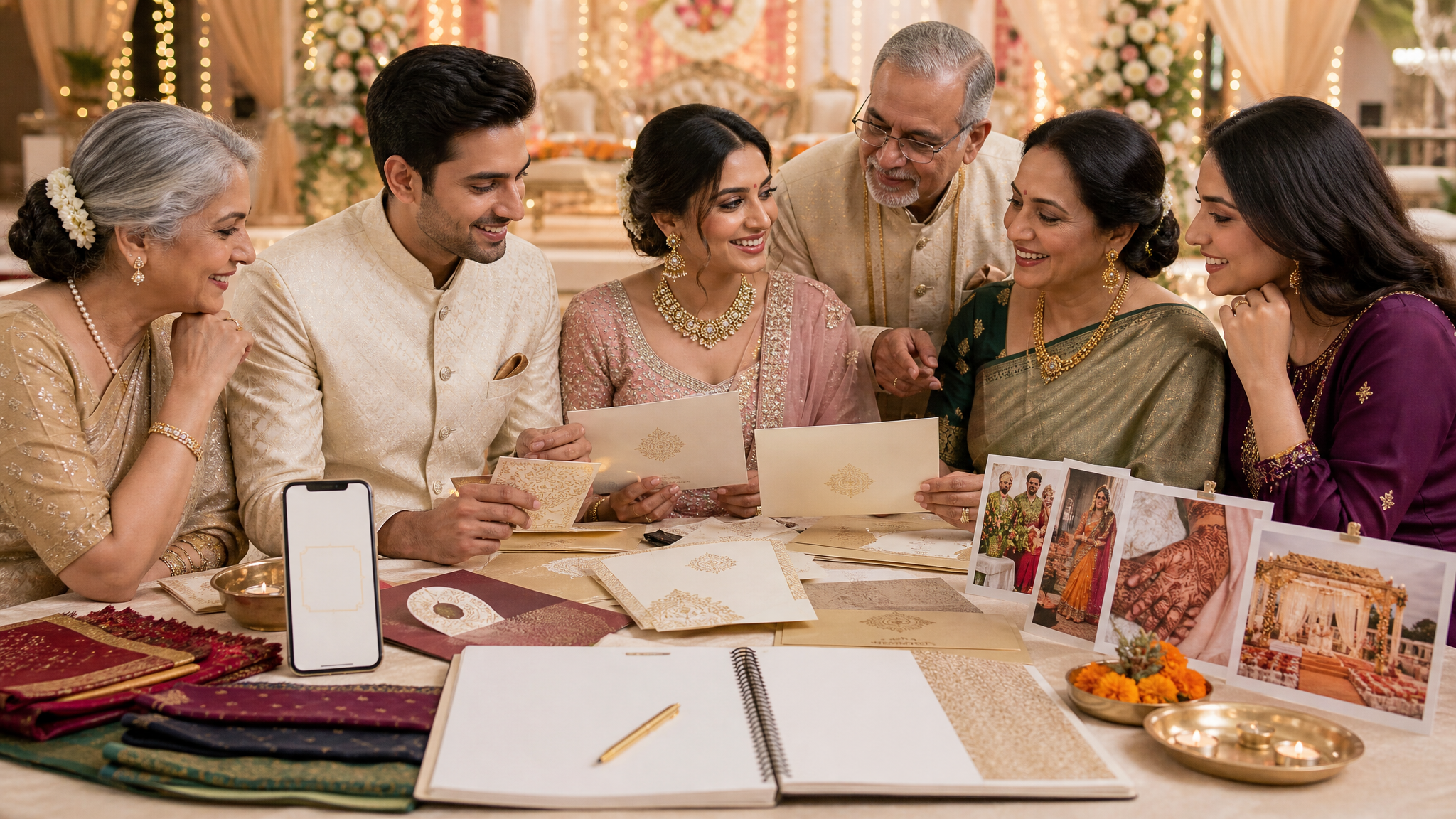
Indian Wedding Invitations: Regional Rituals, Family Traditions, and Modern Wedding Styles
An Indian wedding invitation is more than a date and venue. It introduces the couple, welcomes families, explains a celebration’s rhythm, and gives guests the information they need to participate respectfully. A Punjabi wedding, South Indian ceremony, Bengali celebration, Gujarati event, Sikh Anand Karaj, Muslim nikah, Christian wedding, or interfaith celebration may each use a different invitation style.
This guide explains what to include in Indian wedding invitations, how regional rituals affect the schedule, and how families can combine cultural meaning with clear planning for guests in India and the USA.
What makes an Indian wedding invitation different?
Many Indian weddings include more than one event. The invitation may need to introduce a mehndi, haldi or pithi, sangeet, garba, baraat, religious ceremony, lunch, reception, or family gathering. Guests should be able to understand which events they are invited to and what each event requires.
- Names of the couple and, when appropriate, their parents or families
- Event names, dates, times, and locations
- Dress guidance for each event
- RSVP instructions and a contact person
- Parking, transportation, hotel, or venue information
- Essential ceremony guidance about footwear, head coverings, photography, or food
- Privacy information when the invitation contains an address or family details
Indian wedding invitation formats
| Format | Best use | Planning point |
|---|---|---|
| Printed invitation suite | Formal weddings, elders, and guests who value a keepsake | Proof names, dates, venues, and family spellings before printing. |
| Digital invitation | USA weddings, travel-heavy guest lists, and quick updates | Use a clear link and keep one current schedule so guests do not receive conflicting details. |
| Wedding website | Multi-day events, travel information, FAQs, and registry details | Protect private information and share access only with invited guests. |
| Family-led invitation | Community weddings and celebrations where elders coordinate hosting | Confirm that the couple’s names, preferences, and privacy wishes are represented accurately. |
| Hybrid invitation | Printed formal invitation plus digital logistics and updates | Keep wording and times consistent across every format. |
Punjabi and Sikh wedding invitations
Punjabi celebrations may include a roka or engagement, mehndi, haldi, sangeet, jaggo, a baraat, milni, Anand Karaj, and reception. Not every family includes every event, so list only the events guests are actually invited to attend.
For an Anand Karaj or gurdwara ceremony, include practical guidance about head coverings, footwear, arrival time, photography, and respectful conduct only after confirming the venue or family’s expectations. Keep the invitation welcoming rather than overly complicated.
South Indian wedding invitations
Tamil, Telugu, Kannada, Malayalam, Kodava, and other South Indian weddings may begin early and include several detailed rituals. The invitation should make early arrival, ceremony timing, venue access, and dress expectations clear.
If the wedding includes a temple, community hall, or home ceremony, explain parking and footwear arrangements. When guests are traveling from another city or country, add a simple event-by-event schedule rather than assuming they understand the sequence.
Bengali, Gujarati, Marathi, Assamese, and regional invitations
Bengali, Gujarati, Marathi, Assamese, Odia, Rajasthani, Kashmiri, and other regional celebrations can have their own ceremonies, songs, colors, family roles, and food traditions. Invitation wording should reflect the family’s actual customs rather than using a generic regional label.
When an event includes garba, dandiya, regional songs, or a community meal, tell guests whether participation is expected, optional, or simply welcome. Clear language helps people join without feeling uncertain.
Hindu, Muslim, Christian, Jain, Buddhist, Parsi, and interfaith weddings
Religious and interfaith weddings may combine a ceremony with a reception or include separate celebrations for each family. A nikah, church ceremony, temple wedding, civil ceremony, or interfaith service may have different rules for seating, music, photography, attire, and food.
Ask the officiant and venue to review the guest information. Mention only the guidance guests need and avoid presenting one family’s practice as a rule for every wedding in that tradition.
How to list a multi-day wedding schedule
| Event | Information guests need | Optional wording detail |
|---|---|---|
| Engagement or roka | Date, time, location, attire, and RSVP | Explain whether the gathering is intimate or open to the wider family. |
| Mehndi | Arrival time, attire, seating, and participation guidance | Tell guests whether henna is available and whether the event is women-centered or mixed. |
| Haldi or pithi | Outdoor or indoor location, clothing guidance, and timing | Let guests know that turmeric or water may be part of the celebration. |
| Sangeet or garba | Performance start time, dress code, parking, and meal information | State whether guests may dance or whether the program is mostly staged. |
| Baraat | Meeting point, route, weather plan, and arrival time | Share safety and accessibility information for guests joining the procession. |
| Religious ceremony | Venue rules, footwear, head covering, seating, and photography guidance | Use wording approved by the family or officiant. |
| Reception | Doors, meal, speeches, entertainment, and transportation | Include an end time when guests need to arrange a ride or hotel transfer. |
Invitation wording and family roles
Families may share hosting responsibilities, but the couple should have a final say over names, schedule, guest list, dress guidance, and privacy. Assign one person to proofread the final invitation and another to test the digital links.
- Couple: approves wording, guest experience, and personal preferences
- Parents or elders: confirm family names, hosting language, and regional customs
- Event coordinator: checks venues, timing, vendors, and directions
- Guest contact: answers questions and communicates changes
- Privacy lead: reviews addresses, children’s names, registry details, and online visibility
Indian wedding invitations for USA guests
Guests in the USA may be traveling between states, attending a gurdwara, temple, hotel, banquet hall, church, or private venue, and choosing clothing for several events. Add a short logistics section with airport, hotel, parking, shuttle, weather, attire, and accessibility information.
For guests who are unfamiliar with Indian ceremonies, explain the practical expectations without turning the invitation into a long cultural essay. A wedding website or FAQ page can hold additional details.
Digital invitation privacy
A digital invitation can contain a family address, travel schedule, phone numbers, registry information, and private venue details. Use access controls when possible and avoid posting the complete invitation publicly.
- Use a private RSVP link or password when appropriate.
- Do not publish home addresses or hotel room information on public social media.
- Share payment, registry, and gift links only through verified channels.
- Ask before including children’s names or photos.
- Keep an updated guest list and remove access after the event if needed.
Invitation design and wedding style
The visual design can reflect the wedding style without making cultural claims the family does not use. A formal multi-day wedding may use layered stationery, while a modern USA celebration may use a clean digital design with regional color, textiles, or family artwork.
Possible design directions include traditional, minimalist, floral, jewel-tone, contemporary, regional, bilingual, or fusion. Choose readable typography and make sure the design does not hide dates, times, or directions.
Invitation accessibility
Use readable contrast, clear type size, descriptive link labels, and a mobile-friendly digital page. Offer a phone or email contact for guests who cannot use the digital RSVP. If older relatives are important hosts, proofread wording in the language they prefer.
How PunjabiRishtey fits into the family journey
PunjabiRishtey supports the relationship and matchmaking stage before couples and families begin planning invitations and wedding events. Explore Punjabi matrimonial profiles, review USA matrimonial options, read membership information, or register a profile.
Frequently asked questions
What should an Indian wedding invitation include?
Include the couple’s names, event details, venues, RSVP instructions, dress guidance, transportation information, and any essential ceremony or privacy notes.
How do I invite guests to only some Indian wedding events?
List each event separately and address the invitation or digital RSVP to the guests invited to that event. Avoid sending a general schedule that makes every guest think they must attend every ceremony.
Should parents’ names appear on an Indian wedding invitation?
That depends on the family’s hosting tradition and the couple’s wishes. Confirm spellings, preferred names, and whether both families should be listed before printing.
How can I explain Indian wedding dress codes?
Use practical words such as festive, formal, traditional, religious, or comfortable for dancing. Mention footwear, head coverings, modesty, weather, and outdoor conditions only when relevant.
Can I share an Indian wedding invitation on social media?
Ask the couple first. Invitations may contain private addresses, phone numbers, travel plans, and registry information that should not be public.
Final takeaway
The best Indian wedding invitation balances family tradition with guest clarity. Name the real events, explain practical expectations, respect regional and religious differences, protect private details, and give the couple a final review before distribution. A thoughtful invitation helps every family member and guest feel prepared to celebrate.
Leave a Reply