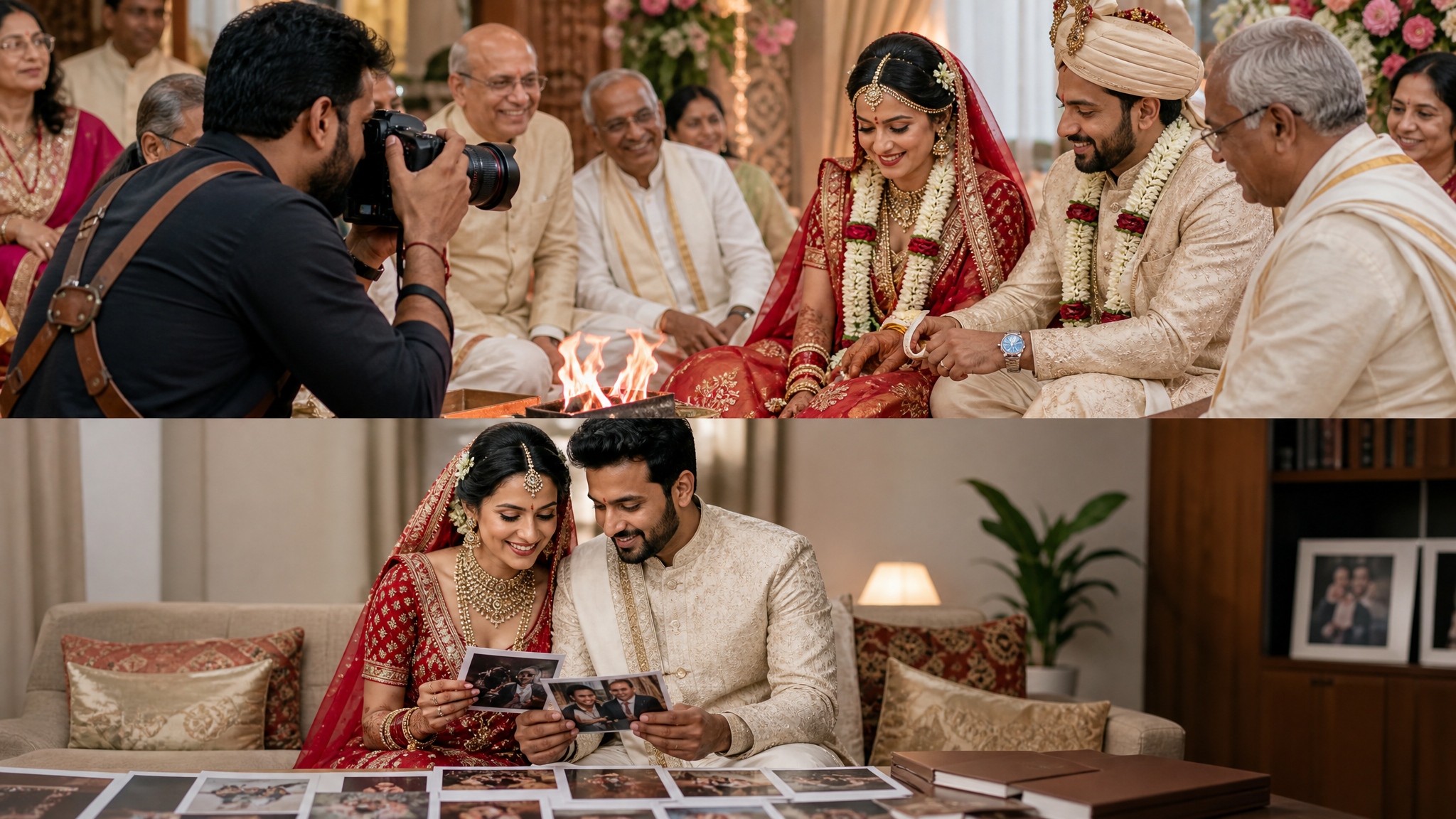
Indian Wedding Photography: Rituals, Family Memories, and Privacy-Safe Planning
Indian weddings create many kinds of memories: a quiet family blessing, a colorful mehndi, a lively sangeet, a sacred ceremony, a joyful baraat, a community meal, and the conversations that happen between events. Good Indian wedding photography should preserve those layers without flattening every culture into the same pose or exposing private family moments.
This guide helps couples, families, and photographers plan coverage across Indian wedding styles, regional rituals, USA venues, and multi-day celebrations. It focuses on respectful storytelling, practical shot planning, and privacy—not staged claims or guaranteed results.
Start with the family’s story
Before choosing a photographer, ask what the couple and families want remembered. Some want documentary coverage of elders and guests, while others prioritize portraits, fashion, ceremony details, or a short highlight film. The answer should guide the timeline and the photographer’s approach.
- Which family members and relationships matter most?
- Which rituals should be photographed carefully and with limited movement?
- Which events are private, family-only, or not to be shared online?
- Do elders, children, or guests need additional time and accessible spaces?
- Does the couple prefer candid, editorial, traditional, or documentary coverage?
Indian wedding photography styles
| Style | What it emphasizes | Useful for |
|---|---|---|
| Documentary | Unscripted reactions, family interactions, rituals, and guest energy | Couples who want the feeling and relationships of the day preserved |
| Editorial | Styled portraits, clothing, architecture, details, and composed lighting | Couples who value fashion, design, and polished portraits |
| Traditional portraiture | Organized family groups, couple portraits, and ceremony moments | Large families and elders who want formal records |
| Fine-art inspired | Soft color, artistic framing, texture, and a carefully edited gallery | Couples who prefer a stylized visual identity |
| Hybrid coverage | A practical mix of candid, family, ceremony, and creative portraits | Multi-day weddings with different needs at each event |
Portfolio style is only one part of the decision. Also evaluate communication, cultural respect, backup equipment, contract clarity, delivery expectations, and how the photographer behaves around family and religious spaces.
Photography for Punjabi and Sikh weddings
Punjabi celebrations may include mehndi, haldi, sangeet, jaggo, a baraat, an Anand Karaj, milni, and reception events. Sikh ceremony photography requires respect for the gurdwara or venue rules, head coverings, footwear, movement, and the sanctity of the space.
Ask the photographer whether they have worked respectfully in a gurdwara or with a Sikh family’s specific expectations. Do not assume every Punjabi wedding has the same event list or visual traditions.
Photography for South Indian weddings
South Indian weddings may involve early ceremonies, silk attire, family rituals, regional jewelry, garlands, and detailed exchanges that happen quickly. Tamil, Telugu, Kannada, Malayalam, Kodava, and other traditions can have different sequences and photography priorities.
Build the shot plan around the actual ceremony schedule. If a ritual takes place early in the morning, confirm arrival time, venue access, lighting, and the photographer’s ability to work unobtrusively.
Photography for Bengali, Gujarati, Muslim, Christian, Jain, Buddhist, Parsi, and interfaith weddings
Bengali, Gujarati, Muslim, Christian, Jain, Buddhist, Parsi, and interfaith weddings may each combine regional dress, family customs, religious observance, food, music, and venue expectations. The couple should explain which moments are public, which are private, and which should not be photographed or posted.
For a nikah, church ceremony, temple ceremony, civil ceremony, or interfaith service, consult the officiant or venue about movement, flash, seating, and photography restrictions. A respectful photographer adapts instead of treating every ceremony like a stage.
Plan coverage by event
| Event | Possible photography priorities | Planning note |
|---|---|---|
| Engagement or roka | Family introductions, rings, blessings, portraits, and details | Confirm the family groups before the event so the gathering stays relaxed. |
| Mehndi | Henna details, conversations, music, food, and family participation | Protect privacy and ask before photographing close-ups of hands or guests. |
| Haldi or pithi | Playful family moments, turmeric rituals, and preparation | Protect equipment and confirm whether guests may be photographed during messy moments. |
| Sangeet or garba | Performances, dance, stage, audience reactions, and group energy | Coordinate with the show director and keep pathways clear. |
| Religious ceremony | Key rituals, family roles, offerings, vows, and respectful portraits | Follow officiant, venue, head-covering, footwear, and flash rules. |
| Reception | Entrance, speeches, meal, portraits, dancing, and farewell | Balance planned portraits with time for guests to enjoy the celebration. |
Build a practical family shot list
A shot list should guide the day without turning every minute into a production. Ask the couple to identify essential family combinations, people traveling from far away, elders, children, and any relationship that should be documented.
- Couple with each set of parents
- Couple with grandparents and elders
- Siblings, cousins, bridal party, and close friends
- Family members participating in a ritual
- Interfaith or blended-family groupings
- Guests who may not attend every event
- Details with personal meaning, such as heirloom jewelry or family textiles
Assign a family photo coordinator who knows names and relationships. This helps the photographer gather groups without repeatedly asking the couple to manage relatives.
How to photograph rituals respectfully
- Learn the ceremony order before the wedding day.
- Ask the officiant where the photographer may stand or move.
- Use quiet movement and avoid blocking family or guests.
- Do not direct sacred actions for a better image.
- Confirm whether flash, drones, tripods, or extra lighting are permitted.
- Respect requests not to photograph private offerings, documents, or family conversations.
- Ask before sharing images publicly, especially when children or religious objects appear.
Photography at USA Indian wedding venues
USA venues may include hotels, banquet halls, gurdwaras, temples, churches, private estates, community centers, gardens, and outdoor locations. Each setting has different rules for lighting, access, parking, power, flash, drones, candles, and photography time.
Ask the venue for a written photography policy and share it with the photographer. Confirm whether the photographer needs insurance, a certificate of insurance, a loading appointment, or permission to photograph in nearby public areas.
Choosing an Indian wedding photographer in the USA
- Review complete galleries, not only social-media highlights.
- Look for coverage of ceremonies, families, elders, different skin tones, and varied lighting.
- Ask how the photographer handles religious spaces and culturally specific rituals.
- Confirm the number of photographers, hours, editing style, album options, and delivery schedule.
- Ask about backup equipment, file storage, illness, emergencies, and replacement coverage.
- Read the contract for cancellations, rescheduling, overtime, travel, meals, and image rights.
Privacy-safe wedding photography
Wedding images can reveal family relationships, children, jewelry, addresses, travel plans, and religious participation. Couples should discuss what may be posted on the photographer’s website, social accounts, portfolio, advertising, or vendor tags.
| Privacy decision | Question to document |
|---|---|
| Public portfolio | Which images, if any, may be used publicly? |
| Children | Do parents approve online use of children’s images? |
| Religious moments | Are there private rituals or sacred items that should not be posted? |
| Family requests | Who is authorized to request removal or restrict an image? |
| Guest sharing | Can guests receive a private gallery with download and sharing rules? |
Photo and video backup planning
Ask how the photographer backs up files during and after the event. Confirm whether images are stored in more than one location, how long the gallery will remain available, and whether the couple receives high-resolution files, web versions, or albums.
Do not use a public cloud folder with sensitive filenames or family details. Choose a private gallery with an appropriate password and share it only with invited guests.
How PunjabiRishtey fits into the family journey
PunjabiRishtey supports the relationship and matchmaking stage before families begin planning wedding photography. Explore Punjabi matrimonial profiles, review USA matrimonial options, read membership information, or register a profile.
Frequently asked questions
How much photography coverage does an Indian wedding need?
It depends on the number of events, guest count, travel, ceremony timing, and whether the couple wants video or multiple photographers. Build the schedule around the moments and people that matter most.
Should we hire a photographer familiar with Indian weddings?
Cultural experience can help, especially for multi-day celebrations and religious ceremonies. More important is whether the photographer listens, respects the family, follows venue rules, and communicates clearly.
How can we organize large family portraits?
Create a short priority list, assign a family photo coordinator, schedule portraits when key relatives are available, and tell the photographer about mobility or accessibility needs.
Can our wedding photographer post the images online?
Review the contract and agree in writing. Couples can request private galleries, no-publication terms, or approval before portfolio use.
What should we ask about a USA wedding photographer’s contract?
Check hours, second photographers, editing, delivery, albums, backup plans, travel, overtime, cancellation, rescheduling, image rights, privacy, and gallery access.
Final takeaway
Indian wedding photography works best when it is built around people, rituals, and consent rather than a generic shot list. Explain the family story, plan coverage by event, respect each ceremony’s rules, and document privacy choices before the wedding. The result should feel true to the couple and the families who made the celebration possible.
Leave a Reply