Indian Wedding Music and Dance Traditions: Regional Styles, Rituals, and Family Celebrations
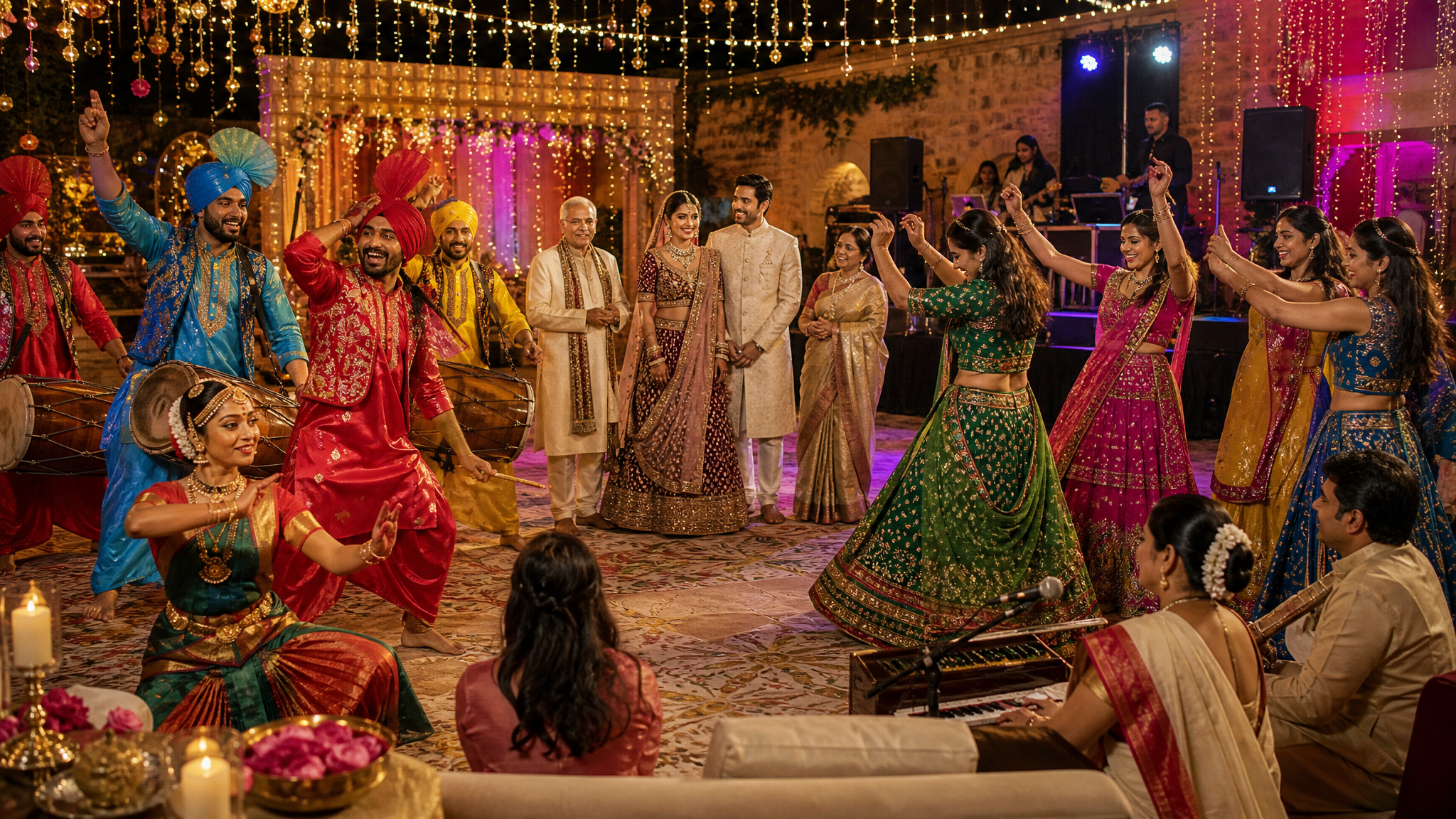
Indian wedding music and dance can turn a family gathering into a shared story. A Punjabi dhol performance, Gujarati garba, South Indian classical presentation, Bengali wedding song, Muslim celebration, Sikh ceremony, Christian reception, or interfaith playlist may each create a different atmosphere. The most meaningful plan reflects the couple’s families, region, faith, age groups, and comfort rather than treating every wedding as the same show.
This guide explains how music and dance fit into common Indian wedding styles, how families can plan performances, and how to bring traditions into a USA celebration without losing their meaning.
Why music matters in an Indian wedding
Music marks transitions, welcomes guests, gives families a way to participate, and creates room for both celebration and reflection. It can accompany a procession, support a ritual, introduce the couple, or give relatives a chance to share a prepared performance.
Some families prefer live musicians, while others choose a DJ, recorded regional songs, a curated playlist, a band, or a combination. The right choice depends on the venue, ceremony rules, budget, guest age range, and the couple’s preferences.
Indian wedding music styles at a glance
| Music or dance style | Common wedding connection | Planning consideration |
|---|---|---|
| Dhol and bhangra | Punjabi celebrations, baraat, sangeet, and lively receptions | Check venue sound limits, procession routes, and space for safe dancing. |
| Garba and dandiya | Gujarati gatherings, sangeet programs, and community celebrations | Plan a clear dance floor and explain the sequence to guests unfamiliar with the style. |
| Classical dance | South Indian, temple, family, and cultural presentations | Allow rehearsal time, suitable lighting, and a respectful performance area. |
| Regional wedding songs | Family rituals, blessings, women’s gatherings, and ceremony preparation | Ask relatives which songs carry meaning and whether lyrics should remain private. |
| Film and fusion music | Sangeet, reception entrances, and mixed-generation celebrations | Balance popular songs with regional, religious, and family preferences. |
| Live folk or devotional music | Religious ceremonies, community events, and family traditions | Confirm the officiant and venue’s expectations about instruments and performance. |
Punjabi wedding music and dance
Punjabi weddings may include dhol, bhangra, gidda, family singing, sangeet performances, a baraat, jaggo, and reception dancing. The energy can be joyful and communal, with relatives of different ages joining the celebration in their own way.
For a Sikh wedding, coordinate carefully with the gurdwara or ceremony venue. Music at a reception or sangeet may be very different from the devotional environment of an Anand Karaj. Keep the boundaries clear and follow the venue’s rules.
Gujarati garba and dandiya
Garba and dandiya can create a circular, participatory atmosphere. Some families include them in pre-wedding events, while others use them as a larger community celebration. Guests who are unfamiliar with the steps may appreciate a short explanation or an open area where they can observe before joining.
Check the floor surface, footwear guidance, crowd flow, and space between dancers. The goal is participation, not pressure.
South Indian wedding music and dance
Tamil, Telugu, Kannada, Malayalam, Kodava, and other South Indian celebrations may include classical music, dance, regional instruments, family songs, and early-morning ceremony traditions. A wedding may also include music at a reception that is separate from the religious ceremony.
Ask the family which rituals need quiet attention and which events welcome performance. Respect the difference between a cultural presentation, a sacred moment, and a party playlist.
Bengali, Assamese, Marathi, and eastern wedding traditions
Bengali, Assamese, Marathi, Odia, and other eastern or western regional weddings may include songs, ululation, folk influences, family performances, and ceremony-specific sounds. A family may have its own songs passed between generations.
Do not assume that a song associated with one region is appropriate for every family from that region. Ask the couple or elders before labeling a performance as traditional.
Music at Muslim, Christian, Jain, Buddhist, Parsi, and interfaith weddings
Music expectations vary widely within Muslim, Christian, Jain, Buddhist, Parsi, and interfaith families. Some ceremonies emphasize prayer, recitation, hymns, or quiet reflection, while a separate reception may include regional or popular music.
Discuss boundaries with the couple, family, officiant, and venue. Do not add music to a sacred ceremony simply because it appears in a generic wedding template.
Plan music by wedding event
| Event | Music or dance possibilities | Family planning question |
|---|---|---|
| Engagement or roka | Soft welcome music, family songs, couple entrance, or a short performance | Should the event feel intimate, formal, or festive? |
| Mehndi | Regional playlist, women’s songs, light dance, or acoustic music | Are guests comfortable being recorded while singing or dancing? |
| Haldi or pithi | Upbeat family playlist, dhol, or short participatory songs | How will sound, water, turmeric, and equipment be managed? |
| Sangeet | Family dances, couple performance, live band, DJ, or choreographed program | Who manages the running order, rehearsals, and microphones? |
| Baraat | Dhol, procession music, live instruments, or a curated entrance playlist | What route, sound, safety, and venue permissions are required? |
| Religious ceremony | Devotional music, hymns, recitation, traditional instruments, or silence | What does the officiant permit, and what must remain quiet? |
| Reception | Couple entrance, family dances, regional songs, dinner music, and open dancing | How will different age groups and cultural preferences be included? |
How families can share the spotlight
A family-centered performance plan can include siblings, cousins, elders, friends, and children without making anyone compete. Give each group a clear time limit and allow people to decline without embarrassment.
- Invite elders to share a song, blessing, story, or symbolic entrance.
- Give children a short, supervised role rather than a long rehearsal burden.
- Allow each side of the family to choose a meaningful song or dance.
- Include guests who may not know the choreography through simple group sections.
- Ask before filming private family rehearsals or sharing them online.
Planning a USA Indian wedding playlist
USA weddings often bring together guests with different language preferences and musical memories. Build the playlist in sections: ceremony-appropriate music, regional family songs, couple favorites, dinner music, performance tracks, and open dancing.
Check the venue’s sound system, power, curfew, noise rules, outdoor restrictions, and licensing expectations. A professional DJ or band should receive a timeline, pronunciation notes, entrance cues, and a do-not-play list.
Music and dance safety
- Keep cables, speakers, instruments, and lighting away from walking routes.
- Use a stable dance floor and check footwear guidance.
- Keep dhol or amplified music away from guests who need a quieter space.
- Build breaks into long performances and provide seating for older guests.
- Confirm whether fire, smoke, candles, or special effects are allowed.
- Protect children from crowded procession routes and active equipment.
Respectful photography and video
Performances can reveal children, family relationships, religious moments, and personal information. Tell photographers and videographers which parts may be recorded, which should remain private, and whether the final material may be posted publicly.
For planning family memories and ceremony coverage, read the related Indian wedding photography guide.
How PunjabiRishtey fits into the family journey
PunjabiRishtey supports the relationship and matchmaking journey before couples and families begin planning wedding celebrations. Explore Punjabi matrimonial profiles, review USA matrimonial options, read membership information, or register a profile.
Frequently asked questions
What music is common at an Indian wedding?
It depends on region, faith, family, and event. Punjabi weddings may feature dhol and bhangra, Gujarati events may include garba or dandiya, South Indian celebrations may include classical or regional music, and receptions may use film, fusion, or couple-selected songs.
What is the difference between sangeet and a wedding reception?
A sangeet is often centered on family performances, music, dance, and shared celebration before or around the wedding. A reception may focus more on the couple’s entrance, meal, speeches, portraits, and open dancing. Families may combine or separate them.
How do we include family members in wedding performances?
Offer optional roles, short performances, simple group sections, and non-dance contributions such as singing, storytelling, blessings, or introductions. Make participation welcoming rather than mandatory.
Can Indian wedding music be used at a USA venue?
Usually the practical questions involve venue rules, sound limits, equipment, timing, outdoor restrictions, and the DJ or band’s ability to manage regional requests. Confirm requirements before booking.
How can we respect religious ceremony music rules?
Ask the officiant and venue what is permitted, follow the ceremony order, and keep reception music separate from sacred moments when required.
Final takeaway
Indian wedding music and dance are strongest when they reflect real family memories and the couple’s chosen wedding style. Plan by event, ask regional and religious questions, give families room to participate, and keep privacy and safety in the same plan as the playlist. That balance creates a celebration guests can enjoy and remember.
Leave a Reply