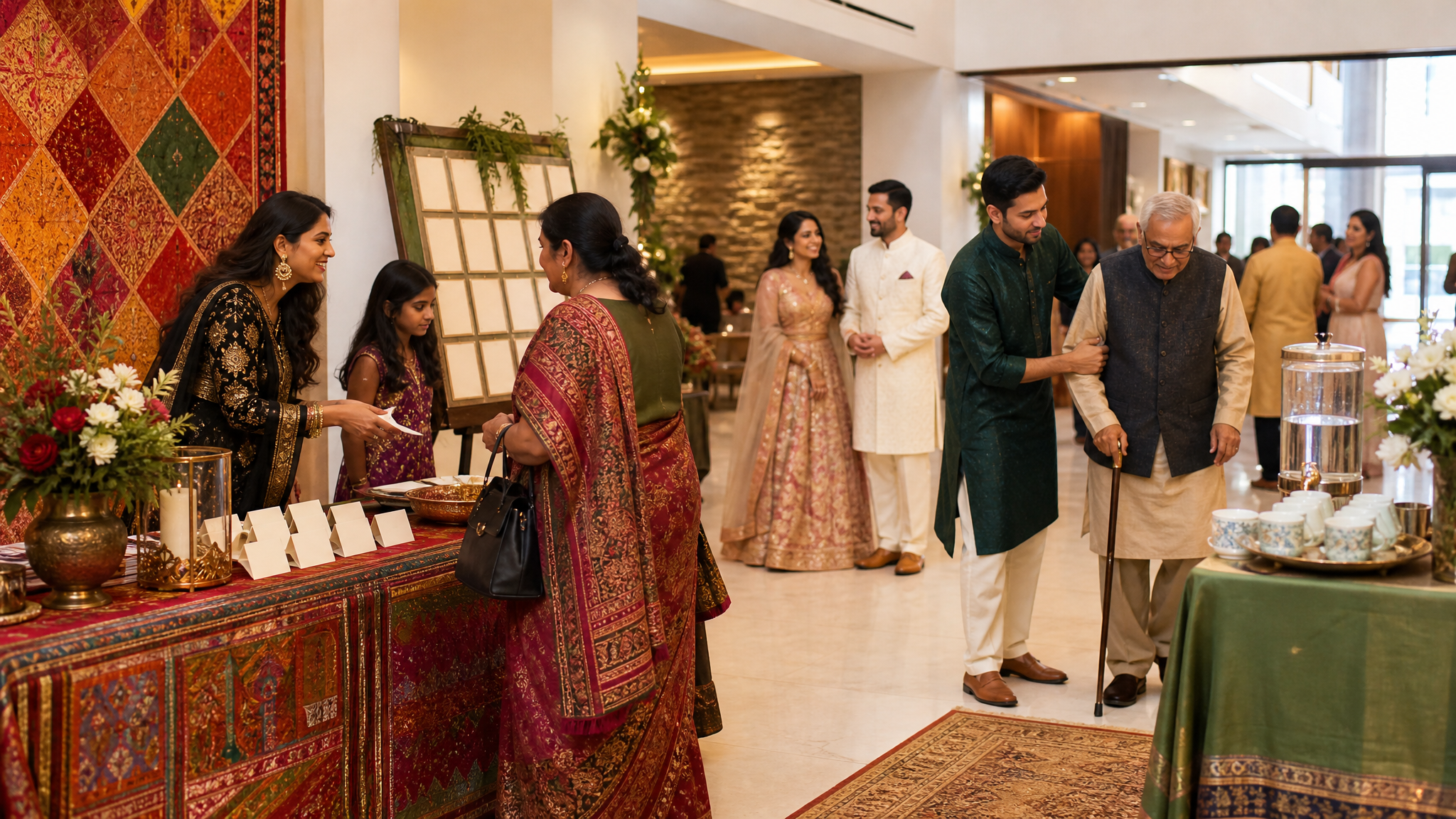
USA Indian Wedding Guest Welcome Guide: Venue Planning, Family Hosting, and Cultural Details
Hosting an Indian wedding in the USA often means welcoming guests from different cities, regions, generations, languages, and family traditions. A thoughtful guest experience does not require copying every custom. It requires clear information, comfortable logistics, respectful ceremony planning, and family members who know how to help.
This guide covers guest welcome planning for Punjabi, Sikh, Hindu, South Indian, Bengali, Gujarati, Muslim, Christian, Jain, Buddhist, Parsi, interfaith, and fusion wedding celebrations. Every family is different, so use the ideas as a planning framework rather than a universal rulebook.
Start with the guest journey
Map what a guest needs from invitation to farewell. A guest may be traveling internationally, attending several ceremonies, managing children, wearing formal clothing, following dietary practices, or visiting a gurdwara, temple, church, hotel, or private venue for the first time.
- How will guests receive the schedule and venue directions?
- Which events are formal, religious, casual, outdoor, or family-only?
- Where can guests park, stay, change clothes, store gifts, and rest?
- Who can answer questions about clothing, food, shoes, head coverings, or ceremony etiquette?
- How will older guests, children, and guests with mobility needs move through the venue?
USA Indian wedding venue types
| Venue type | Strength | Questions to ask |
|---|---|---|
| Hotel ballroom | Guest rooms, catering, parking, and weather protection | Can the hotel accommodate Indian food, multi-day events, decor, and late-night music? |
| Banquet hall | Flexible event layout and large guest capacity | What are the kitchen, vendor, noise, and installation rules? |
| Gurdwara, temple, or religious venue | Connection to ceremony and community tradition | What are the rules for shoes, head coverings, food, photography, and guest conduct? |
| Church or civic venue | Suitable for Christian, civil, or fusion ceremonies | How can Indian decor, music, food, and family participation be incorporated respectfully? |
| Private estate or garden | Outdoor atmosphere and customized design | What is the weather, restroom, parking, power, accessibility, and backup plan? |
| Community center | Practical space for local and family-led events | Who handles tables, cleanup, security, kitchen use, and vendor access? |
Give guests one clear wedding schedule
A multi-day Indian wedding can include an engagement, mehndi, haldi or pithi, sangeet, garba, baraat, religious ceremony, lunch, reception, and farewell. Guests need to know which events they are invited to, when to arrive, what to wear, where to park, and whether food is served.
Use one current schedule rather than sending multiple messages with conflicting times. Assign one family member to update guests if the venue or timing changes.
Clothing guidance for guests
Explain the level of formality and any ceremony-specific expectations. Guests may choose a saree, lehenga, salwar suit, kurta set, sherwani, bandhgala, suit, tuxedo, or respectful fusion clothing, depending on the event.
- State whether the event is casual, festive, formal, or religious.
- Mention head coverings, footwear, or modesty guidance when required by the venue or family.
- Tell guests whether they will be outdoors, walking, dancing, or sitting for a long ceremony.
- Provide practical weather information for USA locations.
- Do not imply that one regional outfit represents every Indian wedding.
For more detailed attire planning, see the related Indian wedding clothing guide.
Welcome details that help international and out-of-town guests
- Airport, hotel, venue, and transportation information
- Local weather and clothing suggestions
- Parking, rideshare, shuttle, and accessible entrance details
- Venue maps and a contact number for urgent questions
- Information about changing clothes between daytime and evening events
- Advice about gifts, envelopes, cards, and where to place them safely
- Language support when older relatives or international guests need it
Family hosting roles
A welcome plan works better when duties are shared. The couple should not be the only people answering directions, greeting every guest, managing gifts, and explaining ceremony etiquette.
| Role | Responsibility |
|---|---|
| Guest information lead | Maintains the current schedule, directions, contact list, and updates. |
| Welcome team | Greets guests, guides them to registration, seating, food, and ceremony areas. |
| Family photo coordinator | Helps gather relatives for portraits without pulling the couple away repeatedly. |
| Older guest support | Arranges seating, transportation, rest breaks, and accessible routes. |
| Children’s support | Identifies quiet space, food options, changing needs, and safe supervision. |
| Gift and valuables lead | Receives cards or gifts discreetly and stores them securely. |
| Vendor contact | Handles caterer, venue, decorator, photographer, and schedule questions. |
Food and hospitality
Food should reflect the family and serve the actual guest list. Menus may be vegetarian, halal, Jain-friendly, regional, mixed, or fusion depending on the event. Label dishes clearly and ask the caterer about allergens and cross-contact.
Make water, tea, coffee, non-alcoholic drinks, and seating easy to find. If guests are arriving from a long ceremony or travel day, offer a practical snack or meal at the appropriate time.
Read the related guide to Indian wedding food and hospitality for regional menu planning.
Welcoming guests at Sikh, Hindu, Muslim, Christian, and interfaith ceremonies
Each venue and family may have specific expectations about shoes, head coverings, seating, photography, food, alcohol, sacred objects, and movement. Put essential guidance in the guest information, but avoid overloading guests with rules that do not apply to their event.
Ask the officiant or venue to review the instructions. A short, respectful explanation is usually more helpful than assuming every guest already knows the ceremony.
Accessibility and comfort planning
Indian weddings can involve long standing periods, stairs, crowded entrances, loud music, outdoor paths, and several venue changes. Ask the venue about ramps, elevators, accessible restrooms, seating near the ceremony, parking drop-off, quiet areas, and safe routes.
Provide chairs for older guests and anyone who needs a break. Do not require guests to disclose private medical information publicly to receive assistance.
USA venue questions before signing
- Can the venue host a mandap, sacred fire, baraat, live music, and multi-day schedule?
- What are the rules for candles, incense, food preparation, flowers, and natural materials?
- Can the venue accommodate South Asian catering or an outside caterer?
- Where can guests park, change clothing, store gifts, and rest?
- How much time is available for vendor load-in, setup, and breakdown?
- Are there sound, photography, drone, alcohol, and closing-time restrictions?
- What accessibility features are available?
- What happens if the ceremony moves indoors because of weather?
- Who is the venue contact during the event?
For ceremony structures and decor, review the related USA Indian wedding mandap and decor guide.
Guest gifts, cards, and valuables
Set up a visible but secure gift and card location away from crowded entrances. Assign one trusted person to move cards or valuables to a private storage area. Tell guests where to leave gifts without asking them to announce what they brought.
Do not publish a family’s storage location, gift inventory, travel plans, or valuable jewelry details. Privacy is part of good hospitality.
Photography and guest consent
Tell guests whether photography and video will be present and how images may be used. Ask the couple and family before sharing private ceremony moments, children’s images, religious items, or close-ups of guests online.
Use a private gallery or clear sharing rules when possible. A guest’s attendance does not automatically mean consent for public commercial use of their image.
Emergency and backup planning
| Possible issue | Helpful backup |
|---|---|
| Weather changes | Indoor ceremony layout, umbrellas, covered walkways, and guest alerts. |
| Transportation delay | One guest contact, shuttle buffer, rideshare guidance, and updated timing. |
| Missing outfit item | Emergency kit, local tailor, boutique, spare accessories, and garment steamer. |
| Dietary concern | Clearly labeled backup food and a caterer contact who understands ingredients. |
| Older guest fatigue | Reserved seating, quiet space, water, and an accessible route. |
| Schedule change | One family-approved message channel and a person responsible for updates. |
For last-minute clothing and item preparation, see the USA Indian wedding emergency shopping checklist.
How PunjabiRishtey fits into the family journey
PunjabiRishtey supports the matchmaking journey before couples and families begin coordinating venues and guest hosting. Explore Punjabi matrimonial profiles, review USA matrimonial options, read membership information, or register a profile.
Frequently asked questions
How do I welcome guests to an Indian wedding in the USA?
Provide one clear schedule, venue directions, dress guidance, transportation information, food details, and a family contact. Greet guests in person and make seating, water, restrooms, and event transitions easy to find.
What information should be on an Indian wedding invitation?
Include the event name, date, time, venue, address, dress direction, RSVP, parking or transportation information, and any essential ceremony guidance.
How can we help guests who are unfamiliar with Indian wedding rituals?
Offer a short explanation of the ceremony, identify a family contact, and ask the officiant or venue to review any instructions. Avoid assuming guests have the same cultural background.
How can a USA venue support a multi-day Indian wedding?
Confirm setup time, catering, decor, sound, guest rooms, parking, accessibility, cleaning, and schedule changes before signing. A written venue plan helps coordinate the family and vendors.
What is the most important part of Indian wedding hospitality?
Clarity, comfort, and respectful attention. Guests should know where to go, what to expect, how to ask for help, and how to participate without feeling embarrassed or excluded.
Final takeaway
A welcoming USA Indian wedding combines cultural respect with practical planning. Share the schedule, explain only the guidance guests need, assign family roles, protect privacy, and make the venue comfortable for different ages and abilities. The strongest hospitality feels personal because families have planned the small details before guests arrive.
Leave a Reply